Did you know that climate change is projected to impact millions of lives, threatening ecosystems and human health alike? In the conversation surrounding “When Will Climate Change Kill Us,” it’s vital to recognize the urgency of this issue. As extreme weather events become more frequent, many are left pondering not just the reality of climate change, but also the timeline and consequences it may bring. This discourse isn’t just about doom and gloom; it invites us to explore solutions and proactive measures we can take today. By engaging with this topic, you can better understand the trends, impacts, and actions necessary for a sustainable future, empowering you to be part of the change we need. Join us as we delve into the complex yet captivating world of climate change and discover how we can address these pressing challenges together.
The Impending Threat: How Climate Change Affects Human Life
As climate change escalates, it presents an unprecedented threat that affects human life on multiple levels. The harsh reality is that without significant intervention, climate change will contribute to approximately 250,000 additional deaths each year between 2030 and 2050 due to malnutrition, malaria, and heat stress, among other issues [1/climatechange-factsheet-rfhe.pdf?sfvrsn=75d570fd2)]. This staggering statistic underscores the urgent need for global action and personal responsibility in mitigating the effects of a warming planet.
Extreme weather events, fueled by climate change, are becoming increasingly common. The rising frequency and intensity of heatwaves, storms, and floods not only result in immediate dangers like injury and death but also exacerbate long-term health conditions, disrupt food and water supplies, and elevate mental health issues [3]. For instance, the heat-related illnesses and respiratory issues caused by increased air pollution lead to over 1.2 million deaths annually [1/climatechange-factsheet-rfhe.pdf?sfvrsn=75d570fd2)]. These impacts highlight the interconnectedness of climate change with public health, economy, and societal stability, showcasing how individual choices and collective action can drastically alter the trajectory we are on.
Moreover, the repercussions of climate change extend beyond just health threats; they create a ripple effect, destabilizing economies and exacerbating social disparities. Vulnerable populations-especially those in low-income communities-face the brunt of these challenges, where adapting to new climate realities can be nearly impossible due to limited resources. Thus, combating climate change is not merely an environmental issue but a vital social justice concern that requires comprehensive strategies that include both mitigation and adaptation efforts.
Every failure to act now solidifies a more perilous future. Empowering individuals and communities to take tangible, actionable steps towards sustainability can initiate a transformative process. By making informed choices such as reducing waste, utilizing energy efficiently, and supporting eco-friendly policies, we can collectively alter our path and foster a healthier planet for future generations.
Understanding Climate Change: Key Facts You Need to Know
Climate change is not just a distant future concern; it is an ongoing crisis impacting our lives today. According to NASA, the effects of human-caused global warming are already being felt and will worsen unless greenhouse gas emissions are significantly reduced [[1](https://climate.nasa.gov/internal_resources/1027/)]. Understanding the fundamentals of climate change is crucial for grasping its urgent implications.
The science of climate change is based on the greenhouse effect, where gases such as carbon dioxide and methane trap heat in the atmosphere. This results in rising global temperatures, which have led to increasing sea levels, shifting weather patterns, and more intense natural disasters, including hurricanes and droughts [[2](https://climate.nasa.gov/explore/ask-nasa-climate/198/a-world-of-extremes/)]. These phenomena disrupt ecosystems and human populations, challenging our health, safety, and livelihoods.
Key Facts
- Global Temperature Rise: The Earth’s average surface temperature has risen about 1.2 degrees Celsius since the late 19th century, primarily due to increased carbon dioxide emissions from fossil fuels.
- Melting Ice and Rising Sea Levels: Glaciers and polar ice caps are melting, contributing to a rise in sea levels by about 8 inches since 1880.
- Increased Extreme Weather: The frequency of extreme weather events has increased, with climate models predicting more intense heatwaves, storms, and floods due to climate change.
- Health Implications: Climate change is a direct threat to public health, contributing to ailments like respiratory issues and heat-related illnesses as shown by over 1.2 million annual deaths linked to pollution [[3](https://www.who.int/docs/default-source/wpro—documents/hae—regional-forum-(2016)this-update-climatechange-factsheet-rfhe.pdf?sfvrsn=75d570fd2)].
Understanding these facts not only clarifies the urgency of the situation but also motivates action. Individuals and communities can make significant changes to reduce their carbon footprints through various simple actions, such as using energy-efficient appliances, reducing waste, and supporting sustainable practices. Each choice contributes to a collective effort that can make a difference in combating climate change and ensuring a livable future for generations to come.
The Science of Climate Change: Evidence and Predictions
When it comes to understanding climate change, one of the most significant aspects is the overwhelming evidence that has emerged over decades of scientific research. The consensus among climate scientists is clear: human activities-especially the burning of fossil fuels-are the primary drivers of climate change. Since the late 19th century, the Earth’s average surface temperature has risen approximately 1.2 degrees Celsius. This rise is attributed mainly to increased carbon dioxide emissions, resulting in more heat being trapped in our atmosphere via the greenhouse effect. The ramifications of this temperature increase are profound, influencing everything from weather patterns to sea-level rise to biodiversity loss.
The consequences of climate change are not just theoretical; they are observable in real time. Glaciers around the world are melting at alarming rates, contributing to an average sea-level rise of roughly 8 inches since 1880. These changes threaten coastal communities with increased flooding and erosion. Moreover, the frequency and intensity of extreme weather events-including hurricanes, droughts, and heatwaves-are on the rise. Climate models predict that this trend will continue, with more frequent and severe weather crises expected, ultimately jeopardizing both human safety and ecosystems.
Future Predictions and Implications
As we look to the future, the predictions about climate change are worrisome. If current trends continue and significant global actions to reduce greenhouse gas emissions are not implemented, we could see a world where global temperatures rise by 2 degrees Celsius or more by the end of the century. This increase could trigger catastrophic effects: irreversible damage to natural ecosystems, loss of biodiversity, and severe disruptions to food and water security.
To mitigate these risks, proactive measures must be taken now. Solutions include transitioning to renewable energy sources, improving energy efficiency, and implementing sustainable agricultural practices. Grassroots movements and innovative technologies provide hope, demonstrating that significant change is possible when communities and governments align their efforts against climate change. Individuals can contribute by advocating for policy changes, reducing their carbon footprints, and supporting businesses committed to sustainability.
The time for action is now. By understanding the evidence and the predictions surrounding climate change, we can make informed decisions that not only protect our planet but also ensure a thriving future for generations to come.
How Climate Change Directly Impacts Public Health
As the planet warms, one of the most profound impacts of climate change is on public health. Rising temperatures are not merely an environmental concern; they pose direct threats to human well-being. Heatwaves are expected to occur more frequently and with greater intensity, leading to increased instances of heat-related illnesses and deaths. For example, during the summer of 2021, a staggering 600 people died in Canada due to record-high temperatures, underscoring the urgency of recognizing heat as a public health emergency.
Air Quality and Respiratory Health
Climate change adversely affects air quality, primarily through increased levels of pollutants such as ground-level ozone and particulate matter. These pollutants exacerbate respiratory diseases like asthma and can lead to cardiovascular complications. Children, the elderly, and those with preexisting conditions are particularly vulnerable. The American Lung Association reported that as climate change progresses, the number of “ozone alert days” – days when air quality is deemed unhealthy – has increased, stressing healthcare systems already stretched thin.
Vector-Borne Diseases
Changing climates also facilitate the spread of vector-borne diseases, such as malaria, dengue fever, and Lyme disease. Warmer temperatures and altered rainfall patterns can extend the habitats of mosquitoes and ticks, resulting in longer transmission seasons and new geographical areas becoming vulnerable. An example is the emergence of West Nile virus in regions previously considered low-risk, highlighting how climate change can shift disease dynamics unpredictably.
Mental Health Implications
Moreover, the mental health impacts associated with climate change are profound yet often overlooked. Extreme weather events, such as hurricanes and wildfires, can lead to post-traumatic stress disorder (PTSD), anxiety, and depression among affected populations. The damage to homes and communities, coupled with the stress of displacement, adds an additional layer of mental health concerns that communities must address as climate-related disasters increase.
To reduce these threats, communities can adopt proactive health measures. Promoting public awareness about the health risks associated with climate change is essential. Additionally, healthcare systems can prepare for outbreaks of diseases or health crises linked to climate change through robust surveillance and response planning. Everyone has a role; from encouraging local and individual initiatives aimed at reducing carbon footprints to advocating for policies that protect both the environment and public health, collective action is vital for combating climate-related health challenges.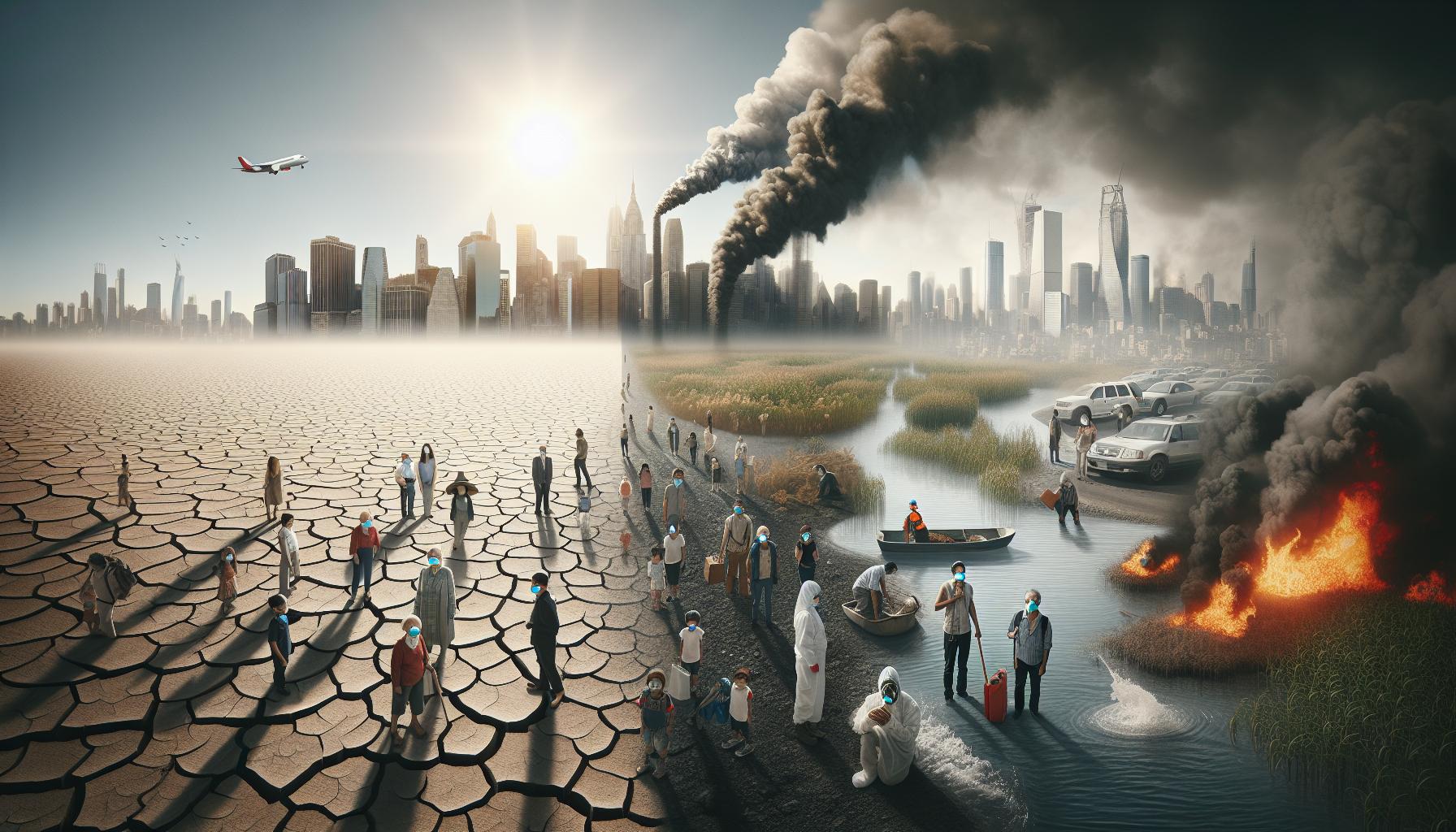
Ecological Disasters: The Chain Reaction of Climate Change
The intricate web of ecological disasters resulting from climate change can be likened to a series of dominoes, where the fall of one leads to inevitable consequences for others. As temperatures rise, we are witnessing an increase in extreme weather events-hurricanes, floods, droughts, and wildfires-that not only devastate local ecosystems but also disrupt human settlements, food production, and biodiversity. For example, the 2019 Australian bushfires burned over 18 million hectares of land, killing or displacing nearly three billion animals and highlighting how climate-induced disasters create ripple effects across multiple species and habitats.
Water systems are particularly vulnerable, with changing precipitation patterns leading to both floods and droughts. These erratic weather conditions undermine water supply and quality, making it increasingly difficult to sustain agriculture and drinking water sources. In regions like sub-Saharan Africa, prolonged droughts have already diminished crop yields significantly, exacerbating food insecurity and driving migration as communities seek better living conditions. To illustrate, the UN warns that up to 600 million people could face extreme water scarcity by 2030 due to climate change, underlining the urgent need for sustainable water management strategies.
Forests, often referred to as the planet’s lungs, are rapidly changing as shifts in temperature and precipitation alter their ecosystems. Deforestation, coupled with wildfires fueled by climate change, not only releases carbon stored in trees but also disrupts habitats, contributing to a decline in species diversity. For instance, the Amazon rainforest, a critical carbon sink, faces increased incidences of deforestation for agricultural expansion, while simultaneously struggling with wildfires that threaten its ecological integrity. The ramifications extend beyond the loss of flora and fauna: the diminishing biodiversity affects human health, livelihoods, and cultural practices reliant on these ecosystems.
Combating the Chain Reaction
To address the chain reaction of ecological disasters, proactive steps at both individual and community levels are essential. As a first measure, communities can enhance resilience against these changes by investing in sustainable agricultural practices that improve soil health and water management. Utilizing techniques like agroforestry and permaculture not only boosts biodiversity but also secures food sources against climate volatility.
Additionally, promoting reforestation initiatives can restore damaged ecosystems while improving local air and water quality. Organizing local tree-planting campaigns not only engages community members but also raises awareness about the critical role these plants play in combating climate change. By focusing on collaborative efforts and innovative solutions, we can mitigate the ecological impacts of climate change and foster a healthier planet for future generations.
Economic Consequences: What Climate Change Means for Your Wallet
The economic impact of climate change is becoming increasingly evident, with costs associated with environmental degradation threatening to disrupt not just ecosystems but also our financial stability. A recent analysis estimates that climate change could strip as much as $23 trillion from the U.S. economy by 2050 if current trends continue, a staggering figure that underscores the urgency of addressing this crisis. From fluctuating prices of goods to increased healthcare costs due to climate-related illness, the financial ramifications are far-reaching and affect everyone, particularly in vulnerable communities.
One key area of economic concern is the impact on agriculture. As climate changes lead to unpredictable weather patterns-ranging from droughts to flooding-crop yields are impacted. Farmers face increasing uncertainty, which can result in higher prices for consumers. For instance, the drought in California in 2021 contributed to a 20% increase in the cost of some fruits and vegetables, drastically affecting household budgets. Additionally, as pests and diseases spread with warmer temperatures, farmers must invest more in pesticides and crop protection, further driving up the cost of food.
Insurance premiums are another area where individuals and businesses will feel the strain. With the rise of extreme weather events-hurricanes, wildfires, and floods-insurance companies are re-evaluating risk assessments. This is leading to higher premiums and, in some cases, companies refusing to insure properties in high-risk areas. A report from the National Oceanic and Atmospheric Administration (NOAA) noted that insured losses from extreme weather have tripled since 1980, highlighting the increasing costs we face as climate impacts become more pronounced.
To mitigate these economic consequences, individuals can take proactive steps. Embracing energy efficiency-such as using energy-saving appliances and insular windows-can reduce utility bills and contribute to overall sustainability. Supporting local agriculture by purchasing from farmers’ markets can help bolster local economies and create resilience against food price inflation. Furthermore, advocating for policies that support renewable energy and sustainable practices is essential, as these can reduce future costs and lead to a more stable economic environment.
In summary, the ramifications of climate change are not just environmental-they are profoundly economic. As we confront rising costs in various sectors, it becomes imperative to adopt individual and collective strategies that can mitigate these adverse effects. Every decision counts, and by acting now, we can safeguard our wallets while fostering a sustainable future.
Climate Change and Social Disparities: Who Will Suffer Most?
Vulnerable populations globally face the brunt of climate change effects, highlighting existing social disparities that threaten their survival and well-being. For instance, low-income communities and marginalized groups often reside in areas that are at higher risk of environmental hazards, such as flooding, extreme heat, and pollution. These communities typically lack the financial resources and political power to effectively respond to climate-related disruptions, leading to intensified hardships. A striking example is found in urban areas, where poorer neighborhoods, often lacking green spaces, can experience overheating-sometimes referred to as “urban heat islands”-making residents particularly susceptible to heat-related illnesses.
Moreover, education and healthcare disparities exacerbate these vulnerabilities. Children from disadvantaged backgrounds may receive inadequate education about climate resilience and adaptation strategies, leaving them ill-equipped to handle the changing environment. Access to healthcare services is also uneven, with marginalized groups frequently facing barriers such as transportation challenges and financial limitations that prevent them from seeking timely medical attention. For instance, during heatwaves or natural disasters, these populations may be less likely to receive the medical care they need, resulting in avoidable health complications or even fatalities.
To combat these social disparities, it is essential to advocate for equitable climate policies that prioritize the needs of the most affected communities. Community-led initiatives can serve as powerful tools for resilience. For example, programs that empower residents to organize neighborhood preparedness actions-such as establishing cooling centers during heatwaves or creating urban gardens-can enhance local capacity to respond and adapt effectively to climate impacts. Policymakers must also ensure that sufficient resources and support systems are allocated to these vulnerable groups, including access to affordable housing in safer areas, investment in disaster preparedness, and financial aid during climate-related events.
In conclusion, addressing social disparities in the context of climate change is not merely an environmental issue; it is fundamentally a question of justice and humanity. By actively engaging with affected communities, promoting equitable policies, and fostering resilience through local initiatives, we can create a more inclusive society where everyone is better equipped to face the challenges posed by a changing climate. As these efforts grow and evolve, they will serve as vital steps toward ensuring that no one is left behind in the fight against climate change.
Technological Innovations: Solutions to Combat Climate Change
Innovative technological solutions are crucial in the battle against climate change, with advancements making significant strides in reducing carbon footprints and enhancing resilience. The development of renewable energy technologies, such as solar panels and wind turbines, has transformed how we generate power. For instance, the cost of solar energy has dropped by about 80% over the past decade, making it a more viable option for both utilities and households alike. As countries work towards decarbonizing their energy sectors, the deployment of these technologies represents one of the most effective pathways to mitigate climate change while creating green jobs.
Emerging Technologies and Their Impacts
In addition to renewable energy, innovations in energy storage are vital for balancing supply and demand. Technologies like lithium-ion batteries and flow batteries enable excess energy generation to be stored for later use, making renewable sources more reliable. A notable example is Tesla’s battery systems, which have significantly contributed to stabilizing electrical grids reliant on intermittent energy sources. Furthermore, advancements in smart grid technology enhance energy efficiency, allowing consumers to manage their energy use dynamically and reduce waste.
Another fascinating area is carbon capture and storage (CCS). This approach involves capturing carbon dioxide emissions from sources like power plants and storing it underground to prevent it from entering the atmosphere. Projects worldwide, such as the Boundary Dam in Canada, demonstrate the feasibility of CCS. These technologies not only help mitigate climate change but also open the door for a circular economy where waste is minimized, and resources are reused effectively.
Practical Steps for Individuals and Communities
While large-scale technological advancements are essential, individual and community actions can also make significant impacts. Here are a few practical steps to consider:
- Adopt Energy Efficiency: Simple measures like using energy-efficient appliances, improving home insulation, and leveraging smart thermostats can considerably reduce energy consumption.
- Support Local Innovations: Engage with or invest in local green technology companies and initiatives. Many communities are embracing local solar or wind energy projects, creating a more sustainable energy mix.
- Advocate for Cleaner Technologies: Encourage local governments to invest in public transportation and sustainable urban planning that prioritizes green infrastructure, such as electric vehicle charging stations.
By harnessing technological innovations and implementing practical solutions, individuals and communities can actively contribute to combating climate change. These collective efforts not only address immediate environmental concerns but also pave the way for a more sustainable and equitable future for generations to come.
Global Movements: How Communities are Fighting Back
As climate change continues to pose an existential threat, communities around the globe are rising to the challenge, often with innovative and inspiring grassroots movements. From urban centers to rural areas, local initiatives are becoming beacons of hope, demonstrating that collective action can lead to substantial changes. A striking example is the use of community gardens, where neighborhoods transform vacant lots into green spaces that not only combat urban heat but also promote biodiversity and provide fresh produce to local residents, ensuring food security in the face of climate disruptions.
Many of these movements are powered by the youth, with organizations like Fridays For Future leading climate strikes to demand urgent policy changes from governments worldwide. These protests highlight the intersection of climate action and social justice, emphasizing that marginalized communities often bear the brunt of climate impacts. For instance, environmental justice groups advocate for policies that address both climate change and systemic inequalities, pushing for equitable solutions that prioritize vulnerable populations. By weaving together social equity and environmental responsibility, these movements create a more inclusive narrative around climate action.
Additionally, the rise of renewable energy cooperatives demonstrates how communities can take charge of their energy futures. In Spain, for example, citizens have formed cooperatives that invest in solar energy installations, allowing them to harness clean energy while reducing their reliance on fossil fuels. Such initiatives not only lower energy costs but also foster a sense of ownership and empowerment among community members. They illustrate how local mobilization around renewable energy can reverse harmful climate trends and help build resilient local economies.
Practical steps that individuals can take to support these community movements include participating in local climate initiatives, advocating for policies that prioritize sustainability, and educating others about the importance of combating climate change. By joining forces with neighbors and leveraging shared resources, individuals can amplify their impact on the climate crisis, making meaningful contributions to the collective effort. Through these dynamic movements, the message is clear: together, communities have the power to fight back against climate change and inspire a sustainable future.
Government Action: Policies Against Climate Change
Steps towards effective government action against climate change begin with the recognition that policy decisions shape the trajectory of our environment. As climate-related disasters increase in frequency and intensity, governments hold the key to implementing structural changes that can mitigate these effects and lessen future impacts. With 2021’s COP26 summit highlighting the urgent need for actionable commitments, nations across the globe are reevaluating their approaches to climate policy.
Key Policies and Initiatives
A crucial component of government action is the establishment of robust regulatory frameworks that enforce limits on greenhouse gas emissions. For instance, the European Union’s Green Deal aims to make Europe the first climate-neutral continent by 2050. This involves enhanced investments in renewable energy, sustainable mobility, and energy-efficient buildings. Similarly, the United States has rejoined the Paris Agreement, emphasizing a commitment to reduce emissions by 50-52% by 2030 compared to 2005 levels. Policy frameworks like these not only help combat climate change but also stimulate job creation in the green economy, fostering innovation and local resilience.
Governments can also incentivize sustainable practices through financial mechanisms. Tax credits, subsidies for renewable energy projects, and grants for energy efficiency retrofits can motivate businesses and individuals to adopt greener practices. For example, California has implemented a variety of programs that provide financial support for solar energy installations, drastically increasing adoption rates and reducing reliance on fossil fuels. Such mechanisms can lead to a significant reduction in carbon footprints while stimulating economic activity.
Community Engagement and Transparency
Beyond regulatory measures, engaging communities in climate action is vital for the effectiveness of climate policies. Governments can promote transparency and inclusivity by involving citizens in the decision-making process related to climate action. Public forums, community workshops, and citizen panels can help ensure that the voices of those most affected by climate change are heard, facilitating policies that are equitable and just. This engagement is especially crucial for marginalized populations who often suffer the most from the consequences of climate change yet have the least influence in policy discussions.
Leadership is also key at the governmental level. By publicly committing to ambitious climate targets and showcasing successful programs, governments can inspire action across all sectors. Initiatives like “Climate Action Plans” not only set measurable goals but also serve as guiding frameworks for achieving sustainable outcomes. By pooling resources for research, innovation, and clean technologies, governments can also drive scientific advancements that lead to effective climate solutions.
In conclusion, proactive government action can counter climate change’s dire predictions. By implementing comprehensive policies, incentivizing sustainability, engaging communities, and promoting transparency, governments can create a synergistic approach that not only addresses climate issues but also fosters economic vitality and social cohesion. Collectively, these actions embody a commitment to future generations, ensuring a sustainable planet for all.
Everyday Choices: How You Can Make a Difference
Making informed choices in our daily lives can significantly mitigate the effects of climate change. Every action, no matter how small, contributes to a collective impact. For instance, did you know that by simply reducing your meat consumption, you can lower your carbon footprint considerably? The production of meat, particularly beef, emits substantially more greenhouse gases compared to plant-based foods. Transitioning to a more plant-centric diet, even just a few days a week, can lead to remarkable changes in personal sustainability and promote environmental health.
Practical Steps to Consider
- Embrace Renewable Energy: If possible, shift to a green energy provider or consider installing solar panels on your home. Many utility companies offer options to purchase renewable energy, which helps reduce dependence on fossil fuels.
- Rethink Transportation: Consider walking, biking, or using public transportation instead of driving. If you have to drive, carpool when possible. These choices not only decrease emissions but also enhance your community by reducing traffic congestion.
- Reduce, Reuse, Recycle: Make a habit of recycling materials and reducing waste. Invest in reusable bags, bottles, and containers to limit single-use plastics. This not only cuts down waste but can also save money in the long run.
- Support Sustainable Brands: Choose to buy products from companies committed to environmental sustainability. Many brands now prioritize eco-friendly materials and practices, which encourages more businesses to follow suit.
Engagement in these practices not only fosters personal responsibility but can also inspire others to follow suit. Community initiatives, such as local clean-up days or tree planting events, provide opportunities to connect with others passionate about sustainability. Sharing your journey and achievements on social media can motivate those in your network to make similar changes in their lives, creating a ripple effect.
Empowering Change Through Advocacy
Beyond individual actions, consider advocating for policies that support climate change mitigation. This could include voting for representatives who prioritize environmental issues or joining local groups focused on sustainability efforts. By participating in these movements, you enlarge the circle of influence and can help push for broader changes in your community.
Every small decision adds up; whether it’s choosing to shop locally, conserving water, or minimizing energy consumption, these actions contribute to a healthier planet and brighter future. Taking ownership of our choices empowers not just personal growth but a collective advancement towards a more sustainable, equitable world.
Future Scenarios: What Happens If We Don’t Act Now?
The potential consequences of inaction against climate change are stark and alarming. Without immediate and sustained efforts to reduce greenhouse gas emissions, we could see an increase in global temperatures by as much as 2°C above pre-industrial levels by 2050. This seemingly slight change can unleash catastrophic events, including more frequent and severe heatwaves, droughts, hurricanes, and flooding, which threaten not only our environment but also the very fabric of human life.
As these climatic shifts unfold, they will exacerbate existing social and economic disparities. Vulnerable populations, including low-income communities and marginalized groups, will bear the brunt of disasters and resource scarcity. For example, food security will be jeopardized as agricultural yields decline due to extreme weather and changing rainfall patterns. The World Economic Forum has highlighted that these risks can lead to a rapid increase in the number of climate refugees, with millions potentially displaced by uninhabitable regions, thereby creating humanitarian crises on an unprecedented scale[1].
Moreover, the economic toll of unchecked climate change will be staggering. The U.S. National Oceanic and Atmospheric Administration (NOAA) reported that extreme weather events in recent years have already caused billions in damages annually. If climate change continues unchecked, we could be looking at global economic losses estimated in the trillions of dollars. Important sectors, including health care, insurance, and infrastructure, will not only struggle with the direct costs of disasters but also with the declining availability of resources and a stressed workforce[2].
If we fail to act, our health systems will also face unprecedented challenges. Climate change is already impacting public health, contributing to respiratory diseases due to pollution, heat-related illnesses, and vector-borne diseases like malaria and dengue fever. The most vulnerable groups-pregnant women, young children, and the elderly-stand to be particularly hard hit[3]. This erosion of public health infrastructure will further strain economies and exacerbate inequalities, as wealthier individuals may protect themselves better than poorer populations.
In summary, the consequences of inaction are not merely future hypotheticals; they are realities we are beginning to face now. Each additional moment without unified action compounds the risks we encounter and solidifies the imperative for us to combat climate change with urgency. The call to action is clear-act now to ensure a sustainable, equitable future for all.
Faq
Q: What are the potential impacts of climate change on human health?
A: Climate change can lead to severe health issues due to increased heatwaves, poor air quality, and the spread of diseases. Vulnerable populations, such as the elderly, are particularly at risk. For detailed insights on health impacts, refer to the section on public health impacts in your article.
Q: How is climate change affecting global economies?
A: Climate change disrupts economies by damaging infrastructure, increasing health care costs, and altering agricultural productivity. These factors can lead to economic strain for individuals and communities. Explore the economic consequences section for more comprehensive information on this topic.
Q: When should we expect to see the most severe effects of climate change?
A: The most severe effects of climate change are anticipated to escalate in the coming decades unless significant action is taken. Projections vary, but many scientists suggest that the impacts will intensify by 2030. For future scenarios, see your article’s relevant section.
Q: How do climate change policies vary across different countries?
A: Climate change policies differ significantly, influenced by economic capabilities, political will, and social priorities. Countries may adopt varying strategies toward emissions reductions and sustainability. For details, check the policies section in your article.
Q: What can individuals do to combat climate change?
A: Individuals can combat climate change by reducing their carbon footprint, supporting renewable energy, and advocating for environmental policies. Simple actions like using public transport and conserving energy can collectively make a significant impact. For more steps, refer to the everyday choices section.
Q: How does climate change exacerbate social inequalities?
A: Climate change disproportionately affects marginalized communities due to limited resources, vulnerabilities to environmental changes, and lack of infrastructure. This exacerbates existing social inequalities. Dive deeper into the social disparities section for a more thorough analysis.
Q: Are technological innovations making any progress against climate change?
A: Yes, various technological innovations, such as carbon capture and renewable energy technologies, are making strides in combating climate change. These solutions are crucial in mitigating its effects. For a detailed exploration, check the technological innovations section in your article.
Q: What role do communities play in fighting climate change?
A: Communities can play a critical role by engaging in grassroots movements, promoting sustainable practices, and advocating for local policies. Community efforts often lead to significant change at the local level. Find out more in the global movements section of your article.
In Retrospect
As we navigate the pressing question of “When Will Climate Change Kill Us,” it’s clear that urgency is paramount. The reality is that climate change is already impacting our lives, and understanding its trajectory is crucial for informed action. We invite you to explore our in-depth resources on climate adaptation strategies and real-world case studies that illustrate the consequences of inaction. Discover more about the role of methane and its effect on global warming in our article on methane emissions and their implications for climate change [[1]], or learn about how our daily choices contribute to air pollution and climate heating [[2]].
Don’t let despair overshadow action-sign up for our newsletter for the latest insights and practical tips on how you can make a difference today. Every small step counts, and collective action is powerful. Join the conversation below by sharing your thoughts or concerns, and let’s work together to forge a sustainable future. Your engagement is vital; after all, the time to act is now.