
How Does China Plan To Fund Climate Change Proposal
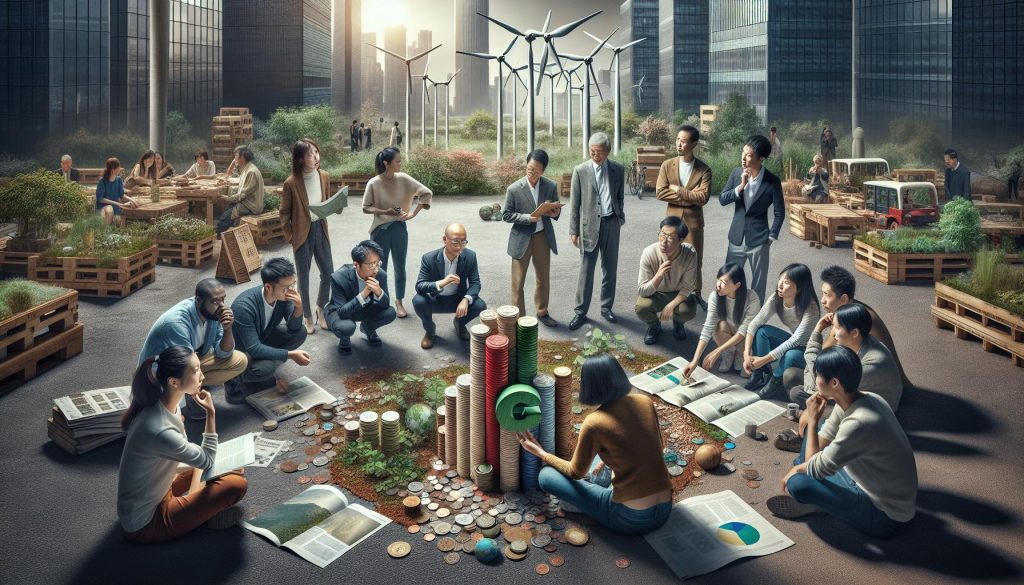
Discover how China plans to fund its climate change proposal. Uncover key strategies and innovative funding solutions that could reshape our planet’s future!
Will COP28’s Climate Fund Become Reality: What To Expect

Will COP28’s Climate Fund Become Reality? Discover what to expect and find out how this fund could reshape global climate action. Don’t miss essential insights!
How Much Does NASA Get Funded For Climate Change

Discover how much NASA gets funded for climate change and what it means for our planet. Learn the impact of this funding and why it matters for our future!
Who Funds The European Climate Foundation: Backers Revealed

Uncover the mystery: Who funds the European Climate Foundation? Discover the powerful backers and their impact on climate initiatives. Don’t miss this insight!
How Did The Political Climate In Italy Change After Unification?

Uncover how the political climate in Italy transformed after unification. Discover key changes that shaped modern Italy-don’t miss these crucial insights!
Who Is Funding The Paris Climate Agreement Right Now

Discover who is funding the Paris Climate Agreement right now! Uncover key players and their impact on our planet’s future-don’t miss this crucial insight!
Who Funds Sequoia Climate Foundation Behind The Scenes

Discover who funds Sequoia Climate Foundation behind the scenes and how their investments drive real environmental change. Uncover the secrets today!
Who Funds The Paris Climate Agreement And How Much

Discover who funds the Paris Climate Agreement and how much. Uncover key players and their financial commitments that drive global climate action!
How Is The Paris Climate Treaty To Be Funded

Discover how the Paris Climate Treaty will be funded! Learn the strategic financial plans and urgent actions needed to combat climate change effectively.
Which Countries Will Pay Into The Paris Climate Funds

Discover which countries will pay into the Paris Climate Funds and how their contributions impact global climate action. Don’t miss out on this vital information!
Foundational Pillars (Start Here)
How Does China Plan To Fund Climate Change Proposal
Empirical analysis evaluating transition pathways, systemic risk factors, and scalable solutions.
Will COP28's Climate Fund Become Reality: What To Expect
Empirical analysis evaluating transition pathways, systemic risk factors, and scalable solutions.
How Much Does NASA Get Funded For Climate Change
Empirical analysis evaluating transition pathways, systemic risk factors, and scalable solutions.
Multilateralism Under Pressure: Balancing Historic Responsibility and Future Emissions
Climate change is the preeminent global collective action problem. Emissions generated in one jurisdiction disperse globally, while the consequences often fall most severely upon developing nations that contributed least to historic atmospheric greenhouse gas concentrations. This asymmetry creates intense friction at annual United Nations Climate Change Conferences (COP), pitting historic emitters (the US and Europe) against emerging industrial powers (China and India) and vulnerable climate nations (Small Island Developing States).
The geopolitical agenda has expanded to encompass climate finance commitments, technology transfer treaties, and the operationalization of the landmark Loss and Damage Fund established at COP27. Concurrently, climate policy has entered the realm of international trade and industrial security, with superpowers competing aggressively for dominance over critical clean energy supply chains—from lithium and rare earth minerals to advanced battery manufacturing.
| Multilateral Arena | Key Stakeholders | Core Negotiating Friction | Primary Diplomatic Milestone |
|---|---|---|---|
| UNFCCC COP Negotiations | 198 Member States / Nation Parties | Fossil Fuel Phase-Out Language vs. National Sovereignty | Paris Agreement (2015) & UAE Consensus (2023) |
| Loss & Damage Fund | Developing Nations vs. Historic Emitters | Funding Governance, Contributor Base & Eligibility Criteria | COP27 Establishment & COP28 Operationalization |
| Climate Finance Mobilization | OECD Donors vs. Global South Nations | Fulfilling and Expanding the $100B+ Annual Climate Target | New Collective Quantified Goal (NCQG) |
| Clean Supply Chain Geopolitics | USA, European Union, China | Critical Mineral Subsidies, Tariffs & Export Controls | US IRA, EU Critical Raw Materials Act, China Quotas |
Thematic Directory & Environmental Research Guides
COP Summits & Multilateral Negotiations
Geopolitical Finance & International Philanthropy
Frequently Asked Questions
What is the principle of 'Common But Differentiated Responsibilities' (CBDR)?
CBDR is an international environmental law principle codified in the 1992 Rio Earth Summit, establishing that while all nations share responsibility for addressing climate change, developed countries must take the lead due to their historic emissions and greater financial capabilities.
What is the purpose of the UNFCCC Loss and Damage Fund?
The Loss and Damage Fund provides dedicated financial assistance to developing countries that suffer irreparable ecological, economic, and human losses from climate catastrophes (like sea-level rise or severe cyclones) that exceed their adaptation limits.
Why are critical raw materials central to modern climate geopolitics?
Clean technologies require vast quantities of minerals like lithium, cobalt, nickel, and rare earths; nations compete for supply chain dominance because controlling mineral processing and battery refining provides immense industrial and geopolitical leverage.