As climate change continues to escalate, the allocation of funds aimed at combating its effects remains a critical issue. In 2025, the possibility of Republicans removing climate change funding could have profound implications for environmental policy and economic stability. This potential shift raises concerns about our ability to address pressing global challenges, such as extreme weather events, rising sea levels, and public health crises. For many, the stakes are personal: clean air, safe neighborhoods, and a sustainable future for the next generation are on the line. As we navigate these uncertain waters, it’s essential to understand not just the political dynamics at play but also the real-world impacts of these funding decisions. Will we move forward with bold innovations in sustainability, or retreat into policies that overlook our planet’s urgent needs? Join us as we explore the complexities surrounding this pivotal topic, uncovering the motivations, implications, and possible paths forward in the fight against climate change.
Impacts of Republican Policies on Climate Funding
The prospect of Republican policies in 2025 signifies a potentially transformative phase for climate funding in the United States. Historically, the Republican Party has exhibited skepticism towards extensive climate initiatives, often prioritizing energy independence and economic growth over aggressive climate action. This shift in policy focus could lead to significant reductions in federal climate funding, reminiscent of cuts seen during the Trump administration, which slashed approximately $8 billion earmarked for climate-related projects and programs aimed at clean energy and research [[1]](https://www.cbsnews.com/news/government-shutdown-climate-cuts-8-billion/). Such decisions not only hinder progress but could also exacerbate environmental challenges, particularly in vulnerable communities.
Looking ahead, signals indicate that the 2025 Republican strategy may include further diminishment of funds dedicated to clean energy technologies and other climate initiatives. Reports suggest that House Republicans are considering substantial cuts to clean energy tax credits and federal supports for clean technology [[2]](https://www.cbpp.org/research/climate-change/with-federal-climate-funding-at-risk-policymakers-should-protect-benefits). This approach may not only threaten existing projects but may also deter private investments needed to spark innovation and expand green jobs. The potential for a funding decrease raises concerns about the future viability of initiatives designed to combat climate change, particularly for projects focused in low-income areas, which often rely on federal support for viability [[2]](https://www.cbpp.org/research/climate-change/with-federal-climate-funding-at-risk-policymakers-should-protect-benefits).
As public opinion concerning climate action shifts, Republican leaders will face pressure to reassess their stance, particularly given that cuts in climate funding have proven unpopular even among their voter base [[3]](https://yaleclimateconnections.org/2025/07/trumps-climate-research-cuts-are-unpopular-even-with-republicans/). The importance of climate funding, illustrated by ongoing environmental challenges, may catalyze calls for bipartisan solutions that balance economic growth with sustainable practices. Mobilizing grassroots advocacy for climate funding continuity could play a pivotal role in shaping future legislative agendas, ensuring that the environmental and social implications of funding cuts resonate with policymakers and constituents alike. Considerable engagement in these discussions is crucial to advance a sustainable future, regardless of the political climate.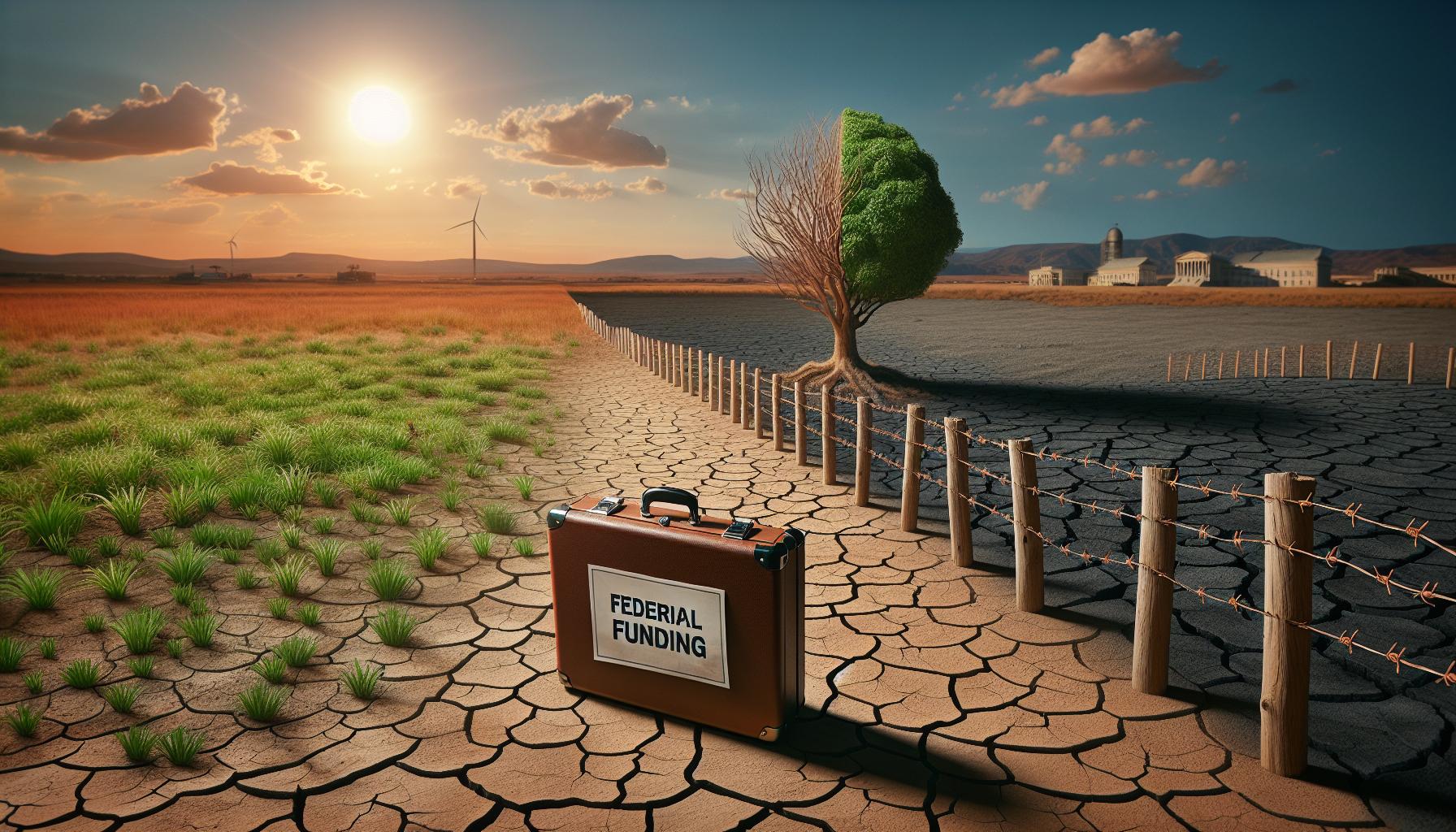
Understanding Climate Change Funding Mechanisms
Understanding the financial mechanisms that support climate change initiatives is increasingly vital, especially as political dynamics shift and funding sources are called into question. Federal climate funding often comes from a mix of direct allocations from government budgets, grants, and tax incentives designed to promote renewable energy and sustainability projects. These financial tools create a safety net that encourages innovation and facilitates the transition from fossil fuels to cleaner energy alternatives.
One of the primary channels for climate funding is federal grants administered by agencies such as the Environmental Protection Agency (EPA) and the Department of Energy (DOE). These grants finance specific projects, ranging from renewable energy deployments to research initiatives on climate resilience. For instance, initiatives like the Solar Investment Tax Credit (ITC) have significantly boosted solar energy adoption by offering tax incentives to both businesses and homeowners, effectively reducing the financial burden of transitioning to renewable energy sources.
In addition to grants, public-private partnerships play a crucial role in mobilizing investment for climate projects. These collaborations often bring together government resources and private sector innovation, allowing for enhanced funding capabilities and broader outreach. For example, the Green Climate Fund, established under the UN Framework Convention on Climate Change, unites public and private funding streams, drawing international investment to support developing nations’ climate resilience.
As we look to the future, understanding these mechanisms is essential, particularly in the context of proposed cuts to climate funding. Engaging in discussions about climate financing not only informs the electorate but also equips advocates with the knowledge needed to push for sustainable funding solutions that align with both environmental goals and economic growth. With an informed public, there remains hope for fostering bipartisan support that can sustain or even enhance climate funding in the face of political challenges.
Historical Context: Climate Funding in the U.S
The evolution of climate funding in the United States has been significantly influenced by sociopolitical trends and legislative changes over the decades. Initially, environmental funding began gaining traction in the 1970s with the establishment of the Environmental Protection Agency (EPA) and the passage of iconic legislation like the Clean Air Act and the Clean Water Act. This era marked the beginning of federal investment aimed at combating pollution and protecting natural resources, laying the groundwork for future climate initiatives.
In the 2000s, attention shifted towards addressing climate change specifically, resulting in the creation of various funding mechanisms focused on renewable energy and sustainability. The introduction of tax credits, such as the Renewable Energy Production Tax Credit (PTC) and the Investment Tax Credit (ITC), played a pivotal role in incentivizing private investment in green technologies. States began to adopt ambitious renewable energy standards, often dependent on federal funding to showcase successes in clean energy adoption.
However, the landscape of climate funding faced renewed scrutiny with the ascent of the Republican Party, particularly during and after the Trump administration. A notable moment occurred when nearly $8 billion allocated for climate-related projects in primarily blue states was canceled, reflecting a broader trend of diminishing federal support for climate initiatives. This shift in funding priorities has caused anxiety among environmental advocates and raised questions about the sustainability of previously initiated projects and the future trajectory of climate action in the U.S. As policymakers deliberate on budgetary appropriations for 2025 and beyond, the historical context of climate funding indicates that decisions made in the political arena can profoundly impact environmental progress and economic stability.
In engaging with this history, one can see the potential reductions in climate funding posed by incoming Republican leadership as not just a financial issue but as a pivotal moment that could redefine America’s commitment to addressing climate change in the coming years. Understanding how past policies have shaped current frameworks will be essential for advocates aiming to sustain or revitalize climate funding amidst evolving political dynamics. To navigate these challenges proactively, stakeholders must leverage historical context to advocate for robust funding mechanisms that not only foster innovation but also reflect the urgent demands of a changing climate.
Key Players: Who Decides Climate Change Budgets?
The allocation of climate change budgets is a complex process shaped by multiple key players whose decisions can significantly influence the trajectory of climate funding. At the forefront are members of Congress, particularly those on committees responsible for appropriations, like the House Appropriations Committee and its Subcommittee on Energy and Water Development. These politicians wield substantial power over which funding initiatives are prioritized, reflecting their constituents’ values and party alignment. With the Republican Party’s stance typically favoring reduced government intervention, the upcoming leadership could increasingly limit budget allocations for climate programs, especially given the party’s historical trend during the Trump administration that saw significant cuts to such funding.
Federal Agencies and Their Role
In addition to Congress, federal agencies such as the Department of Energy (DOE), the Environmental Protection Agency (EPA), and the Department of Agriculture play critical roles in deciding how climate funds are utilized. These agencies draft budget proposals that detail funding needs and project priorities based on policies set by the executive branch. For example, the DOE is pivotal in funding renewable energy projects, while the EPA manages budgets for pollution control and climate resilience programs. The influence of Republican leadership could lead to prioritizing traditional energy sectors over renewable initiatives, which may affect the agencies’ budget proposals.
State Governments and Local Authorities
At the state and local levels, governors and mayors can direct funding towards climate initiatives that align with their policy goals, often leveraging federal funds or state appropriations to support local projects. For instance, states with progressive climate policies may seek to maintain funding streams independent of federal sources, especially if federal budgets are slashed. This state-level autonomy can become a battleground for climate advocacy, particularly if federal constraints push local governments to innovate and seek alternative funding sources, such as public-private partnerships or state-enacted taxes dedicated to environmental projects.
Influence of Public Opinion and Advocacy Groups
Public opinion also plays a crucial role in influencing climate funding decisions. As concerns about climate change grow, advocacy groups and grassroots movements become increasingly instrumental in shaping political discourse, advocating for sustained or increased funding for climate initiatives. These actors can mobilize community support and apply pressure on key legislators to maintain or expand budgets for climate adaptation and mitigation. Engaging with these efforts can serve as an effective strategy for stakeholders looking to ensure continuity in climate funding amidst potential Republican-led budget cuts.
By understanding the interplay among these key players-Congress, federal agencies, state governments, and public advocacy groups-stakeholders can better navigate the potential landscape of climate funding in 2025 and beyond.
Projected Republican Strategies for 2025
signal a concerted effort to reshape the landscape of climate funding significantly. As the party navigates its ideologies, historical tendencies suggest that there may be a push towards reducing federal investments in climate initiatives, focusing instead on traditional energy sectors. During the Trump administration, nearly $8 billion in climate-related funding was reportedly canceled, framing climate policies within a contentious political narrative that branded such initiatives as part of a “Green New Scam” aimed at sustaining a so-called leftist agenda [2]. This precedent raises concerns that similar strategies may resurface, directing resources away from progressive climate actions in favor of more conservative, fossil fuel-friendly policies.
A potential Republican strategy could involve leveraging budget reconciliation processes to bypass Democratic opposition, allowing for direct cuts to environmental funding without the need for bipartisan support. This approach would enable the party to fulfill campaign promises related to fiscal conservatism while attempting to consolidate its base by emphasizing energy independence and market-driven solutions. By framing these budgetary decisions as fiscal responsibility, Republicans may also seek to counterbalance the growing public discourse advocating for climate action and sustainable investments.
Moreover, anticipated divisions within the Republican Party could further complicate the climate funding narrative. While more progressive members might advocate for a pragmatic approach that acknowledges climate change and its implications, hardliners can be expected to push back strongly against proposed funding increases or the continuation of existing programs deemed overly ambitious. This internal dynamic could lead to erratic policy-making, requiring stakeholders to remain vigilant and engaged in the political process to advocate for robust climate funding.
Ultimately, stakeholders interested in seeing sustained climate funding must mobilize strategically. Engaging with local advocacy groups, voicing public support for climate initiatives, and directly contacting representatives can form critical components of a grassroots strategy aimed at counteracting Republican-led budget cuts. Additionally, exploring alternative funding avenues such as public-private partnerships, state-level innovations, and community-led grants can help ensure that climate initiatives continue to progress regardless of federal funding shifts. By fostering collaborations and innovations at multiple levels, communities can become resilient against potential decreases in federal support.
Public Opinion and its Influence on Climate Funding
Public sentiment plays a pivotal role in shaping climate funding decisions, particularly as the political landscape shifts. Surveys indicate that a significant majority of Americans, across party lines, recognize climate change as a critical issue requiring immediate action. For instance, research has shown that approximately 70% of the public supports increased government investment in renewable energy, suggesting a demand for continuity and enhancement of climate funding that transcends partisan divides. This prevailing public concern could influence Republican policymakers, compelling them to consider the economic and social ramifications of cutting climate-related funds.
Moreover, recent history underscores how public opinion can pivotally impact funding priorities. During the Trump administration, attempts to slash nearly $8 billion from climate initiatives faced public backlash, demonstrating that constituents’ voices can significantly sway legislative direction. Grassroots movements and advocacy campaigns have mobilized communities, ultimately prompting some legislators to reconsider their positions on climate funding. With climate initiatives aligned not only with environmental benefits but also with job creation in renewable sectors, Republicans may find it politically expedient to engage in discussions that acknowledge public sentiment, even amid their fiscal conservatism stance.
As the landscape evolves heading into 2025, those concerned about climate funding should actively engage with their representatives. Utilizing practical strategies such as organizing town hall meetings, leveraging social media platforms, and joining advocacy organizations can amplify community voices. By presenting compelling data, personal stories, and the potential for job creation in the green economy, constituents can effectively argue for sustained or increased climate funding, appealing directly to the economic sensibilities of lawmakers who may prioritize their political survival.
Ultimately, public opinion is not merely a backdrop but a powerful force that can shape climate funding trajectories. Advocates should embrace informed optimism-by recognizing that collective actions can yield substantial results, they can foster a more resilient political environment in which climate initiatives are valued and protected, regardless of partisan disputes.
Alternative Funding Sources for Climate Initiatives
In a landscape where traditional government funding for climate initiatives faces uncertainty, especially with potential cuts looming under Republican policies, exploring alternative funding sources becomes critical for sustaining climate action. One significant avenue is private sector investment, which has been increasingly pivotal in financing renewable energy projects and green technologies. According to recent trends, venture capitalists and private equity firms are pouring billions into clean energy solutions, illustrating a robust appetite for innovative environmental startups. Engaging with these investors, municipalities, and organizations can leverage their resources and expertise to develop impactful climate strategies.
Public-Private Partnerships
One effective method of generating alternative funding is through public-private partnerships (PPPs). These collaborations between government entities and private companies can foster financial resources for climate projects. For instance, cities can partner with businesses to implement solar installations or green infrastructure improvements, sharing the costs while splitting returns from energy savings and increased property values. Such arrangements not only provide necessary funding but also promote shared responsibility for sustainability goals.
Green Bonds and Sustainable Finance
Another promising approach is the use of green bonds, which are specifically designed to fund environmentally friendly projects. These bonds have gained traction among governments and corporations looking to finance sustainable initiatives. By issuing green bonds, states and cities can raise capital for renewable energy, energy efficiency, and conservation efforts. For example, California has successfully used green bonds to finance clean energy projects, showcasing a method that can be replicated elsewhere, even amid shifting federal policies.
Encouraging community-based funding models presents yet another strategy. Initiatives like crowdfunding and community investment cooperatives can mobilize local resources, allowing citizens to invest directly in clean energy projects within their own communities. This not only democratizes funding access but also strengthens local support for sustainability efforts.
In summary, as potential cuts to traditional climate funding loom on the horizon, alternative mechanisms such as private investment, public-private partnerships, green bonds, and community financing offer viable pathways to sustain and enhance climate initiatives. By proactively exploring these options, stakeholders can continue to push forward despite political uncertainties, ensuring resilience in the fight against climate change.
Consequences of Reduced Climate Funding
The potential reduction of climate funding under Republican policies could have profound and far-reaching consequences for environmental initiatives across the United States. As these funds often serve as crucial support for clean energy projects, educational programs, and infrastructure improvements, cuts to this essential financing could stall progress on addressing climate change and transitioning to a sustainable economy. For instance, without appropriate funding, municipalities may struggle to implement renewable energy projects, such as solar energy installations or energy efficiency upgrades, which are vital for reducing greenhouse gas emissions.
Moreover, reduced funding may disproportionately impact vulnerable communities that rely on federal assistance to green their neighborhoods and participate in the clean energy economy. Many programs aim to lower energy costs for low-income households, helping them transition to renewable energy sources and improve energy efficiency in their homes. Cuts to these programs may not only hinder progress towards equity in energy access but also increase energy poverty, putting unnecessary strain on already marginalized communities.
Impact on Innovation and Job Creation
Investment in climate initiatives not only addresses environmental concerns but also fosters innovation and job growth. The clean energy sector has been a significant source of employment, with jobs in renewable energy technologies growing at an impressive rate. A decline in federal support could lead to a slowdown in job creation in this sector, hampering the development of new technologies and the overall competitiveness of the U.S. in the global market. For businesses focused on sustainability, reduced funding could limit research and development efforts, constraining the advancement of critical green technologies necessary for combating climate change.
In response to these potential setbacks, stakeholders must consider alternative funding strategies. Public-private partnerships, for instance, can effectively combine resources from both government and private sector investors to ensure critical projects move forward despite funding cuts. By collaborating on renewable energy initiatives, local governments can mobilize private investments, thus mitigating the adverse effects of federal budget reductions while still addressing community needs for climate action.
Ultimately, the possible underscore the importance of sustained and committed investment in environmental initiatives. As climate change continues to pose existential threats to ecosystems and communities, finding innovative financing mechanisms and fostering private sector involvement will be crucial. Building resilient frameworks can empower localities to continue their efforts in battling climate change, ensuring a sustainable future regardless of the political landscape.
Success Stories: States and Cities Combatting Climate Change
A shining example of effective climate action can be found in the various initiatives led by states and cities across the United States, demonstrating resilience and innovation despite the uncertainty around federal climate funding. For instance, California has long been at the forefront of climate policy, implementing ambitious goals to reduce greenhouse gas emissions while fostering clean energy growth. The state aims to achieve carbon neutrality by 2045, supported by policies that promote renewable energy sources like solar and wind. Programs such as the California Solar Initiative have made solar power more accessible, driving a significant increase in solar installations. This approach not only alleviates reliance on fossil fuels but also stimulates local economies by creating jobs in renewable energy sectors.
Similarly, cities like Seattle and New York are taking bold steps to build sustainable urban environments. Seattle’s 2030 District initiative encourages collaboration between public and private sectors to improve building efficiency and reduce greenhouse gas emissions. The program has facilitated substantial energy savings in commercial buildings through retrofitting and innovative energy management practices. New York City’s “OneNYC” plan outlines a comprehensive approach to sustainability, focusing on reducing waste pollution, increasing green spaces, and enhancing public transportation systems. These strategies not only address climate change but also improve quality of life for residents, proving that local actions can lead to significant impacts.
Moreover, community-driven projects are making a remarkable difference. In Austin, Texas, community solar programs allow residents to invest in solar energy, even if they can’t install panels on their own properties. This inclusive approach ensures that underserved communities gain access to renewable energy and its associated cost savings. By prioritizing equity in climate action, these projects help alleviate energy poverty, demonstrating how localized solutions can empower communities.
As the landscape of climate funding continues to evolve, these success stories highlight the importance of sustained investments in local initiatives. They show that even in challenging political conditions, cities and states can lead the way in combatting climate change and fostering sustainable development. By leveraging partnerships, exploring alternative funding sources, and focusing on community engagement, these efforts pave the path for a greener future, demonstrating that local solutions can thrive amidst uncertainty.
Potential Legislative Changes After the 2024 Elections
As the political landscape shifts after the 2024 elections, the future of climate change funding in the U.S. could undergo significant transformations, particularly if Republicans gain greater influence in Congress. Considering the administration’s previous actions, including the cancellation of nearly $8 billion in climate-related funding aimed predominantly at Democratic-controlled states, the implications for future climate initiatives are concerning.
In the event of a Republican majority, we could witness a shift towards prioritizing budget allocations that favor fossil fuel industries while deprioritizing federal support for renewable energy projects. This could result in reallocating funds from essential climate initiatives to bolster oil and gas interests, severely impacting states and communities striving to combat climate change. On the other hand, there is potential for bipartisan efforts to emerge, especially as public opinion increasingly favors sustainable practices and environmental reform. This could lead to negotiations that maintain some semblance of climate funding, albeit with more stringent guidelines tied to fiscal conservatism.
Historically, legislative changes are often framed around budgetary concerns, and this trend is likely to continue. If proposed funding for climate initiatives is seen as extravagant or misaligned with immediate fiscal priorities, those initiatives could face substantial cuts. Advocates for sustainable funding must mobilize efforts to present compelling data illustrating the economic benefits of investing in green technologies and infrastructure. Highlighting success stories-such as job creation within the renewable energy sector-can serve as powerful narratives that inform and persuade lawmakers.
Ultimately, navigating the potential legislative changes requires proactive engagement from stakeholders at all levels. Community leaders, environmental advocates, and businesses committed to sustainability must unify their voices to advocate for continued support for climate initiatives. By establishing clear channels for dialogue and emphasizing the economic and social return on investment of climate funding, stakeholders can better position themselves to influence decision-making in Congress, irrespective of the political makeup.
How to Advocate for Climate Funding Continuity
To ensure continuity in climate funding amidst potential political changes, it is imperative for communities, individuals, and organizations to adopt proactive strategies that engage lawmakers, raise public awareness, and forge partnerships. One effective approach is actively participating in local and national advocacy efforts. By joining or forming coalitions with environmental groups, local businesses, and community organizations, advocates can create a unified voice that emphasizes the economic, environmental, and social benefits of continued funding for climate initiatives.
Another critical strategy is to communicate compelling narratives that resonate with diverse audiences. Sharing success stories, such as local renewable energy projects that have created jobs or improved community resilience, can illustrate the tangible benefits of climate funding. For instance, highlighting how investments in solar energy have lowered energy costs in specific communities can underscore the financial advantages of sustainable investments. This approach not only informs but also inspires action among constituents who may influence their representatives.
Engaging with policymakers directly is also essential. Advocates can schedule meetings with local legislators to discuss the potential impact of funding cuts on their communities, emphasizing specific projects that rely on federal support. During such discussions, presenting data that connects climate funding to local economic development-such as job creation in green industries-can make a persuasive case. Utilizing widely recognized economic studies that show the long-term cost savings associated with climate action can also bolster arguments against funding cuts.
Finally, leveraging social media and traditional media platforms to amplify messages is crucial in today’s digital landscape. Advocates should consider organizing campaigns that not only raise awareness but also mobilize public opinion. This includes creating petitions, shareable infographics, and engaging video content that simplifies and explains the importance of climate funding. By fostering a solid grassroots movement that reflects broad public support, stakeholders can create a compelling argument that makes it difficult for legislators to disregard climate funding in the face of shifting political priorities.
By taking these steps, advocates can enhance the chances of maintaining climate change funding amidst potential reductions, ensuring that environmental initiatives remain a priority in national policy discussions.
The Global Perspective: Learning from Other Nations
Around the world, various countries have adopted innovative strategies to address climate change, providing valuable lessons for U.S. policymakers as debates intensify about the future of climate funding. For instance, Germany’s Energiewende, or “energy transition,” showcases how robust public investment in renewable energy can drive both environmental sustainability and economic growth. By shifting from fossil fuels to renewables, the country not only significantly reduced greenhouse gas emissions but also created approximately 400,000 jobs in the renewable energy sector, illustrating a direct link between climate funding and job creation that U.S. advocates might emphasize in their discussions.
Similarly, Costa Rica stands out as a remarkable case of effective climate financing. The nation invests heavily in reforestation and conservation efforts funded by a fee on fossil fuels. By generating approximately $24 million annually from this initiative, Costa Rica has successfully restored millions of hectares of forest, showcasing a sustainable model where environmental health can bolster tourism and biodiversity. Such examples highlight alternative funding mechanisms that may be replicated or adapted in the U.S., especially in light of political shifts affecting federal budgets.
In New Zealand, the government has focused on integrating indigenous knowledge into environmental policies, emphasizing community-led conservation efforts. This approach has not only empowered local populations but also brought about profound ecological benefits, such as the restoration of native forests and improvements in water quality. By fostering public participation and aligning climate strategies with cultural values, there are lessons that can be applied in the U.S. to enhance public support for climate funding, especially in areas where skepticism may exist.
Ultimately, as the U.S. navigates potential policy changes in 2025, these international examples can serve as compelling narratives for advocates aiming to secure ongoing climate funding. By demonstrating how targeted investments in climate initiatives can lead to comprehensive benefits-economic growth, job creation, and community resilience-advocates can make a more persuasive case for why sustained funding is crucial, regardless of the political landscape.
Frequently Asked Questions
Q: Will Republicans cut climate change funding in 2025?
A: It is likely that Republicans will seek to reduce climate change funding in 2025, as recent trends show opposition to government expenditure on environmental initiatives. Monitoring government proposals and public reactions can provide insights into these funding decisions.
Q: What specific climate programs might be affected by potential cuts?
A: Potential cuts could target programs aimed at renewable energy, emissions reduction, and climate resilience. Recent reports indicate significant funding for such programs may be at risk if Republican priorities lean toward decreasing government spending on climate efforts.
Q: How could reduced climate funding impact local communities?
A: Reduced climate funding could lead to increased vulnerability to climate-related disasters for local communities by limiting investment in infrastructure that mitigates flooding, heat, and other climate effects. Engaging with local advocacy groups can foster resilience in these communities.
Q: Are there alternative funding options for climate initiatives if federal funds are cut?
A: Yes, alternative funding can include state grants, private investments, and nonprofit partnerships. Local governments and organizations can explore these options to continue supporting climate initiatives despite federal funding challenges.
Q: How can citizens advocate for climate funding preservation?
A: Citizens can advocate by contacting their elected representatives, participating in community forums, and joining advocacy groups. Public opinion can significantly influence budget priorities, especially leading up to elections.
Q: What role does public opinion play in climate funding decisions?
A: Public opinion is crucial as it can sway legislators to prioritize climate funding or withdraw support. Evidence suggests that widespread public concern about climate change can lead to increased funding for related programs.
Q: What are the historical trends of climate funding under Republican leadership?
A: Historically, Republican leadership has shown a tendency to cut funding for climate initiatives, prioritizing economic growth and reduced government expenditure. This suggests potential future actions will align with this trend.
Q: How might the 2024 elections influence climate funding in 2025?
A: The outcomes of the 2024 elections could significantly affect climate funding strategies. If Democrats gain more seats, it may lead to increased funding initiatives; conversely, more Republican seats could result in continued cuts or restrictions on climate-related budgets.
Insights and Conclusions
As we look ahead to 2025, the possibility of Republicans removing climate change funds raises critical questions about our environmental future. Understanding the potential implications could shape informed decisions in both public policy and personal investments. If you’re concerned about how these changes may impact climate initiatives and your financial wellbeing, now is the time to stay informed. Explore our in-depth analysis on the ramifications of reduced funding and discover strategies to adapt.
For more insights, check out our articles on “The Economic Impact of Climate Policy Changes” and “How to Prepare for Shifts in Environmental Legislation.” Engage with us by sharing your thoughts in the comments-your voice matters in this crucial conversation! And don’t forget to subscribe to our newsletter for the latest updates and expert insights delivered right to your inbox. Taking action now can help us navigate the changes ahead and ensure a sustainable future for all.