As climate change continues to reshape our planet, the frequency and intensity of natural disasters are on the rise, affecting millions around the world. From devastation caused by hurricanes and wildfires to the havoc of floods and droughts, the correlation between climate change and extreme weather events is becoming increasingly evident. Understanding how climate change amplifies these disasters is crucial for protecting our communities and the environment.
By exploring this pressing issue, we can uncover the science behind rising temperatures, shifting weather patterns, and their impact on our daily lives. As you read on, you’ll discover not only the realities of climate-induced disasters but also actionable insights on how we can mitigate these effects and foster resilience within our communities. Join us in unraveling the urgent question: Does climate change really increase natural disasters? Your awareness and engagement are vital steps toward making informed choices for a sustainable future.
Does Climate Change Really Increase Natural Disasters?
The increasing intensity and frequency of natural disasters, such as hurricanes, floods, and wildfires, can be attributed to climate change, a crisis escalating due to elevated greenhouse gas emissions. A landmark report from the World Meteorological Organization indicated that 2024 was one of the warmest years on record, resulting in unprecedented sea-surface temperatures and widespread marine heatwaves. These elements collectively stress the planet’s ecosystems and contribute to increasingly severe weather patterns, leading to more frequent natural disasters that disrupt lives and economies [[1]](https://wmo.int/publication-series/state-of-climate-africa-2024).
The science behind this phenomenon lies in the way warmer temperatures alter atmospheric conditions. For instance, warmer air holds more moisture, leading to heavier rainfall during storms, which can cause catastrophic flooding. Additionally, higher sea temperatures can increase the intensity of hurricanes, making them more destructive. Studies show that with each degree rise in global temperature, the intensity of extreme weather events is expected to grow, prompting devastating impacts on communities, particularly in vulnerable regions [[2]](https://wmo.int/publication-series/wmo-global-annual-decadal-climate-update-2025-2029).
To combat these challenges, communities must adapt by investing in resilient infrastructure, enhancing disaster preparedness programs, and implementing sustainable land-use practices. Efforts to reduce emissions can mitigate some effects of climate change, but immediate action is crucial in communities most prone to natural disasters. This proactive approach not only helps safeguard lives and property but also fosters community cohesion and resilience in the face of climate challenges.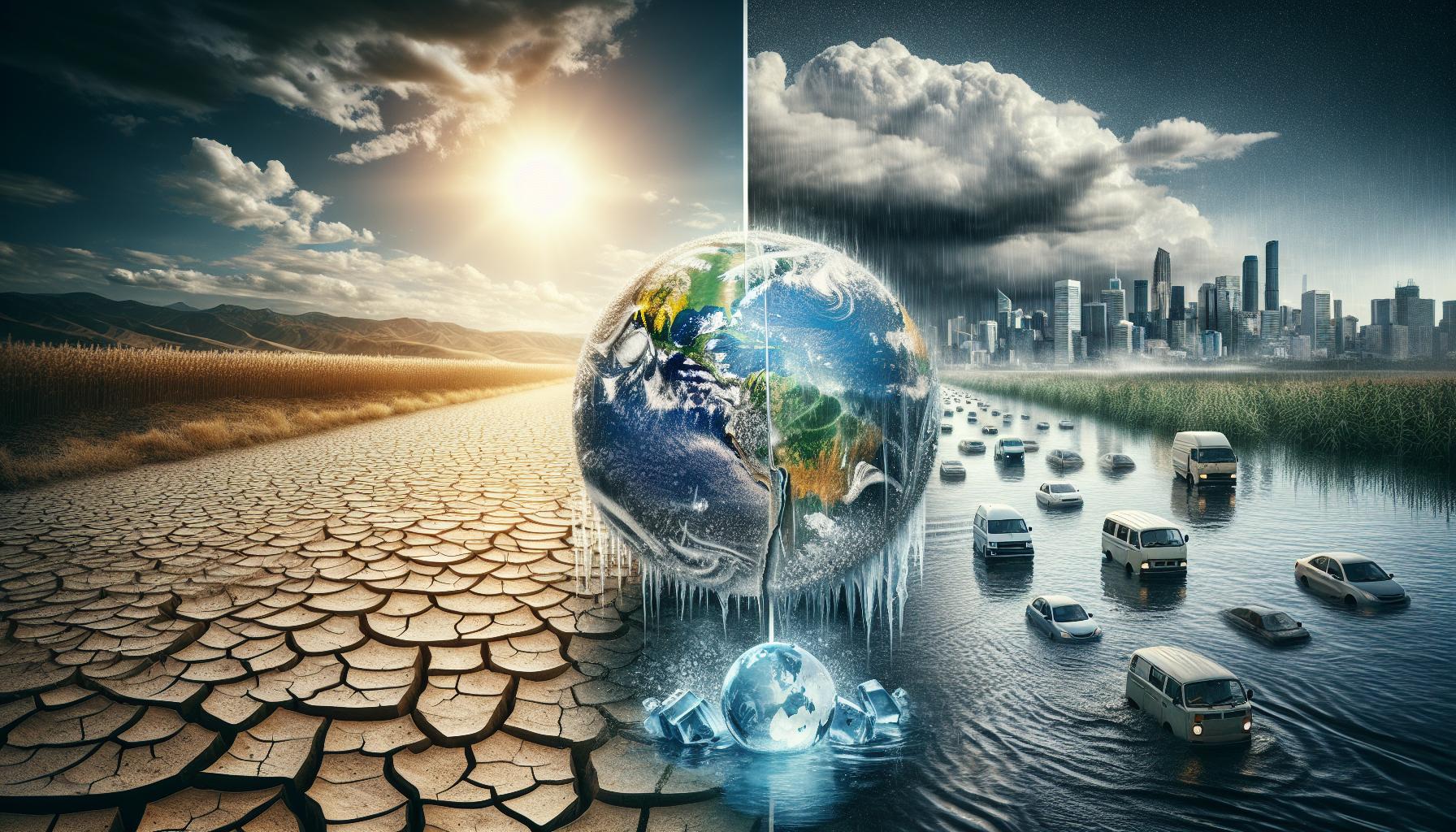
The Science Behind Climate Change and Extreme Weather
As global temperatures rise, the interplay between climate change and extreme weather becomes ever clearer. For instance, warmer air can hold significantly more moisture-approximately 7% more moisture for every degree Celsius increase in temperature. This fundamental change in atmospheric conditions contributes to heavier rainfall during storms, leading to severe flooding and landslides that devastate communities and disrupt economies. The World Meteorological Organization reported that 2024 has been marked by unprecedented sea-surface temperatures, which not only underscores the current climatic shifts but also correlates directly with the growing intensity of natural disasters around the world [[1]](https://wmo.int/publication-series/state-of-climate-africa-2024).
The effects of climate change extend beyond just precipitation. As ocean temperatures increase, they fuel the formation of more powerful hurricanes and typhoons. For instance, warmer waters can intensify these storms, making them not only stronger but also more capable of causing widespread destruction upon landfall. Studies indicate that the destructive power of a hurricane increases substantially with rising sea temperatures, illustrating the urgent need for communities near coastlines to bolster their hurricane preparedness and infrastructure resilience [[2]](https://wmo.int/news/media-centre/global-climate-predictions-show-temperatures-expected-remain-or-near-record-levels-coming-5-years).
Moreover, climate change is catalyzing shifts in global weather patterns, leading to prolonged periods of drought in some regions while others experience significantly increased rainfall. This variability can create a cycle of crop failures and food insecurity, disproportionately affecting vulnerable populations. To combat these challenges, communities can adopt practical measures such as enhancing local water conservation techniques, improving land-use practices, and investing in resilient infrastructure to withstand extreme weather events. These proactive strategies not only help mitigate the impacts of disasters but also foster a culture of preparedness and sustainability that can ultimately lead to stronger, more resilient communities.
Defining Natural Disasters: Types and Impacts
Natural disasters are catastrophic events that disrupt the functioning of a community or society, causing significant damage to life, property, and the environment. These events can be categorized into several types, including geological (earthquakes, tsunamis), meteorological (hurricanes, tornadoes), hydrological (floods, landslides), and climatological (droughts, heatwaves). Each type brings unique challenges and impacts, often exacerbated by climate change.
The effects of natural disasters are vast and multi-faceted. Economically, damages can reach into billions, straining public resources and hindering development. Socially, the impacts can lead to loss of life, forced migration, and long-term health issues for affected populations. For example, hurricanes and floods not only destroy homes and infrastructure but can also lead to waterborne diseases and mental health crises in the aftermath. As seen in severe events like Hurricane Katrina or the recent floods in Pakistan, vulnerable populations are often the hardest hit, heightening existing inequalities.
To understand the link between climate change and the increased frequency and intensity of these disasters, it’s crucial to recognize how rising global temperatures alter weather patterns. Warmer air can hold more moisture, intensifying rainfall and resulting in catastrophic flooding. Coastal regions are witnessing the deleterious combination of rising sea levels and more powerful hurricanes, which together amplify their destructive capacity. Moreover, regions that historically experienced mild weather are now facing extreme heat and droughts, leading to food insecurity and affecting livelihoods.
Communities can take proactive measures to mitigate the impacts of these natural disasters. This includes investing in resilient infrastructure, improving emergency preparedness, and adopting sustainable land-use practices. For instance, incorporating green spaces in urban planning can absorb excess rainwater during storms, while efficient water management systems can support agriculture during prolonged droughts. By fostering a culture of resilience, communities can significantly reduce the toll of natural disasters exacerbated by climate change and prepare for future challenges.
Global Climate Patterns and Weather Extremes
The dramatic shift in global climate patterns is not just a distant threat; it’s an urgent reality that is reshaping our weather extremes. For instance, the increase in average global temperatures is directly correlated to a rise in the frequency and intensity of severe weather events. The Intergovernmental Panel on Climate Change (IPCC) recently reported that extreme weather events, such as heatwaves, heavy rainfall, and hurricanes, have become noticeably more frequent since the mid-20th century, highlighting a clear connection to anthropogenic climate change.
Weather systems are fundamentally altered as the planet warms. For one, warmer air holds more moisture-about 7% more for every degree Celsius increase-which can lead to intense rainfall and flooding. A compelling example can be seen in the unprecedented rainfall and devastating floods across parts of Europe in 2021, which were linked to warmer temperatures and changes in jet stream patterns. Such heavy precipitation events are created when moisture-laden air masses collide with cooler temperatures, exemplifying how one region’s change can impact entire weather systems globally.
On the opposite end of the spectrum, rising temperatures contribute to prolonged droughts, leading to significant water shortages in various regions. The American Southwest, for instance, has been grappling with an ongoing megadrought affecting water supplies and agriculture. This situation underscores a dual challenge, as the same climate phenomenon that fosters severe storms can also create conditions ripe for drought, impacting food security and local economies.
To adapt to these changing climate patterns, communities can implement several strategies. Investing in green infrastructure, such as permeable pavements and urban green spaces, can help absorb excess rainwater and reduce flooding risks. Additionally, agriculture must evolve through drought-resistant crops and intelligent water management techniques. By proactively addressing these challenges, we can enhance resilience and mitigate the risks associated with climate change-driven extreme weather.
How Rising Temperatures Fuel Natural Disasters
The undeniable reality is that rising global temperatures are driving a significant transformation in the frequency and intensity of natural disasters. As the planet warms, the atmosphere can hold roughly 7% more moisture for every degree Celsius increase. This heightened moisture content is not just an abstract statistic; it translates into heavier rainfall and increased flooding. For example, the catastrophic floods experienced in Europe in 2021 were directly linked to these shifts, where warm, moisture-laden air collided with cooler temperatures, resulting in unprecedented rainfall that devastated communities and infrastructure.
Rising temperatures also exacerbate other types of natural disasters, notably droughts. Areas like the American Southwest have been suffering from prolonged periods of drought, referred to colloquially as a megadrought. This phenomenon is not isolated; it’s indicative of broader climate shifts that foster conditions for both excess and deficit-where the same climatic changes that fuel severe storms can also create parched landscapes. These droughts lead to critical water shortages, affecting agriculture, drinking water supplies, and overall food security, showcasing how interconnected these climate impacts are.
Additionally, the warming ocean waters are a catalyst for more powerful hurricanes and tropical storms. Warmer seas provide additional energy that fuels these storms, leading to increased wind speeds and rainfall amounts. For instance, studies show that storms have been intensifying, resulting in greater disaster risk for coastal communities. As these weather events become more severe, they threaten infrastructure, disrupt livelihoods, and provoke economic instability.
To address the impending challenges posed by climate-induced natural disasters, communities can adopt several practical strategies. Emphasizing green infrastructure-such as rain gardens and permeable pavements-can mitigate flooding by absorbing excess stormwater. Meanwhile, integrating drought-resistant crops and sustainable agricultural practices into farming can enhance resilience against dry spells. By recognizing the profound links between rising temperatures and natural disasters, societies can take proactive steps to adapt and thrive in a changing climate.
The Link Between Climate Change and Hurricanes
The power of hurricanes has long captivated and terrified communities along coastlines, but recent science shows that climate change is altering the very nature of these storms, leading to more intense and potentially catastrophic impacts. Ocean temperatures have been steadily rising, reaching levels that significantly contribute to hurricane strength. Warmer waters serve as fuel for these storms, causing them to grow in power and speed, which in turn increases the risk of devastating landfalls.
Hurricanes thrive on heat, and every degree Celsius increase in sea surface temperature can bolster storm intensity. This phenomenon is not merely theoretical; data clearly illustrates a trend of increased hurricane activity over the last few decades. For instance, storms such as Hurricane Harvey in 2017 and Hurricane Dorian in 2019 exhibited not only higher wind speeds but also an unprecedented capacity for rainfall, resulting in severe flooding that overwhelmed infrastructure and emergency services. Communities that previously felt shielded from the impact of hurricanes are now experiencing unprecedented levels of risk.
To combat the growing threat of hurricanes, communities can take proactive measures to enhance resilience. Implementing robust building codes that account for higher wind speeds and potential flooding can significantly mitigate damage. Additionally, investing in natural barriers such as wetlands and mangroves can absorb storm energy and reduce coastal erosion. Public education campaigns focusing on emergency preparedness and effective response strategies also empower citizens to respond more effectively in the face of impending storms.
Understanding the relationship between rising temperatures and hurricane behavior is crucial for effective planning and resilience building. As climate change is projected to persist, communities must adapt their infrastructures and emergency services to reflect these evolving threats, ensuring that they are not just reacting to storms, but preparing for a future where hurricanes may become more frequent and intense.
Flooding: Climate Change’s Growing Threat
As global temperatures continue to rise, flooding is becoming an increasingly prevalent and devastating outcome of climate change. Research shows that climate change is intensifying rainfall patterns and melting glaciers, contributing to higher water levels in rivers and seas. For instance, in the U.S., the frequency of heavy rainfall events has increased by nearly 30% since the 1950s, leading to severe flooding that impacts not just urban areas but also rural communities and agricultural lands.
One of the critical aspects of flooding’s relationship with climate change is the phenomenon known as “atmospheric rivers.” These are long, narrow bands of moisture in the atmosphere that can transport vast amounts of water vapor from tropical regions to mid-latitude areas. With the atmosphere warming, the capacity of these systems to hold moisture increases. Consequently, when they encounter mountainous terrain, they release this moisture as heavy rain or snow, leading to significant flooding events. A notable example is the catastrophic flooding in New Orleans post-Hurricane Katrina, where heavy rainfall combined with rising sea levels overwhelmed the levees.
Practical Steps for Mitigation
To combat the growing threat of flooding, communities can adopt proactive measures:
- Invest in Infrastructure: Building or upgrading drainage systems to handle excessive rainfall can reduce flooding risks. Cities can implement green infrastructure solutions, such as permeable pavements and green roofs, that absorb rainwater.
- Implement Zoning Regulations: Accurate land-use planning that restricts development in flood-prone areas can minimize the potential for property damage and loss of life.
- Enhance Early Warning Systems: Advanced meteorological technology can improve flood forecasting and provide timely warnings to communities, enabling them to take necessary precautions.
- Community Education and Preparedness: Educating residents about flood risks and emergency response plans can empower them to act swiftly and minimize damage when flooding occurs.
Real-World Examples
Some regions have successfully implemented measures to lessen flooding impacts. For instance, the Netherlands has long been a leader in flood management, utilizing a combination of dikes, levees, and innovative water management strategies to protect against sea-level rise and severe storms. In contrast, areas like Bangladesh, which are frequently subjected to flooding due to both river overflow and cyclone impacts, have invested in early-warning systems and community training to improve resilience.
Ultimately, the connection between climate change and flooding necessitates a comprehensive and multi-faceted approach. By blending technology, community engagement, and sustainable urban planning, we can significantly reduce the threats posed by flooding in an era where climate-induced disasters are likely to become increasingly common.
Droughts and Their Connection to Global Warming
The alarming increase in droughts worldwide highlights an urgent issue linked to climate change that impacts millions of people and threatens ecosystems. Research demonstrates that higher global temperatures lead to increased evaporation rates from both soil and water bodies, effectively drawing moisture away from the environment. For instance, regions that traditionally enjoyed consistent precipitation patterns are now experiencing prolonged dry spells, depleting water sources and jeopardizing agricultural productivity.
To understand the connection between rising temperatures and droughts, it’s essential to consider the concept of “aridity.” As the planet warms, areas that are already dry are becoming drier, while others are experiencing an increased frequency of drought conditions. A case in point is the western United States, which has encountered severe drought conditions over the past two decades, dramatically affecting water supply, agriculture, and groundwater levels. Reports indicate that 2021 was the driest year on record for some parts of the region, leading farmers to abandon crops and significantly impacting food supply chains.
Practical Steps to Combat Drought
Mitigating the effects of drought requires strategic planning and action. Here are several practical measures communities can adopt:
- Implement Water Conservation Practices: Simple changes, such as using drought-resistant plants in landscaping and promoting efficient irrigation techniques, can significantly reduce water consumption.
- Enhance Rainwater Harvesting: Encouraging systems to collect and store rainwater can help communities utilize natural rainfall more effectively, reducing reliance on municipal water sources.
- Adopt Sustainable Agricultural Techniques: Utilizing methods like drip irrigation and soil moisture monitoring can improve crop resilience and minimize water waste.
- Invest in Infrastructure: Upgrading water distribution systems can help reduce leakage and ensure that existing supplies are used more efficiently.
Real-World Examples of Resilience
In response to these challenges, several regions are innovating to combat drought. For example, Israel has invested heavily in drip irrigation technology, revolutionizing agricultural water use and allowing farmers to grow crops in arid conditions. Meanwhile, California has enacted water use restrictions and conservation campaigns, leading to a reduction in urban water consumption by nearly 20% during critical drought years.
Addressing the challenges posed by drought in the context of climate change necessitates a multifaceted approach that emphasizes resilience and adaptation. By placing focus on efficient water use, innovative agricultural techniques, and community engagement, societies can build robustness against the increasingly frequent and severe drought events linked to a warming planet.
The Role of Human Activity in Natural Disasters
Many people might be surprised to learn that human activities are significantly influencing the frequency and intensity of natural disasters across the globe. The relationship between human behavior and natural disasters is often underappreciated, yet evidence shows that our actions directly exacerbate climate change, leading to potentially devastating consequences. The increase in greenhouse gas emissions from industrial activities, deforestation, and urbanization has resulted in rising global temperatures that disrupt weather patterns, making severe weather events more common and severe.
Urban development plays a crucial role in shaping natural disaster outcomes. As cities expand, they often encroach on floodplains and other vulnerable areas, increasing the likelihood of flooding when extreme weather strikes. For instance, the construction of impermeable surfaces, like roads and buildings, limits the natural absorption of rainwater, leading to greater runoff and subsequent urban flooding. In cities like Houston, Texas, rapid urban development combined with extreme rainfall events has led to catastrophic flooding that displaces communities and causes significant economic losses.
Mitigating Human Impact Through Sustainable Practices
To confront the escalating threat of natural disasters connected to climate change, it is vital for individuals and communities to adopt sustainable practices. Effective actions can include:
- Reducing Carbon Footprint: Individuals can minimize their impact by using public transportation, reducing energy consumption, and choosing renewable energy sources.
- Implementing Green Infrastructure: Cities can invest in green roofs, permeable pavements, and urban forests that absorb rainwater and reduce heat, thus mitigating flooding and heat waves.
- Community Engagement: Educating communities about disaster preparedness and response can lead to more resilient populations capable of reacting to emergencies effectively.
- Policy Advocacy: Supporting policies that mitigate climate change, such as emissions reductions and conservation efforts, can contribute to broader systemic changes.
Real-World Success Stories
Several regions have successfully mitigated the impacts of human activities on natural disasters. In the Netherlands, for instance, innovative flood management techniques incorporate natural systems alongside heavy engineering, using wetlands and water storage areas to manage excess water. As a result, the country has significantly reduced the risk of flooding in urban areas while preserving ecological benefits. Similarly, in Singapore, urban planning emphasizes greenery and biodiversity, integrating parks and green corridors that enhance stormwater management and improve urban resilience.
Addressing the role of human activity in the context of natural disasters involves a collective shift towards sustainable practices and disaster preparedness. By fostering community engagement, supporting innovative solutions, and advocating for responsible policies, we can curb our contribution to climate change and its devastating impacts, ultimately creating a safer environment for current and future generations.
Case Studies: Disasters Linked to Climate Change
As the fury of natural disasters continues to escalate, understanding their connection to climate change has never been more crucial. One compelling example is Hurricane Harvey, which struck Texas in August 2017, dumping over 60 inches of rain in some areas. This catastrophic flooding was attributed in part to climate change, with studies indicating that warmer atmospheric temperatures can hold more moisture, intensifying storms and their impact. Urban areas like Houston, which is characterized by extensive impervious surfaces, were particularly vulnerable, leading to widespread destruction and displacing thousands.
Similarly, the recent wildfires in Australia during the 2019-2020 season serve as another poignant case study. A combination of prolonged drought conditions and soaring temperatures, both linked to climate change, contributed to the ferocity and scale of these fires. The fires burned millions of acres, devastated ecosystems, and led to air quality crises far beyond the immediate areas. These events demonstrate the interplay between climate conditions and extreme weather, underscoring how climate change exacerbates these natural disasters, which could have been less severe under historical climate patterns.
Communities are increasingly adopting innovative strategies to mitigate the impacts of climate change-related disasters. For instance, in the Philippines, the local government in Manila has enhanced its disaster preparedness by incorporating climate projections into urban planning. This proactive approach includes building flood retention basins and integrating green spaces to manage rainfall. By investing in such infrastructure, communities are not only safeguarding their residents but also fostering resilience against a backdrop of changing climate dynamics.
As these examples reveal, the link between climate change and natural disasters is not just a theoretical concern; it is a stark reality affecting millions worldwide. By examining case studies like Hurricane Harvey and the Australian wildfires, valuable lessons emerge on the urgent need for adaptive measures and sustainable practices to lessen the impact of future disasters. Adopting a holistic approach that combines community preparedness, responsible urban planning, and environmental conservation is vital in creating resilient societies capable of facing the challenges posed by a changing climate.
Preparing Communities for Climate-Driven Disasters
As natural disasters become increasingly frequent and severe due to climate change, it is essential for communities to proactively prepare for these challenges. Effective preparation not only safeguards lives and property but also fosters resilience, enabling societies to bounce back more swiftly from calamities. Community-driven initiatives, informed by climate data and local needs, play a crucial role in this endeavor.
One practical approach to preparation involves developing comprehensive disaster response plans that are regularly updated based on the latest climate projections. Communities can establish early warning systems that utilize technology to provide timely alerts regarding extreme weather events. Notably, the city of New Orleans has implemented an advanced emergency management system that uses GIS technology to analyze risk zones and notify residents during hurricanes or floods. This method significantly enhances public safety and minimizes the chaos that often follows natural disasters.
Building infrastructure that can withstand extreme weather events is another critical aspect of community preparedness. For instance, in the Netherlands, a country renowned for its innovative water management systems, municipalities have adopted strategies such as creating green roofs, expanding parks, and developing water plazas that absorb excess rainwater. These environmentally friendly designs not only mitigate flooding but also improve urban air quality and promote biodiversity. By investing in such adaptive infrastructure, communities recognize the dual benefits of enhancing resilience while fostering a healthier environment.
Training and engaging community members in disaster response is equally vital. Programs that educate citizens on emergency preparedness, such as creating family emergency kits or conducting evacuation drills, empower individuals and promote a culture of readiness. Participatory workshops can help residents understand local hazards and collaborate on developing community plans tailored to their unique geographic and socio-economic contexts. Furthermore, involving local schools and organizations in these initiatives ensures that preparedness becomes a shared community ethos, strengthening social bonds as well.
Ultimately, effective preparation requires a multifaceted approach that combines informed planning, investment in resilient infrastructure, and community engagement. By drawing on successful examples from around the world and tailoring solutions to fit local needs, communities can significantly enhance their resilience against climate-driven disasters, ensuring that they not only survive but thrive in the face of adversity.
Future Projections: What Experts Are Saying
As global temperatures rise, the reality of escalating natural disasters becomes increasingly apparent, with experts drawing connections between climate change and heightened weather extremes. In the next few decades, significant shifts are anticipated in weather patterns, resulting in more frequent and intense natural disasters. According to the World Meteorological Organization, projections for the period from 2025 to 2029 indicate that average global temperatures will continue to approach or surpass record highs, raising alarming possibilities for a variety of extreme weather events, including storms, floods, and droughts [[2]].
Looking towards the future, scientists emphasize the importance of integrating climate resilience into urban planning and infrastructure development. For example, in many coastal cities, the probability of severe flooding due to rising sea levels is increasing; thus, proactive measures must be taken. Experts recommend a combination of green infrastructure-like permeable pavements and rain gardens-and robust disaster response systems to safeguard communities against severe weather impacts. Such measures not only facilitate better management of stormwater but also enhance the ecological health of urban environments.
Furthermore, the anticipation of more intense hurricanes and typhoons has sparked a surge of investment in forecasting technology and early warning systems. Communities in hurricane-prone regions, such as the Gulf Coast of the United States, are increasingly utilizing advanced modeling techniques to predict storm paths more accurately. This foresight allows residents to prepare more effectively, thus reducing vulnerability when disasters strike. Informed engagement at the community level, coupled with technological advancements, stands out as a crucial strategy for adaptation.
In addition to technological and infrastructural changes, addressing the role of human activity remains imperative. Experts advocate for policies that focus on sustainable practices and reduced greenhouse gas emissions to combat climate change proactively. Such policies not only contribute to mitigating the impacts of climate change but also promote social and environmental justice. Engaging local communities in these initiatives fosters a sense of ownership and empowerment while addressing the root causes of vulnerability. As informed citizens, communities can mobilize around sustainable practices and advocate for necessary changes in local governance and development policies.
To summarize, as we look to the future, the intersection of climate science, technology, and community action will play a pivotal role in determining our resilience against natural disasters. Emphasizing preparedness through education, infrastructure investment, and sustainable policies will empower societies to meet the challenges posed by climate change head-on.
FAQ
Q: How does climate change affect the frequency of natural disasters?
A: Climate change increases the frequency of natural disasters by intensifying weather patterns. Rising global temperatures lead to more extreme storms, flooding, and prolonged droughts, severely impacting communities. Understanding these connections can aid in disaster preparedness and mitigation strategies.
Q: What types of natural disasters are most influenced by climate change?
A: Natural disasters significantly influenced by climate change include hurricanes, floods, wildfires, and droughts. Each of these events becomes more severe and frequent due to higher temperatures, changing precipitation patterns, and shifting climate conditions, necessitating adaptive measures.
Q: Are all regions equally affected by climate change-induced natural disasters?
A: No, the impact of climate change on natural disasters varies by region. Coastal areas may experience more hurricanes and flooding, while inland regions might face increased droughts and wildfires. Local vulnerability assessments can help determine specific risks and preparedness needs.
Q: What is the role of human activity in increasing natural disasters?
A: Human activities, such as greenhouse gas emissions and deforestation, exacerbate climate change, which in turn increases the frequency and intensity of natural disasters. Implementing sustainable practices and reducing emissions can mitigate these risks, as discussed in our article on human influences.
Q: Why are natural disasters becoming more expensive to manage?
A: The rising costs of managing natural disasters stem from increased frequency and severity driven by climate change. Infrastructure damage, emergency response, and recovery efforts require more resources, highlighting the urgent need for proactive disaster management strategies.
Q: How can communities better prepare for climate-driven natural disasters?
A: Communities can enhance preparation by investing in resilience measures, conducting emergency drills, and developing comprehensive disaster response plans. Understanding local risks, as explored in our article on community preparedness, is crucial for effective planning.
Q: When will we start seeing the full effects of climate change on natural disasters?
A: The effects of climate change on natural disasters are already visible today, with escalating weather extremes. Future projections indicate that continued warming will heighten these impacts, emphasizing the need for immediate action to limit greenhouse gas emissions and adapt infrastructure.
Q: What can individuals do to help combat the effects of climate change on natural disasters?
A: Individuals can combat climate change by reducing energy consumption, using public transportation, and supporting sustainable practices. Educating others and advocating for climate-friendly policies are also essential actions to help mitigate the impacts on natural disasters.
Concluding Remarks
As we conclude our exploration of whether climate change increases natural disasters, it’s essential to remember that the connection is clear and backed by science. The escalating frequency and severity of natural disasters present an urgent call for action. Understanding this phenomenon helps us advocate for effective climate policies and prepares us to mitigate its impacts. Don’t let this knowledge fade-share your thoughts in the comments below and let’s spark a conversation about sustainable practices!
To dive deeper, check out our articles on the roles of weather extremes in climate change and strategies for disaster preparedness. If you found this topic enlightening, consider signing up for our newsletter to stay updated on the latest climate research and actionable insights. Together, we can turn awareness into action and foster a resilient future. Explore more now and join the movement toward meaningful change!
Get our latest guides, news, and insights highlighted in your Google Search & AI Overviews.