✨ This article was AI edited. Editorial responsibility: Impact-Investing.eu.
Making money from climate change involves strategically allocating capital into decarbonization solutions, climate resilience infrastructure, energy transition equities, and green commodity markets to generate risk-adjusted financial returns from the global multi-trillion-dollar economic transformation toward net-zero emissions.
The global transition to a low-carbon economy represents the most significant capital reallocation in modern industrial history. According to estimates by the International Energy Agency (IEA) and BloombergNEF, reaching global net-zero targets by 2050 demands annual capital expenditures exceeding $4.5 trillion across renewable energy, grid modernization, industrial electrification, and natural capital. For forward-looking institutional allocators, angel investors, and private retail investors, understanding how to make money from climate change is no longer merely an ethical consideration—it is a fundamental imperative for long-term alpha generation and portfolio preservation.
Crucially, profiting from climate change does not mean exploiting ecological devastation; rather, it means capturing value by solving structural inefficiencies, providing transition financing, and replacing carbon-intensive incumbent technologies with cost-deflating sustainable alternatives. This comprehensive guide breaks down the highest-yielding asset classes, operational methodologies, and empirical risk-management frameworks required to capitalize on the climate economy.
High-Yield Asset Classes in the Climate Transition
Investors can participate across multiple asset tiers depending on liquidity requirements, risk tolerance, and investment horizon:
| Asset Class | Primary Investment Mechanisms | Target Annual Return Profile | Risk / Volatility Profile |
|---|---|---|---|
| Public Clean Energy & Transition Equities | Pure-play solar/wind manufacturers, grid software vendors, and battery producers | 8% – 14% IRR | High public equity market volatility; exposure to interest rate cycles and policy shifts. |
| Private Climate Tech Venture Capital | Early-stage hardware and software startups (fusion, green hydrogen, microbial protein) | 20% – 35% target gross IRR | Very high venture risk; binary technology risk and long liquidation timelines (7–10 years). |
| Renewable Infrastructure Debt & Real Assets | Contracted utility-scale solar arrays, offshore wind assets, battery energy storage (BESS) | 6% – 10% contracted cash yield | Low-to-moderate risk; secured by long-term Power Purchase Agreements (PPAs) with creditworthy offtakers. |
| Voluntary & Compliance Carbon Credits | EU ETS compliance allowances (EUAs), verified carbon removal units (engineered biochar, DAC) | 12% – 25% annualized price upside | Moderate-to-high; sensitive to regulatory cap adjustments, policy reforms, and MRV verification integrity. |
| Sustainable Forestry & Regenerative Agriculture | Direct timberland holdings, soil carbon sequestration credits, high-margin organic farmland | 5% – 9% real yield + inflation hedge | Low correlation to public equities; physical climate risk (wildfire, drought) mitigated by geo-diversification. |
1. Utility-Scale Renewable Energy and Power Purchase Agreements (PPAs)
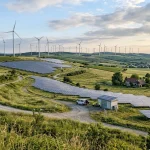
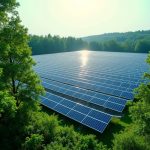
One of the most reliable methods to generate cash flow from the green transition is investing in operational renewable energy generation. Commercial developers construct solar farms and wind installations backed by corporate Power Purchase Agreements (PPAs)—long-term contracts (10 to 20 years) where corporations like Google, Microsoft, or Amazon agree to buy electricity at fixed prices. Discover how these assets fit into larger European portfolios in our guide to climate change impact investing.
Key financial metrics to evaluate in renewable real asset investments include:
- Levelized Cost of Electricity (LCOE): The net present value of the unit cost of electricity over an asset’s operational lifetime. Solar PV and onshore wind now boast the lowest LCOE of any power generation technology in history.
- Capacity Factor: The ratio of actual energy output over a given period to maximum potential output. Modern offshore wind turbines achieve capacity factors exceeding 50%.
- Debt Service Coverage Ratio (DSCR): Ensures operational cash flows comfortably cover senior project debt obligations through seasonal meteorological variations.
2. Climate Technology Venture Capital and Early-Stage Equity
For investors seeking outsized venture returns, early-stage climate technology provides exponential upside potential. The next generation of trillion-dollar industrial conglomerates will emerge from enterprises solving fundamental physical decarbonization challenges:
- Industrial Heat Decarbonization: Thermal batteries and industrial heat pumps replacing gas furnaces in chemical and metal manufacturing.
- Alternative Building Materials: Pozzolanic cement substitutes, low-carbon geopolymer concretes, and engineered mass timber.
- Direct Air Capture (DAC) and Mineralization: Permanent technological carbon removal technologies generating premium voluntary carbon removal credits purchased by Fortune 500 sustainability programs.
- Grid-Scale Energy Storage: Iron-air, sodium-ion, and flow batteries capable of 24–100 hour multi-day discharge cycles to balance intermittent grid loads. Explore broader fund deployment vehicles in our breakdown of European impact funds.
3. Carbon Markets: Trading the European Emissions Trading System (EU ETS)
The European Union Emissions Trading System (EU ETS) is the world’s largest compliance carbon market by turnover. Under a “cap-and-trade” principle, a declining cap is set on total greenhouse gas emissions from power stations, factories, and commercial aviation. Facilities must surrender one European Union Allowance (EUA) for every metric ton of CO2 equivalent emitted.
| Carbon Market Segment | Key Mechanics | Participation Route | Primary Price Drivers |
|---|---|---|---|
| EU ETS (Compliance) | Statutory cap reduces by ~4.3% annually under Fit for 55 package; linear reduction factor drives structural scarcity. | EUA futures on ICE / EEX; dedicated exchange-traded funds (ETFs) tracking EUA benchmarks. | EU industrial output, European natural gas vs coal switching costs, clean spark spreads, and European regulatory policy. |
| Voluntary Carbon Market (VCM) | Unregulated corporate carbon offsets verified by standards like Verra (VCS) or Gold Standard; shifting rapidly to engineered removals. | Direct forward purchase agreements, tokenized carbon platforms, or streaming royalties on carbon developers. | Corporate net-zero commitments, Article 6 international trading rules, and third-party MRV audit scrutiny. |
4. Circular Economy, Resource Efficiency, and Critical Minerals
Decarbonization requires staggering volumes of raw materials: copper for grid transmission lines, lithium and nickel for lithium-ion battery chemistry, neodymium for permanent magnet wind turbines, and silicon for solar photovoltaic cells. Investors can profit along three pivotal nodes:
- Closed-Loop Recycling: Hydrometallurgical battery recyclers recovering 95%+ of battery-grade lithium, cobalt, and nickel from end-of-life electric vehicles and consumer electronics.
- Efficiency-as-a-Service (EaaS): Smart HVAC and automated Building Management System (BMS) retrofits funded through energy savings performance contracts (ESPCs), providing immediate operating cost reductions for commercial real estate portfolios.
- Precision Agriculture: Variable-rate fertilizer applications, autonomous laser weeding, and micro-drip irrigation systems lowering input costs while reducing nitrous oxide agricultural runoff. Check out practical application examples in our analysis of impact investing market opportunities.
Empirical Risk Management: Mitigating Green Swan Events
Investing in climate transition assets carries unique non-linear risks that conventional financial models fail to price accurately:
- Policy & Subsidies Risk: Regulatory changes—such as tariff rollbacks, permitting moratoriums, or altered feed-in premiums—can impair project economics. Investors must prioritize assets that achieve grid parity without direct subsidies.
- Technology Obsolescence: Rapid R&D cycles can render capital-intensive manufacturing plants uncompetitive (e.g., early thin-film solar manufacturers outcompeted by crystalline silicon price collapses).
- Physical Climate Risks: Increasing frequency of 100-year flood events, severe heat waves derating solar panel efficiency, and severe droughts constraining hydroelectric reservoir output require hyper-localized spatial climate modeling.
Frequently Asked Questions About Making Money from Climate Change
Can retail investors make money from climate change with small amounts of capital?
Yes. Retail investors can access climate opportunities through low-cost thematic ETFs targeting clean energy, battery technology, and water infrastructure, or through regulated clean energy crowdfunding platforms offering fractional debt notes from as little as €100.
Are renewable energy equities still profitable during high-interest-rate environments?
While capital-intensive renewable developers face higher financing costs during high-rate regimes, operational assets with inflation-linked Power Purchase Agreements (PPAs) pass rising electricity prices directly through to off-takers, preserving cash yields.
What is the difference between green investing and greenwashing?
Legitimate green investments demonstrate clear, independently verified additionality and measurable environmental metrics (e.g., tons of CO2 sequestered or MWh of clean electricity generated). Greenwashing relies on vague corporate marketing without third-party audit verification or binding capital allocation commitments.
How can an investor trade compliance carbon credits?
Institutional allocators trade EUA futures directly on exchanges such as ICE Endex, while individual investors can access compliance carbon exposure through specialized liquid ETFs and exchange-traded commodities (ETCs) that hold underlying EUA futures contracts.
Which climate sectors offer the highest risk-adjusted returns over a 10-year horizon?
Grid infrastructure, battery energy storage systems (BESS), and energy efficiency software historically offer the strongest risk-adjusted profiles due to non-discretionary utility demand, recurring cash flow contracts, and strong secular tailwinds independent of consumer economic cycles.
Get our latest guides, news, and insights highlighted in your Google Search & AI Overviews.