The Amazon rainforest, often referred to as the “lungs of the planet,” plays a critical role in regulating our climate, storing over 150 billion metric tons of carbon. However, alarming deforestation rates threaten this vital ecosystem, releasing carbon back into the atmosphere and exacerbating global warming. As the world increasingly grapples with climate change, understanding how cutting down the Amazon impacts global temperatures becomes essential. This issue isn’t just about preserving biodiversity; it directly affects our weather patterns, agricultural stability, and even our health. By exploring the profound connections between Amazon deforestation and climate change, we can uncover the urgent need for sustainable practices that protect this irreplaceable resource and, ultimately, our future. Join us as we delve deeper into this crucial topic and discover the steps we can take to make a difference.
Understanding the Amazon Rainforest’s Role in Climate Regulation
The Amazon rainforest is often referred to as the “lungs of the Earth,” not only for its vast expanse of trees that produce oxygen but also for its critical role in climate regulation. Covering approximately 5.5 million square kilometers, this biodiverse ecosystem captures and stores vast amounts of carbon dioxide, mitigating the impacts of climate change. When trees are cut down, the stored carbon is released back into the atmosphere, significantly contributing to global warming. Research shows that deforestation and degradation have the potential to release an estimated 1.5 billion tonnes of carbon dioxide annually, highlighting the urgent need to protect this vital resource.
The Water Cycle and Climate Moderation
One of the less discussed but equally important roles of the Amazon rainforest is its influence on the water cycle. The dense vegetation of the Amazon generates a significant amount of moisture through a process called transpiration, where water is absorbed by roots and released as vapor through leaves. This vapor contributes to rainfall not only within the rainforest but also in distant regions. For instance, studies suggest that nearly 50% of rainfall across parts of the Americas is facilitated by the moisture recycled by the Amazon. Deforestation disrupts this cycle, leading to decreased rainfall and exacerbating drought conditions, as highlighted by scientists who warn that the Amazon’s water cycle faces collapse due to human activity and climate change[1].
Biodiversity and Ecosystem Services
In addition to carbon storage and moisture regulation, the Amazon hosts approximately 10% of the known species on Earth, making it a critical area for biodiversity. This biodiversity not only supports the stability of the ecosystem but also provides numerous ecosystem services such as pollination, nutrient cycling, and natural pest control. The loss of these species due to deforestation can disrupt these services, leading to further ecological degradation and impacting agricultural productivity both locally and globally.
The interplay of these factors underscores the importance of the Amazon rainforest not merely as a regional feature but as a crucial component of the Earth’s climate system. It is essential for us to understand these roles in order to appreciate the full impact of deforestation and work towards sustainable management of this irreplaceable ecosystem. Implementing conservation strategies and promoting sustainable practices can help mitigate these challenges and preserve the Amazon for future generations.
How Deforestation Affects Carbon Emissions Globally
The Amazon rainforest serves as one of the planet’s most significant carbon sinks, absorbing widespread amounts of carbon dioxide (CO2) and thereby helping to mitigate the effects of climate change. However, deforestation introduces an alarming disruption to this vital function. When trees are removed, the carbon stored within them is released back into the atmosphere, significantly contributing to global carbon emissions. In fact, deforestation in the Amazon is responsible for an estimated release of 1.5 billion tonnes of CO2 annually. This not only accelerates global warming but also heightens the risks associated with climate anomalies across the globe, from increased heatwaves to unpredictable weather patterns.
Interestingly, the impact of cutting down trees extends beyond mere carbon emissions. The destruction of vast areas of forest diminishes the Amazon’s ability to perform essential environmental functions, such as regulating local and planetary weather patterns through moisture recycling. A staggering 50% of rainfall in several parts of the Americas is believed to be reliant on the moisture that the Amazon generates. Deforestation alters these rainfall patterns, leading to reduced precipitation not just within the forest but also in surrounding regions, pushing many areas towards potential drought and destabilizing agricultural systems reliant on consistent rainfall.
Addressing the repercussions of deforestation requires a concerted global strategy focused on sustainable management and conservation of the rainforest. Practical actions, such as supporting reforestation initiatives, promoting sustainable agriculture, and encouraging policy measures that limit deforestation, can collectively help restore balance. For instance, reforestation projects, which involve planting trees in areas where forest cover has been lost, can gradually restore the carbon sink capacity of the Amazon while also revitalizing the local ecosystem. By adopting sustainable practices and prioritizing the preservation of this critical resource, we can not only decrease carbon emissions but also contribute to a more stable climate for future generations.
The Ripple Effect: Local Changes with Global Consequences
Cutting down the Amazon rainforest does not just threaten the local ecosystem; it triggers a cascade of changes that reverberate across the globe. As one of the planet’s largest and most biodiverse forests, the Amazon plays a crucial role in maintaining ecological balance, and its degradation has profound implications far beyond its borders. Recent research indicates that the loss of even small areas of this vital forest can disrupt regional weather patterns, leading to altered rainfall distribution across continents and impacting agricultural productivity in far-off regions.
When trees are felled, the moisture generated through transpiration-a process where trees release water vapor-diminishes significantly. This reduction in local humidity leads to decreased rainfall, affecting not just the immediate area but also regions hundreds of miles away. For example, the Midwest of the United States, dependent on consistent rain for crops, could experience severe drought if the Amazon continues to degrade. Studies suggest that up to 50% of rainfall in parts of the Americas depends on the moisture recycling facilitated by the rainforest, underscoring the interconnectedness of our global climate system.
To illustrate the potential ripple effects, we can look at the consequences of drought conditions in Brazil. When deforestation leads to reduced rainfall, it can cause severe impacts on local agriculture, which then affects food prices and livelihoods across Brazil and neighboring countries. As food scarcity increases, the region may become more susceptible to socio-economic unrest, which can create a cycle of instability that extends far beyond their national borders. Addressing these intricate webs of cause and effect requires comprehensive policies and international collaboration focused on sustainability.
Taking action to mitigate these changes involves more than just halting deforestation; it requires a concerted effort to implement reforestation and sustainable land management practices. Local communities can be empowered through agroforestry projects that combine crop production with forest conservation, thus fostering both economic development and environmental stewardship. Supporting sustainable products and responsible consumption choices globally can also contribute to localized conservation efforts. By recognizing that the health of the Amazon directly influences global conditions, individuals and nations alike can take proactive steps to protect this critical ecosystem for the benefit of all.
Impact on Biodiversity and Ecosystem Stability
The Amazon rainforest is often referred to as the “lungs of the Earth,” and for a good reason: this vibrant ecosystem is not just a collection of trees, but a complex web of life, housing approximately 10% of the world’s known species. As deforestation progresses at alarming rates, the destruction of habitats leads to a dramatic decline in biodiversity. A staggering number of plants and animals face extinction, which has repercussions that extend far beyond the immediate loss of species. Each organism plays a unique role in its ecosystem, contributing to stability and resilience. For instance, certain plants are crucial for soil health, while various pollinators help sustain agriculture. Their absence destabilizes ecosystems, leading to a cascading series of effects that can compromise food security and ecological services.
Climate and Biodiversity Interconnection
Climate and biodiversity are intricately linked; the loss of species through deforestation can alter local weather patterns, further destabilizing the environment. Trees offer shade and regulate temperature, creating microclimates essential for many species. As trees are removed, increased sunlight reaches the forest floor, raising temperatures and changing humidity levels. This shift can disrupt the habitats of sensitive species, forcing them to migrate or adapt to rapidly changing conditions-often with devastating results. Studies have shown that regions with high biodiversity are better equipped to withstand environmental stressors and climate changes, demonstrating the importance of preserving these habitats not only for their beauty but for their role in sustaining life on Earth.
Real-World Implications
The implications of biodiversity loss can be seen in agricultural practices. For example, traditional farming relies on a diverse range of crops and wild species for pest control and soil fertility. As such diversity diminishes due to deforestation, farmers may face increasing challenges, such as crop failures and the need for chemical fertilizers and pesticides, which further harm the environment. On a broader scale, diminishing biodiversity threatens the availability of clean water, soil quality, and overall ecological balance, ultimately impacting human survival.
Furthermore, indigenous communities that depend on the forest for their livelihoods are profoundly affected. With the loss of biodiversity, they lose not only their resources but also their cultural heritage and knowledge tied to the land. Thus, protecting the Amazon rainforest is not merely an environmental issue; it’s a matter of social justice and human rights.
Practical Steps Forward
Recognizing these challenges, several actionable strategies can be implemented to mitigate biodiversity loss in the Amazon:
- Support Sustainable Products: Opt for goods that are certified sustainable to promote responsible harvesting of forest resources.
- Advocate for Policy Change: Engaging with and supporting policies that promote conservation and sustainable land use can lead to significant change.
- Participate in Reforestation Efforts: Getting involved in local or global reforestation initiatives helps restore degraded areas.
- Educate Others: Raising awareness about the importance of biodiversity helps build a supportive community around conservation efforts.
In essence, exposing the delicate balance of the Amazon’s ecosystems reveals how vital it is to our planet’s health. By recognizing our interconnectedness with this remarkable rainforest, we can take collective responsibility for its preservation, ensuring that this rich biodiversity continues to thrive for generations to come.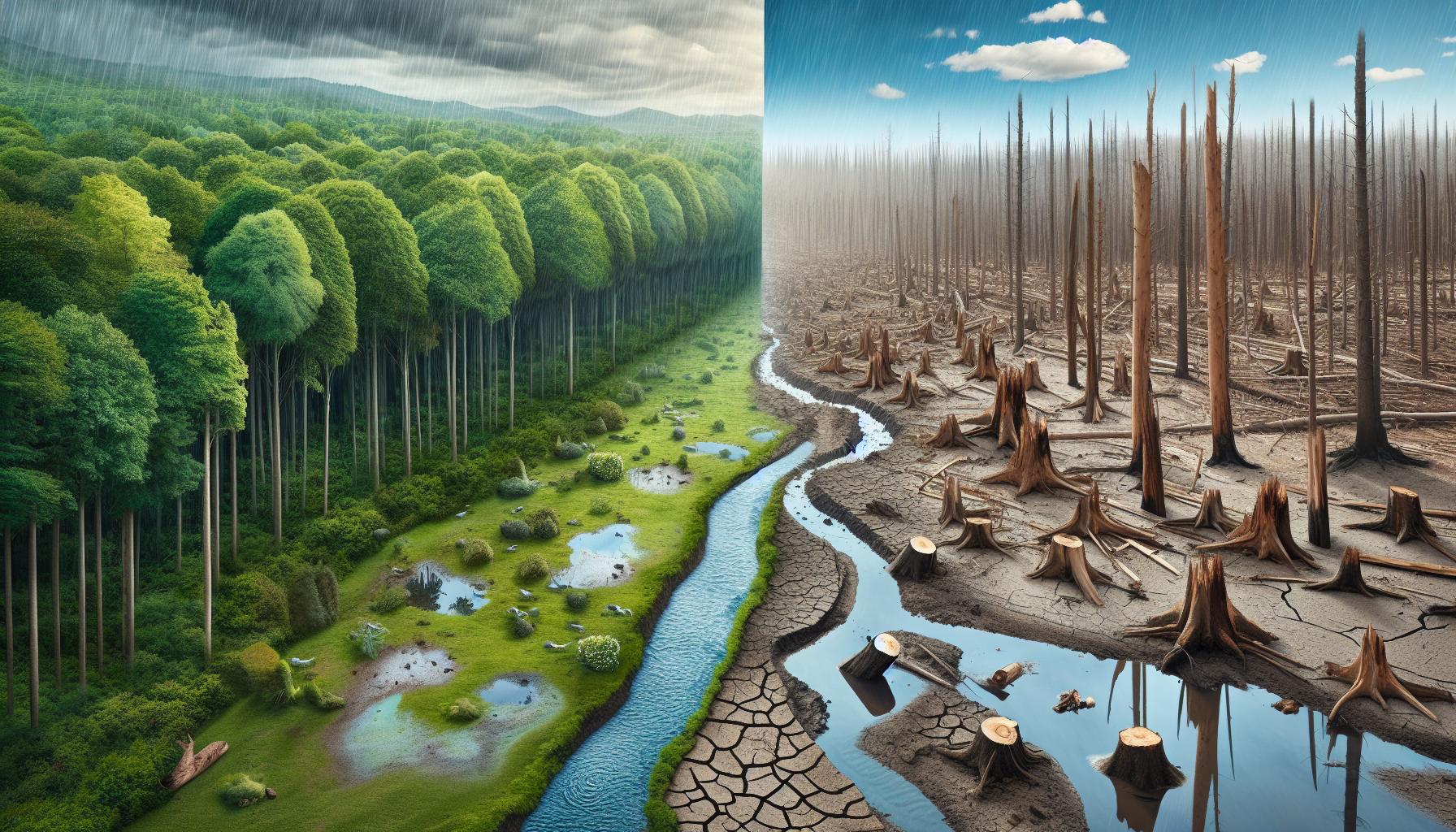
Weather Patterns: How Deforestation Alters Rainfall
The Amazon rainforest is often hailed as a critical regulator of global climate, yet cutting it down has far-reaching consequences that reverberate through weather patterns across not just the region, but the entire world. When trees are removed, one of the immediate effects is a significant alteration in how moisture cycles through the atmosphere. Healthy forests contribute to rainfall patterns by releasing water vapor through a process called transpiration, essentially acting as a natural pump for atmospheric moisture. As deforestation escalates, this vital process diminishes, leading to less precipitation and more pronounced droughts in both the Amazon and surrounding areas.
Changes in vegetation not only reduce local rainfall but can also disrupt global weather systems. The Amazon rainforests help regulate temperatures and rainfall patterns through their vast canopy, which serves to shade the ground and retain moisture. Without ample tree cover, the temperature rises, and the microclimates essential for many species shift dramatically, impacting overall climate stability. It’s been estimated that extensive deforestation could potentially convert large areas of the Amazon into savanna, which would lead to further loss of rainfall and create a feedback loop, thereby amplifying climate change effects globally [[1]](https://www.bbc.com/news/articles/c9vy191rgn1o).
To combat these detrimental impacts, several concrete actions can be taken. First, supporting sustainable land use practices can help preserve remaining forested areas, thereby sustaining the ecological balance that supports rainfall. For example, agroforestry combines agriculture with tree planting, which not only supports food production but also maintains moisture levels in the air. Additionally, advocating for stronger environmental policies that prioritize rainforest conservation can create a more resilient ecological system. Educational initiatives that emphasize the importance of forests can foster community engagement in conservation efforts, encouraging local stewardship of these precious ecosystems.
While the task may seem daunting, individual actions can collectively lead to significant change. By making informed product choices-such as purchasing goods from companies committed to sustainable practices-individuals can contribute to the protection of the Amazon and its weather-regulating capabilities. In doing so, not only do we help preserve this unique ecosystem, but we also safeguard our planet’s future climate.
Socioeconomic Factors: Why We Cut Down the Forest
The Amazon rainforest is not just a biodiversity hotspot; it is also a vital resource for local communities that heavily depend on its resources for their livelihoods. At the heart of the deforestation crisis lie socioeconomic factors that drive individuals and corporations to clear vast areas of forest. For many rural inhabitants, the Amazon provides essential opportunities for agriculture, logging, and mining. As populations grow and economic pressures mount, many turn to these activities as a means of survival, often prioritizing immediate needs over long-term environmental sustainability.
One of the most significant drivers of deforestation is agriculture. In countries like Brazil, land is often cleared to create fields for crops such as soy and to make way for cattle ranching, which can be more profitable than preserving forest land. As global demand for beef and soy rises, so does the incentive to convert the forest into farmland. Unfortunately, these agricultural practices can lead to soil degradation, which diminishes productivity over time, creating a cycle of destruction and renewed deforestation as farmers look for new land.
Trade and Economic Growth
Economic growth is another crucial factor influencing deforestation. Governments sometimes view the clearing of forests as a path to economic development, leading to policies that favor resource exploitation over conservation. For instance, infrastructure projects, such as roads and dams, are often constructed through the rainforest, opening previously inaccessible areas to logging and mining activities. The short-term benefits, such as job creation and increased economic output, often overshadow the long-term consequences, including habitat loss and increased greenhouse gas emissions. The challenge lies in balancing economic development with the need to protect this critical ecosystem.
Community and Indigenous Perspectives
Indigenous communities, who have lived in harmony with the forest for generations, often possess vital knowledge about sustainable land management. However, their voices are frequently sidelined in economic discussions. Empowering these communities by recognizing their land rights and incorporating their traditional practices into modern conservation strategies can yield a win-win situation. Initiatives such as ecotourism and sustainable harvesting provide alternative income sources that respect both local culture and the environment.
To change the trajectory of deforestation in the Amazon, it is essential to address these socioeconomic factors comprehensively. Governments, corporations, and consumers must work collaboratively to adopt sustainable practices and support policies that prioritize long-term environmental health over short-term economic gains. As individuals, actively choosing products from sustainable sources, advocating for indigenous rights, and supporting conservation organizations can all contribute to a brighter future for the Amazon and its invaluable role in regulating the global climate.
Indigenous Knowledge: Lessons from the Amazon Tribes
The Amazon rainforest is home to a wealth of indigenous knowledge that has been honed and passed down through generations, providing invaluable lessons in sustainable living and environmental stewardship. Indigenous communities have developed intricate systems of biodiversity management that not only maintain ecosystem balance but also enhance resilience against climate change. This traditional wisdom is crucial as the world faces the stark realities of deforestation and climate instability.
Indigenous tribes, such as the Yanomamo and Kayapo, have long understood the interconnectedness of their environment. Their practices, which often include rotational farming, the use of native plants for food and medicine, and sacred rites that honor the forest, contribute to the preservation of biodiversity within the Amazon. These traditional methods often stand in stark contrast to industrial agricultural practices that prioritize short-term yield over long-term sustainability. By embracing indigenous approaches, we can learn to cultivate land in a way that supports both human needs and ecosystem health.
Incorporating Indigenous Knowledge into Modern Conservation
One solution for reversing the detrimental impacts of deforestation lies in integrating indigenous practices into contemporary conservation strategies. Numerous studies highlight that land managed by indigenous people has significantly lower deforestation rates compared to areas under official state control or corporate exploitation. Recognizing this, conservation initiatives can aim to empower indigenous groups by granting them legal rights to their ancestral lands and promoting their involvement in management and decision-making processes. Such a paradigm shift not only honors their methods but also yields more robust environmental outcomes.
Additionally, as modern technologies such as satellite imagery and AI emerge, they are being utilized to aid in the documentation and revitalization of indigenous knowledge. By combining these advanced tools with traditional wisdom, it becomes possible to enhance climate resilience in the region. This innovative blend fosters sustainable practices that can not only protect the forest but also provide livelihoods for local communities.
- Documentation of Local Practices: Creating databases of traditional ecological knowledge can help in sustainable planning.
- Collaborative Programs: Partnerships between governments, NGOs, and indigenous communities can foster sustainable development models.
- Education and Awareness: Initiating programs that educate non-indigenous populations about the value of indigenous practices can encourage wider acceptance and integration.
The critical lessons from indigenous communities are vital for the global fight against climate change. As we confront the ongoing crises stemming from deforestation, it’s imperative that we respect, amplify, and learn from their knowledge, promoting a restoration of balance between humanity and nature. Each action we take, influenced by these age-old practices, can lead us toward a more sustainable future for the Amazon and our planet as a whole.
Reforestation and Restoration: Can We Reverse Damage?
The alarming rates of deforestation in the Amazon rainforest have raised significant concerns over the sustainability of our planet’s climate. However, the potential for reforestation and restoration initiatives offers a glimmer of hope. Research indicates that restoring just 15% of deforested areas in the Amazon could significantly mitigate carbon emissions, enhancing biodiversity and stabilizing local climates. Restoration not only contributes to carbon sequestration but also helps to restore the intricate ecosystems that are vital for countless species and indigenous livelihoods.
One of the most effective strategies includes adopting agroforestry practices that blend agriculture with tree planting. This method not only restores forest cover but also provides farmers with food and income. For instance, the Amazonian region has seen successful projects where farmers integrate native tree species with crops, creating a sustainable model that benefits both the land and the people. Efforts like these highlight the need for a collaborative approach, combining the insights of indigenous knowledge with modern science. By supporting local communities in implementing these solutions, we can foster a deeper connection between them and the forest.
Key Strategies for Successful Reforestation
The path to restoring the Amazon involves several crucial strategies:
- Community Engagement: Involving local communities in reforestation projects ensures that their needs are met and increases the likelihood of success. Empowering indigenous people to lead these efforts respects their knowledge of the land and its ecosystems.
- Diverse Planting Schemes: Using a mix of native species helps to create a resilient forest structure. Biodiversity enhances ecosystem stability and increases the chance of survival for plants and wildlife.
- Monitoring and Maintenance: Implementing regular monitoring can help assess the health of restored areas and guide necessary adjustments. Technologies like drones and satellite imagery can facilitate this process.
As the world grapples with the effects of climate change, the urgency for ambitious reforestation efforts cannot be overstated. By investing in restoration projects, not only can we combat carbon emissions, but we can also restore habitats and uphold the traditions and rights of indigenous peoples. Initiatives like these demonstrate that while the challenges of deforestation are significant, the resolve to restore and maintain our planet’s vital systems remains within reach. Through collaborative efforts, innovative practices, and community-driven approaches, we can work towards securing a healthier future for the Amazon and our global climate.
Global Solutions for Sustainable Amazon Management
The preservation of the Amazon rainforest is not only crucial for local biodiversity but also vital for the health of our planet. Innovative and sustainable management solutions are essential to combat the ongoing challenges of deforestation and climate change. Engaging local populations in sustainable practices is a cornerstone of these efforts. By prioritizing community-based forest management, we empower indigenous and local communities to lead reforestation initiatives, respecting their traditional knowledge and connection to the land.
Implementing Nature-Based Solutions
Nature-based solutions, such as agroforestry, blend agricultural pursuits with ecosystem preservation. Farmers can plant native tree species alongside crops, providing a dual benefit of agricultural productivity and forest restoration. This not only mitigates carbon emissions but also enhances soil health, reduces erosion, and promotes biodiversity. For instance, projects across the Amazon have demonstrated that these practices can significantly improve yields while restoring essential habitats for wildlife.
Leveraging Technology for Monitoring and Protection
The role of technology in forest management cannot be understated. Remote sensing technologies, including satellite imagery and drones, enable real-time monitoring of deforestation and illegal land use. These tools allow for rapid responses from authorities and conservation groups, ensuring that protected areas remain intact. Furthermore, mobile applications can empower local communities to report illegal activities, fostering a collaborative approach to conservation and reinforcing local stewardship.
Global Partnerships and Financial Support
International cooperation is vital in the fight against deforestation. Global partnerships can mobilize financial resources and technical expertise to support sustainable development initiatives in the Amazon. Programs such as REDD+ (Reducing Emissions from Deforestation and Forest Degradation) provide financial incentives for preserving forests. By linking financial rewards to the conservation of the Amazon, nations can create a sustainable economy that values ecological health.
In conclusion, sustainable management of the Amazon is a multifaceted challenge that requires a blend of community engagement, technological innovation, and global collaboration. As individuals, businesses, and governments recognize their roles in this interconnected system, they can contribute to a resilient and thriving Amazon rainforest that supports both local communities and the global climate.
The Future of Climate: Projections Without the Amazon
The loss of the Amazon rainforest could lead to catastrophic consequences for our global climate system, resembling a slow-motion catastrophe that could unfold over the coming decades. Currently, the Amazon acts as a vital carbon sink, absorbing approximately 2.2 billion tons of carbon dioxide annually. If deforestation continues at its present pace, studies indicate that we could lose this essential function, exacerbating climate change through increased greenhouse gas emissions. Projections suggest that without the Amazon, not only would we see an acceleration of climate warming but also a tipping point that threatens the broader stability of ecological systems worldwide.
Impact on Global Temperatures
The absence of the Amazon would likely result in a significant rise in global temperatures. Current models estimate that regions previously covered by the rainforest could experience temperature increases of 2° to 3°C. This alarming shift would be due to two primary factors: the release of stored carbon dioxide from deforested areas and the loss of evapotranspiration-a natural process that cools the atmosphere. For example, the loss of approximately 185 million acres of forest from 1978 to the present has already contributed to noticeable climate fluctuations within and beyond South America[[1]](https://www.amazonconservation.org/the-challenge/threats/).
Weather Patterns and Extreme Events
Without the Amazon, weather patterns would shift dramatically, leading to increased frequency and intensity of extreme weather events like droughts, floods, and hurricanes. Rainfall patterns would become erratic, affecting agriculture not just in nearby regions but globally. The Amazon currently contributes to about 50% of Brazil’s rainfall; altering this source could trigger a domino effect on agricultural yields, food security, and economic stability in countries dependent on these ecosystems.
In addition, the loss of the Amazon could disrupt the water cycle, leading to reduced freshwater availability in regions far from the forest itself. As a case in point, the impacts could reverberate as far as the United States, where farmers on the Great Plains might face harsher growing conditions due to changes in rainfall distribution influenced by the loss of tropical forests[[2]](https://ballardbrief.byu.edu/issue-briefs/deforestation-in-the-amazon-rainforest).
Socioeconomic Ramifications
The implications for human societies are equally daunting. Environmental degradation is intrinsically linked to socioeconomic factors, where vulnerable communities often bear the brunt of climate impacts. As critical resources become scarce and agricultural outputs diminish, migration, conflict, and public health crises could arise. This not only affects those directly dependent on the Amazon but also has broader implications for global stability.
Ultimately, the future of our climate without the Amazon is one of uncertainty and risk. However, proactive stewardship of these forests can still lead to positive outcomes. By enhancing conservation efforts, promoting sustainable agriculture, and securing international commitments to protect the Amazon, we can forge a sustainable future that values this indispensable biome. Taking action now can make a significant difference in preserving our planet’s health and ensuring that the Amazon can continue its role as a critical component of global climate stability.
Taking Action: What You Can Do to Help
The Amazon rainforest is often described as the lungs of our planet, and its destruction reverberates far beyond South America. Each year, billions of tons of carbon are released into the atmosphere due to deforestation. But there’s still hope: individuals can play a pivotal role in protecting this vital ecosystem and, in turn, our global climate. By making informed decisions and taking direct actions, you can contribute to the preservation of the Amazon and combat climate change.
One effective way to start is by leveraging your purchasing power. Opt for products that are sustainably sourced and certified. Look for labels such as Rainforest Alliance or Fair Trade when buying coffee, chocolate, or palm oil. These certifications often ensure that the products are grown in ways that support rainforest conservation. Additionally, reducing meat consumption, particularly beef, can help, as livestock farming is a significant driver of deforestation in the Amazon. Even small changes, like incorporating more plant-based meals into your diet, can make a difference.
Educating yourself and your community is equally essential. Engage in discussions about climate change and rainforest conservation, whether at local community centers, schools, or online. Share articles, documentaries, and information that highlight the importance of the Amazon. Grassroots movements have proven effective; for instance, community-led initiatives in various regions around the world have successfully lobbied for better environmental regulations. By raising awareness, you create a ripple effect that can inspire others to take action, leading to broader societal changes.
Taking part in or donating to reputable organizations focused on rainforest preservation is another impactful step. Many non-profits and conservation groups actively work to protect the Amazon through advocacy, active reforestation efforts, and supporting indigenous rights. Your contributions can help fund projects that restore habitats and support local communities in sustainable practices. For example, organizations like the Amazon Conservation Team not only focus on the environment but also respect and integrate the knowledge of indigenous communities, which is crucial for effective conservation.
Lastly, consider advocating for policy changes by contacting your local representatives to express your concerns about deforestation and climate change. Supporting legislation aimed at environmental protection or climate action can lead to significant changes on a larger scale. By becoming informed and involved, you can be a part of the global movement to save the Amazon, ensuring its continued role in regulating our climate and sustaining biodiversity for generations to come.
Emerging Technologies: Monitoring and Protecting the Rainforest
The advancements in technology offer a beacon of hope in the ongoing struggle to monitor and protect the Amazon rainforest, which plays a crucial role in regulating the global climate. Through innovative approaches, scientists and conservationists can gather data and respond swiftly to threats such as deforestation, illegal logging, and land-use changes. For instance, satellite imagery and remote sensing technologies provide a bird’s-eye view of the forest, allowing for real-time monitoring of environmental changes and illegal activities. These tools can detect deforestation patterns and help authorities react before significant damage occurs.
One leading example of this technology’s application is the Brazilian National Institute for Space Research (INPE), which uses satellites to track deforestation in the Amazon. Their real-time alerts enable timely interventions, promoting better enforcement of environmental regulations. Additionally, drones are being employed for more localized monitoring, assessing hard-to-reach areas of the rainforest. Equipped with high-resolution cameras and sensors, drones can gather critical information about wildlife, vegetation health, and illegal disturbances, acting as vigilant sentinels of the forest.
Community Empowerment through Tech
The integration of technology also extends beyond governmental efforts. In various parts of the Amazon, local communities are harnessing mobile apps designed for environmental reporting. These platforms allow residents to report deforestation or illegal activities directly to conservation groups or authorities. For example, the app “Forest Watcher” empowers users to monitor changes in forest cover and share their findings with organizations dedicated to preserving the environment. This fosters a sense of ownership and responsibility among community members while enhancing data accuracy and improving response times to environmental threats.
Moreover, innovative partnerships between tech companies and conservation organizations are proving vital for the Amazon’s protection. Organizations like Conservation International are collaborating with tech giants to develop tools that analyze data on biodiversity and climate impacts, guiding better decision-making for land use and conservation strategies. These efforts illustrate how emerging technologies can create a multifaceted approach to safeguarding the Amazon, balancing economic interests with environmental stewardship.
In sum, leveraging emerging technologies is a powerful strategy to protect the Amazon rainforest from deforestation and climate disruption. By combining satellite monitoring, community-driven reporting, and collaborative tech initiatives, it is possible to develop a robust framework for safeguarding one of our planet’s most vital ecosystems. The journey ahead requires innovation, collaboration, and resilience, yet the potential benefits to both local environments and global climate are immense.
Q&A
Q: How does deforestation of the Amazon rainforest affect global temperatures?
A: Deforestation of the Amazon rainforest contributes to global temperature increases by releasing stored carbon dioxide into the atmosphere. Trees absorb CO2; when they are cut down, this greenhouse gas is released, exacerbating climate change. Reducing forest cover also diminishes the Earth’s natural cooling mechanisms, potentially leading to higher global temperatures.
Q: What are the long-term consequences of cutting down the Amazon rainforest for climate change?
A: Long-term consequences of Amazon deforestation include increased greenhouse gas emissions, loss of biodiversity, and disrupted weather patterns. As trees are removed, the rainforest’s ability to sequester carbon diminishes, leading to a feedback loop of worsening climate impacts. The loss of diverse habitats also jeopardizes ecological balance and resilience.
Q: How does the Amazon rainforest help regulate the climate?
A: The Amazon rainforest aids climate regulation by acting as a major carbon sink, absorbing more CO2 than it emits. Its vast vegetation also influences local and global rainfall patterns through transpiration, helping to maintain weather stability. Protecting the Amazon is crucial for mitigating climate change and sustaining global biodiversity.
Q: What role do indigenous practices play in the conservation of the Amazon rainforest?
A: Indigenous practices contribute significantly to the conservation of the Amazon rainforest by incorporating sustainable land management and biodiversity preservation. Indigenous peoples possess traditional ecological knowledge that helps maintain the forest’s health and resilience against climate change, showcasing a vital link between culture and environmental stewardship.
Q: Can reforestation efforts in the Amazon combat climate change?
A: Yes, reforestation in the Amazon can significantly combat climate change by restoring lost carbon sinks and enhancing biodiversity. Planting native trees improves CO2 absorption and helps stabilize local climates. Active restoration efforts can also promote ecosystem recovery, offering a sustainable pathway to better climate resilience.
Q: How does deforestation influence global weather patterns?
A: Deforestation alters global weather patterns by disrupting the water cycle, which changes precipitation and temperature distributions. The removal of trees reduces atmospheric moisture, leading to droughts in some areas and increased rainfall in others. These changes can have cascading effects on global climates, affecting agriculture and water supply.
Q: What actions can individuals take to help preserve the Amazon rainforest?
A: Individuals can help preserve the Amazon by supporting eco-friendly products, reducing meat consumption (which drives deforestation), promoting reforestation efforts, and advocating for sustainable practices. Educating others on the importance of the rainforest and participating in or donating to conservation organizations can also make a positive impact.
Q: Why is it important to understand the Amazon’s impact on global climate?
A: Understanding the Amazon’s impact on global climate is essential because it highlights the interconnectedness of ecosystems and human activities. As one of the largest carbon sinks, the Amazon plays a crucial role in mitigating climate change. Awareness can drive conservation efforts and inform policies crucial for sustainable development and climate action.
The Conclusion
As we’ve explored, the deforestation of the Amazon rainforest significantly disrupts global climate patterns, affecting everything from rainfall to carbon levels. It’s clear that immediate action is crucial-whether you’re an individual or part of a larger organization, every effort counts. Want to learn more about how you can contribute to sustainable practices? Check out our in-depth articles on reducing carbon footprints and supporting reforestation initiatives.
We invite you to subscribe to our newsletter for the latest updates on environmental stewardship-you’ll gain insights into actionable steps you can take today. If you have any questions or thoughts about the impacts of deforestation, share them in the comments below! Together, we can foster awareness and drive the change necessary to protect our planet’s vital ecosystems. Remember, every small action adds up, so let’s work together for a greener future!
Get our latest guides, news, and insights highlighted in your Google Search & AI Overviews.