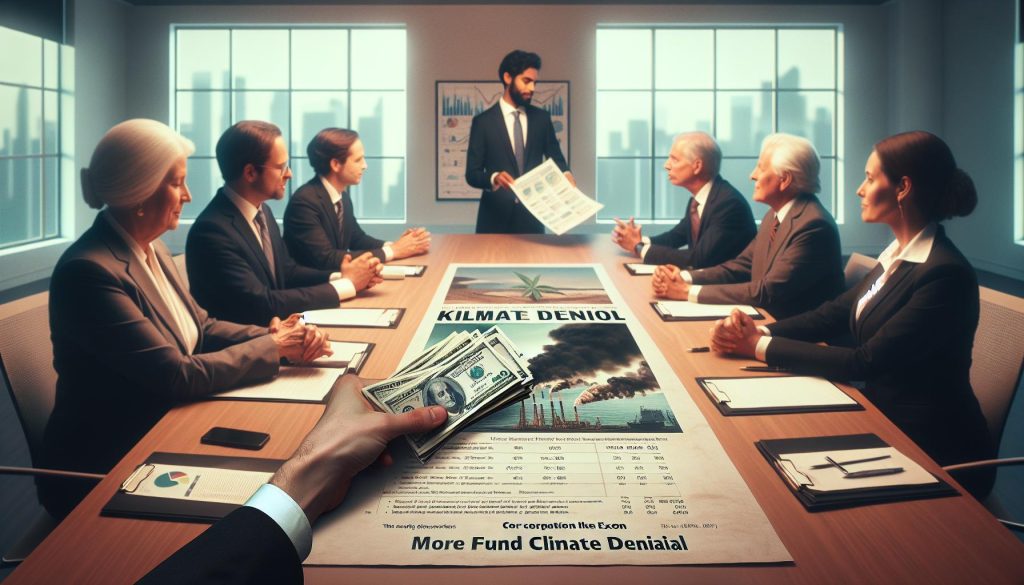
In an era where climate change dominates global discussions, it’s startling to uncover the significant financial support that major corporations, like Exxon, provide to climate-denying organizations. This funding raises critical questions about ethics, responsibility, and the future of our planet. As we delve into how Exxon strategically allocates resources to undermine climate science, we will explore the implications for public policy, environmental sustainability, and the collective responsibility we all share. Understanding these funding networks helps illuminate the broader narrative of corporate influence over environmental discourse, giving you insight into how financial decisions directly affect climate action efforts. Join us as we expose these connections and empower informed discussions on climate responsibility.
Uncovering Exxon’s Financial Support for Climate Deniers
Exxon’s financial backing of climate denial has far-reaching implications that extend beyond mere monetary transactions. Research has shown that ExxonMobil has invested substantial resources into organizations and campaigns that dispute the science of climate change, often to protect its interests in fossil fuel production. This funding creates an environment in which misinformation can proliferate, fueling public skepticism regarding climate science and hindering effective policy responses.
The corporation’s funding strategies typically target both nonprofit organizations that question the validity of climate science and research initiatives that downplay the realities of environmental degradation. This financial support allows these groups to maintain their operations, produce misleading reports, and engage with policymakers, thereby integrating climate denial into broader political discourse. For example, organizations known for their climate denial rhetoric often receive significant donations from Exxon, enabling them to amplify their messages through various media channels and public forums.
In practical terms, this support translates into real-world consequences for both climate policy and public understanding. When climate denial is backed by substantial funding, it leads to confusion among the public, making it challenging for citizens to distinguish between scientifically backed information and fabricated claims. Moreover, the presence of well-funded denial campaigns can deter politicians from embracing necessary regulatory measures, allowing fossil fuel industries to continue their operations with fewer constraints. Ultimately, Exxon’s financial support for these denial efforts complicates the pursuit of climate action, emphasizing the urgent need for transparency in corporate funding practices and robust public advocacy for sound environmental policies.
The Mechanisms Behind Corporate Funding Practices

Understanding the intricate motivations behind corporate funding practices reveals a complex landscape where financial power directly influences climate discourse. Major corporations, like Exxon, employ a variety of mechanisms to channel funds into organizations or campaigns that cast doubt on climate science. This strategy is not merely reactive but a calculated move designed to protect their business interests, primarily rooted in fossil fuel production.
One common practice is the establishment of partnerships with organizations that have a history of promoting climate skepticism. These partnerships often manifest as significant financial contributions or sponsorships, enabling these organizations to amplify their messages across various platforms. For instance, Exxon’s funding can support initiatives that generate misleading reports, bolstering narratives that question the validity of climate change research. Such financial backing provides these groups with the resources to operate effectively, engage policymakers, and maintain visibility in public discussions, thereby creating a false equivalency between scientific consensus and dissenting viewpoints.
Moreover, Exxon and similar corporations utilize their public relations machinery to frame these funding practices within acceptable norms, portraying their contributions as efforts to promote open debate rather than systematic attempts to mislead. This framing can obscure the more pernicious effects of their funding, contributing to a broader narrative that fosters public confusion and skepticism toward climate science. As a result, the funding mechanisms become a tool for creating an ecosystem where climate denial flourishes, challenging the efficacy of regulatory policies aimed at mitigating climate change.
In practical terms, addressing these funding practices requires a concerted effort toward transparency and accountability. Advocating for stringent disclosure laws regarding corporate donations to climate-related organizations can empower citizens to scrutinize the motives behind such financial support. Additionally, public campaigns aimed at raising awareness around the implications of climate denial funding can help cultivate a more informed populace, fostering environments where scientifically backed information prevails over misleading narratives. By demystifying these mechanisms, individuals and communities can rally for greater corporate responsibility and more robust environmental policies.
Who Are the Climate Deniers Receiving Funding?

Financial backing from fossil fuel giants like Exxon has played a pivotal role in enabling various organizations and individuals to propagate climate skepticism. These beneficiaries often include a mix of think tanks, advocacy groups, and even specific media personalities who actively challenge the scientific consensus on climate change, promoting narratives that downplay its severity or dismiss it entirely.
Notable Beneficiaries of Exxon’s Funding
Some well-known organizations have received substantial financial support from Exxon and similar entities, helping them amplify their climate denial messages. Among these are:
- The Heartland Institute: A prominent think tank known for its controversial stance on climate change, the Heartland Institute has received millions in funding to promote scientific dissent against climate consensus.
- The Cato Institute: This libertarian think tank challenges government regulations aimed at reducing carbon emissions and has been a vocal opponent of climate action, supported by corporate donations.
- Competitive Enterprise Institute: This organization promotes free market solutions and has consistently published materials that cast doubt on the effects of climate change, bolstered by funds from fossil fuel interests.
These groups not only produce reports that question climate science but also engage in lobbying efforts aimed at diminishing regulatory frameworks intended to combat climate issues. Each funding stream strengthens their capabilities to reach wider audiences through various media channels, contributing to widespread misunderstanding of climate issues.
Real-World Implications
The influence of these funded organizations extends beyond academia and policy. They often enter public discourse, providing platforms for speakers and writers who reinforce skepticism about climate change. For instance, well-funded media appearances and published articles can create an illusion of debate, drawing public attention away from the scientific consensus and contributing to polarized opinions on climate issues.
The implications of this funding are significant; they create an atmosphere where scientific clarity can be obfuscated, making it difficult for the average person to navigate the complexities of climate science. To combat these effects, increasing transparency in the funding of such organizations could empower public action and foster a more informed society.
In addressing climate change, holding accountable those who orchestrate and sustain climate denial through corporate funding is essential for fostering genuine public understanding and supporting effective policies aimed at mitigating climate impacts.
Real-World Impacts of Exxon’s Funding on Climate Policy

The reach of Exxon’s financial support to climate denial extends into the very heart of climate policy and public perception. This backing fosters a climate where misinformation can thrive, impacting not just scientific discourse but tangible legislative outcomes. By providing funding to organizations that actively question established climate science, Exxon effectively contributes to a landscape where critical climate policies are scrutinized or undermined, thus delaying necessary action on a global scale.
Take, for example, the lobbying efforts of groups funded by Exxon. Organizations like the Heartland Institute and the Competitive Enterprise Institute have played significant roles in promoting narratives that weaken regulatory measures aimed at reducing greenhouse gas emissions. Their campaigns often present distorted views of climate science in public forums, reinforcing doubts in the minds of legislators and the general public. In this environment, policymakers may feel pressured to avoid or dilute proposed regulations, fearing backlash or losing support from constituents who have been influenced by this disinformation.
Moreover, the impacts of this funding ripple through media channels. Well-resourced climate denial advocates leverage their financial backing to secure media appearances, publish articles, and disseminate content that casts uncertainty over scientifically supported climate initiatives. The result is a public discourse that can mislead citizens and challenge their understanding of the urgency of climate action. As individuals struggle to differentiate between credible scientific consensus and orchestrated skepticism, the effectiveness of policies intended to combat climate change is further jeopardized.
Addressing these real-world impacts requires concerted efforts towards transparency and accountability. By advocating for clearer reporting on corporate funding of climate skepticism, stakeholders can begin to dismantle the facade that clouds public understanding. This is crucial in strengthening democratic processes that allow for science-based decision-making in environmental policy, ultimately empowering individuals to push for action aligned with climate reality. Through awareness and engagement, communities can challenge the status quo fostered by corporate interests and demand responsible governance prioritizing environmental sustainability.
Analyzing Exxon’s Influence on Public Perception of Climate Science
The public’s perception of climate science is intricately influenced by corporate funding practices, particularly those of major oil companies like Exxon. Through substantial financial support to organizations that cast doubt on climate change, Exxon shapes narratives that reach far beyond the immediate realm of environmental policy. This influence manifests in various ways, from public discourse to the actions of policymakers, and it raises critical questions about the integrity of our understanding of climate issues.
A striking example is how funding organizations such as the Heartland Institute and the Competitive Enterprise Institute enables them to disseminate misleading information on climate science. These groups promote narratives that undermine critical climate legislation, framing climate change as a topic open to debate rather than one supported by a strong scientific consensus. As these narratives gain traction, both in public opinion and among lawmakers, they cultivate an environment ripe for skepticism. This leads to significant barriers in implementing necessary regulatory measures that could mitigate climate change impacts.
Moreover, the media plays a pivotal role in amplifying Exxon’s funded messages. Well-resourced climate skeptics seize opportunities to appear on television, write articles, and contribute to public discussions that challenge the urgency and scale of climate initiatives. This creates a confusing landscape where citizens struggle to discern between scientifically backed claims and manufactured skepticism, prompting hesitation in forming public support for robust climate action.
To counter these influences, transparency becomes paramount. Advocating for clear disclosure of corporate funding to climate-denying organizations is essential. Such transparency would enable stakeholders and the public to critically evaluate the motives behind opposing scientific consensus. Promoting educational initiatives and community engagement around climate science can empower individuals with the knowledge to navigate these complex narratives, reinforcing the demand for accountability and responsible governance in climate policy. By fostering a more informed public discourse, we can begin to dismantle the misleading frameworks that undermine climate action and encouragement of a sustainable future.
Taxpayer Dollars: The Shadows of Industry Influence
The influence of major corporations on public policy is often obscured by a complex web of funding practices, with taxpayer dollars frequently being funneled into efforts that align corporate interests with skepticism about climate science. This dynamic raises critical questions about the transparency of public spending and accountability. For example, many government-funded initiatives aimed at combating climate change may inadvertently support organizations and think tanks that receive financial backing from companies like Exxon, which actively promote climate denial narratives.
The Taxpayer Connection
Taxpayer dollars are supposed to be employed for the public good, yet they can also serve as a source of support for organizations that produce misleading information about climate change. A notable case involves research grants that, while appearing to enable scientific inquiry, end up directly or indirectly funding entities that propagate doubt about climate change. When governmental agencies allocate public funds without strict guidelines on transparency, the consequences can be far-reaching, perpetuating misinformation and obstructing effective climate policy.
- Funding Flow: It’s crucial to trace how publicly funded projects and grants may overlap with the agendas of corporate sponsors. This can manifest when universities or research institutions collaborate with industry stakeholders whose interests lie in downplaying climate change.
- Case Examples: Instances where federal research grants support projects that have been criticized for serving oil industry interests underscore the need for more stringent oversight and clearer conflict-of-interest policies.
- Public Awareness: Taxpayer awareness about how their funds are utilized is essential. Encouraging citizen engagement in budget discussions can lead to more responsible allocation of resources.
Accountability and Action
To drive change and ensure that taxpayer dollars serve to address climate challenges rather than exacerbate misinformation, several strategies can be employed. Advocacy for regulatory frameworks that demand transparency in funding sources and accountability is paramount. This can include:
- Legislative Support: Pushing for laws that require organizations that receive government funding to disclose all funding sources can help illuminate potential conflicts of interest.
- Community Initiatives: Engaging local communities to demand accountability from both industry and government can shift public narratives and elevate the discussion around climate issues.
- Education and Empowerment: Promoting educational programs that inform the public about the links between corporate funding and climate denial can foster a more informed electorate ready to challenge misleading narratives.
By advocating for greater transparency and accountability regarding the use of taxpayer dollars, citizens can combat the influence of industry on critical climate discussions, paving the way for more effective and scientifically-grounded climate policies.
The Role of Media in Shaping Climate Discourse
The relationship between media narratives and climate discourse is pivotal, especially in an age where misinformation can spread as rapidly as insightful facts. The media serves not only as a conduit for information but also shapes public understanding and perception of climate issues. This role becomes particularly crucial when considering the financial backing from corporations like Exxon, whose investments in climate denial organizations often blur the lines between fact and propaganda.
Media outlets can reinforce or undermine public consensus on climate change based on their framing and representation of news. For instance, when major outlets offer equal airtime to climate scientists and climate skeptics funded by fossil fuel interests, it creates an illusion of balance that misrepresents the overwhelming scientific agreement on climate issues. This phenomenon, often referred to as “false balance,” allows narratives fueled by corporate funding to permeate public consciousness, making it imperative for consumers of news to critically evaluate sources.
To combat the influence of corporate funding in media, there are actionable steps that individuals and communities can take:
- Promoting Media Literacy: Enhancing skills to critically assess news sources is essential. Understanding who funds the media and their potential biases can empower audiences to discern fact from misinformation.
- Supporting Independent Journalism: Engaging with and supporting media organizations that prioritize environmental reporting and transparency can help create a more factual media landscape.
- Engagement in Public Discourse: Encouraging discussions around climate in local forums or social media can help raise awareness about the impacts of funding on climate narratives, pushing back against false claims.
In a world where major corporations hold significant sway over public perception, the responsibility lies not only with journalists but also with consumers of media. By demanding accountability, advocating for transparency, and fostering a culture of informed discourse, society can begin to mitigate the adverse effects of corporate funding on climate conversations and enhance public understanding of vital climate science.
Case Studies: Exxon and Other Major Corporations
In recent years, the financial entanglements of major corporations like ExxonMobil with climate deniers have sparked significant scrutiny and debate. ExxonMobil, one of the largest oil and gas companies globally, has been allegedly involved in funding organizations that promote climate skepticism despite overwhelming scientific consensus on climate change. This funding not only skews public perception but also has noteworthy implications for policy-making and environmental action.
When examining ExxonMobil’s funding practices, it is crucial to look at specific instances. One prominent case is Exxon’s backing of the American Enterprise Institute (AEI) and the Heartland Institute, two organizations actively promoting climate denial narratives. In the 2000s, ExxonMobil reportedly donated over $2 million to AEI, which used these funds to cast doubt on climate change science. Similarly, the Heartland Institute has organized conferences featuring notable climate skeptics, providing a platform supported by significant corporate contributions. These activities illustrate how funding can empower groups that challenge the scientific consensus, contributing to public confusion.
The broader landscape reveals a disturbing trend among various corporations that emulate Exxon’s practices. Companies in sectors like tobacco, pharmaceuticals, and fossil fuels often invest heavily in misinformation campaigns to protect their interests. When comparing these approaches, it becomes evident that the strategies remain consistent-donating to think tanks, academic sponsors, and media outlets that disseminate favorable yet misleading information. This not only endangers environmental efforts but may also influence younger generations who might perceive climate change as a contentious debate rather than an urgent crisis.
To counteract these influences, advocating for transparency is vital. Consumers and stakeholders can press for companies to disclose their funding sources and lobbying activities. Individuals can engage with advocacy groups aiming to hold corporations accountable, support legislation promoting corporate transparency, and foster dialogues that demand ethical business practices. By recognizing and challenging these funding mechanisms, we can address the broader implications for climate policy, public understanding, and ultimately, environmental integrity.
Understanding the Public’s Response to Climate Denial Funding
As awareness of climate change has surged, so too has public scrutiny of the financial ties between major corporations and climate denial organizations. Research shows that funding from companies like ExxonMobil has significantly influenced public perception and skepticism about climate science. For instance, the leaked documents revealing ExxonMobil’s decade-long funding of groups that challenge the science of climate change have ignited widespread outrage among environmental advocates and concerned citizens alike. This financial backing not only contributes to the spread of misinformation but also fosters a distrust of scientific consensus, eroding decades of education and outreach efforts aimed at raising awareness about climate risks.
The public’s response to these revelations varies, highlighting a complex landscape of opinions and reactions. Many individuals and grassroots organizations are mobilizing to demand accountability from corporations. Social media campaigns and petitions have emerged, calling for transparency regarding corporate funding and lobbying practices. This proactive stance is not just limited to educated activists but is resonating with a broader audience concerned about the future of our planet. Engaged citizens are increasingly scrutinizing the sources of information and financial influences shaping climate policy, pushing for policy reform that mandates corporate disclosures. Moreover, educational initiatives have gained traction, empowering communities to understand the detrimental effects of corporate-funded climate denial on public discourse.
To take actionable steps in response to climate denial funding, individuals can engage in several strategies. It is essential to support legislative measures that require corporations to publicly disclose their funding sources, thereby increasing transparency. Additionally, consumers can make informed choices by patronizing businesses that prioritize environmental sustainability and ethical practices. Advocacy groups play a vital role in this process; therefore, supporting their efforts through donations or volunteer work can amplify their impact. Importantly, grassroots activism can stimulate dialogue around climate change and its implications, fostering a more informed electorate that recognizes the stakes involved in the climate crisis.
In conclusion, public response to corporate funding of climate denial is increasingly centered on accountability and transparency. By fostering awareness and driving collective action, society can work towards dismantling misinformation and supporting evidence-based climate policy. As citizens become more vigilant about the financial influences shaping our understanding of climate science, the push for responsible corporate practices will yield a more informed and united front against climate change.
Strategies for Holding Exxon Accountable
To counter the considerable influence that corporations like ExxonMobil have on climate change denial, a multifaceted approach involving accountability, transparency, and grassroots mobilization is essential. These strategies not only aim to hold Exxon accountable for its past actions but also work towards a future where responsible corporate behaviors prevail in the climate discourse.
One effective strategy is advocating for legislative reforms that require corporations to disclose their lobbying efforts and financial contributions to climate denial organizations. By supporting policies that mandate transparency, consumers and activists can ensure that the public is informed about who influences climate science perceptions. For example, the Climate Disclosure Standards Board (CDSB) promotes transparency in environmental reporting, which can help keep companies accountable for their environmental claims.
Additionally, consumer advocacy plays a critical role in driving change. The buying power of consumers can be harnessed to support companies that demonstrate ethical practices and sustainability commitments. Initiatives like the “Buy Blue” movement encourage consumers to choose businesses with strong environmental records, effectively signaling to corporations that profitable practices align with sustainability. Community-led campaigns aimed at boycotting businesses that support climate denial or those linked to Exxon’s funding activities can further amplify this impact.
Another significant avenue is the mobilization of grassroots movements. Communities can band together to raise awareness about ExxonMobil’s funding of climate denial. Organizing local events, educational workshops, or “teach-ins” can foster understanding of how corporate funding undermines climate science. These grassroots campaigns can create viral social movements, similar to those seen in recent climate activism, creating public pressure that compels corporations to change their practices.
As individuals and organizations continue to challenge the status quo, it’s crucial to maintain strategic partnerships with environmental organizations and academic institutions. Collaborating for research initiatives that expose the nexus between corporate funding and climate misinformation can provide the necessary data to support arguments for accountability. For instance, studies revealing the extent of Exxon’s funding of climate denial activities not only educate the public but also influence policymakers to impose stricter regulations on corporate lobbying.
In summary, the approach to holding Exxon accountable is rooted in transparency, consumer power, grassroots activism, and strategic collaboration. Each strategy reinforces the others, leading to a unified demand for responsible corporate practices that prioritize the health of the planet over profits. By engaging diverse stakeholders in this movement, society can foster a more robust conversation around climate change and advocate for policies that align with scientific consensus.
Future Trends: Corporate Funding and Climate Action Initiatives
The changing landscape of corporate funding and climate action initiatives reveals a critical juncture in how large corporations engage with environmental issues. As public awareness of climate change grows, there is increasing pressure on companies like ExxonMobil to pivot their funding strategies. Rather than supporting climate denial organizations, the future may necessitate a shift towards investing in sustainable practices and technologies that genuinely address the environmental crisis.
One of the most promising trends is the rise of corporate social responsibility (CSR) initiatives. Companies are recognizing that transparent and ethical practices not only foster consumer trust but can also be economically beneficial. The concept of “greenwashing”-where companies portray an environmentally responsible image without substantial actions-can lead to backlash, prompting a shift toward genuine efforts. An example of this is companies investing in renewable energy projects or committing to carbon neutrality, signaling a potential turn in how corporations align their financial practices with climate action.
Another emerging trend is increased regulatory pressure for transparency in corporate funding. Initiatives such as the EU’s Sustainable Finance Disclosure Regulation aim to hold corporations accountable for their environmental impact. Such regulations can lead to more comprehensive disclosures regarding funding practices, compelling companies to disclose their financial ties to climate denial groups and shifting the narrative toward responsibility and accountability. This regulatory environment encourages companies to invest in sustainability-driven initiatives instead of supporting misinformation, reshaping public perception of their commitment to combating climate change.
Innovative partnerships and collaborations also present an optimistic outlook for corporate funding in relation to climate action. Companies are increasingly joining forces with environmental organizations and research institutions to promote sustainable development. For instance, partnerships aimed at developing new clean technologies or funding climate research can allow corporations to contribute positively to the climate discourse. This collaborative approach is vital, as it merges corporate resources with environmental expertise, enhancing the efficacy of climate action initiatives.
While challenges remain, the growing awareness of climate-related issues and the demand for corporate accountability create an environment where corporations may redefine their funding priorities. By actively engaging in climate action instead of supporting denial, companies like ExxonMobil have the potential not only to rehabilitate their public image but also to contribute to a more sustainable future. Embracing this shift will not only help navigate the repercussions of climate change but will also position corporations as leaders in the global movement towards environmental responsibility.
Empowering Action: How to Advocate for Transparency
In the realm of climate change advocacy, transparency stands as one of the most powerful tools for engendering corporate accountability. A striking statistic reveals that up to 70% of companies might not accurately disclose their lobbying expenditures or financial ties to climate denial organizations. This discrepancy highlights the urgent need for consumers, activists, and shareholders to push for clearer reporting practices. Armed with knowledge, individuals and organizations can assist in dismantling the barriers to transparency surrounding corporate funding, especially with major players like ExxonMobil.
To advocate effectively for transparency, consider the following practical strategies:
- Research and Document: Engage in thorough research to uncover where and how companies, especially those such as ExxonMobil, allocate their financial resources. Utilize resources like the Center for Responsive Politics to access databases on corporate spending and lobbying.
- Raise Awareness: Use social media platforms, blogs, and community forums to highlight findings. Sharing infographics or data summaries can help educate peers on Exxon’s financial practices and their implications for climate policy.
- Engage Stakeholders: Form coalitions with non-profit organizations that focus on climate accountability. Groups such as Greenpeace and Friends of the Earth can amplify your message and lend credibility to advocacy efforts.
- Lobby for Legislative Change: Push for regulations that strengthen disclosure requirements for corporate funding of political campaigns and climate denial organizations. Initiatives like the For the People Act can pave the way for enhanced transparency measures.
- Utilize Investor Influence: For shareholders, engaging directly with company governance can be pivotal. Propose shareholder resolutions demanding comprehensive transparency reports on lobbying activities and contributions to think tanks or groups promoting climate denial.
Advocacy also encompasses leveraging real-world examples to illustrate the potential for impact. The successful campaigns by Climate Action Now and the Arctic 30 showcase how collective action can lead to tangible changes in corporate behavior. By documenting their findings and effectively communicating them to the public, these groups pressured companies to re-evaluate their funding practices.
Ultimately, by advocating for transparency, consumers and activists alike can help ensure that corporations like ExxonMobil re-align their funding toward sustainable practices. This collective effort is essential not only for combating climate denial but also for fostering a more informed public discourse on environmental stewardship and corporate responsibility. Engaging in this mission is not merely an act of resistance but an essential step toward shaping a more sustainable corporate environment.
FAQ
Q: How does ExxonMobil influence climate change denial?
A: ExxonMobil influences climate change denial primarily through its funding of organizations and individuals that promote skepticism about climate science. This funding shapes public discourse and can hinder policy action on climate change, as discussed in the article’s sections on Exxon’s financial practices and their impact on climate policy.
Q: What strategies does Exxon use to fund climate denial?
A: Exxon uses direct donations to think tanks and advocacy groups, alongside partnerships that amplify its messaging. These strategies obscure the corporation’s role in climate denial, as detailed in the mechanisms behind corporate funding practices discussed in the article.
Q: Who benefits from Exxon’s funding of climate skepticism?
A: Organizations and public figures advocating against climate science receive financial support from Exxon. This funding helps them to maintain their influence on policy and public opinion, as highlighted in the article’s exploration of recipients of Exxon’s funding.
Q: What legal actions have been taken against Exxon for climate denial funding?
A: Legal actions against Exxon include investigations and lawsuits aimed at holding the corporation accountable for misleading the public about climate change. The article reviews Enron’s accountability strategies and their implications for corporate transparency.
Q: How does corporate funding affect public perception of climate science?
A: Corporate funding, such as that from Exxon, skews public perception by promoting misinformation about climate science. This influence fosters doubt and confusion, which the article explains in the context of analyzing Exxon’s impact on public views.
Q: What role does media play in Exxon’s climate narrative?
A: Media serves as a conduit for Exxon’s climate narrative by often amplifying messages from funded organizations, shaping public discourse. This relationship is examined in the article, emphasizing the importance of media in climate discourse.
Q: What can individuals do to counteract Exxon’s influence on climate policy?
A: Individuals can advocate for transparency, support climate-friendly policies, and educate others about the effects of corporate funding in climate discourse. Concrete steps and strategies are detailed in the article’s sections on empowering action and holding Exxon accountable.
Q: Are there international efforts to limit corporate funding of climate denial?
A: Yes, international efforts include regulatory proposals and coalitions aimed at increasing corporate accountability regarding climate funding. These initiatives are discussed in the sections on future trends and corporate funding strategies in the article.
To Conclude
Thank you for watching “How Exxon Funds Climate Deniers: Exposed.” As you’ve learned, the connection between funding and climate misinformation is critical for understanding the challenges we face. We invite you to explore our related articles on corporate accountability and the impact of climate change on global communities.
Don’t let the conversation stop here-subscribe to our newsletter for the latest insights on environmental issues and corporate transparency, and discover actionable steps you can take to support sustainable change. Have thoughts or questions? Leave a comment below; we love hearing from you!
To dive deeper into this subject, check out our resources on understanding corporate sponsorship of misinformation and explore how you can engage with advocates fighting against climate denial. Together, we can hold organizations accountable and drive the change our planet needs. Remember to share this video to raise awareness, and join us in making a difference today!
Get our latest guides, news, and insights highlighted in your Google Search & AI Overviews.