
Did you know that investment in physical capital accounts for over 20.6% of global GDP? This remarkable figure highlights the crucial role tangible assets-like machinery, buildings, and equipment-play in driving economic growth. Understanding physical capital is vital not only for investors and businesses but also for anyone interested in how our economies function and evolve. In a world increasingly focused on efficiency and innovation, investing in physical capital can lead to improved productivity, job creation, and enhanced competitiveness. By exploring the dynamics of this investment, you’ll uncover how fostering physical capital can address pressing global challenges, from economic disparities to sustainable development. Join us as we delve deeper into the intricacies of physical capital investment and its profound impacts on economic growth and prosperity.
What is Physical Capital Investment?
Investing in physical capital is a foundational element of economic development that entails the allocation of resources toward tangible assets which enhance productivity and efficiency. These assets can include machinery, infrastructure, tools, and technology, all of which are vital for transforming raw materials into finished goods. For instance, a manufacturing plant that invests in advanced machinery can produce products faster and with better quality, ultimately increasing its competitiveness in the market.
A critical aspect of physical capital investment is its ability to drive innovation across various sectors. By upgrading or acquiring state-of-the-art equipment, businesses not only improve their output capabilities but also foster an environment conducive to creative thinking and improving processes. This investment can lead to the development of new products or services that meet emerging consumer needs, thus sustaining long-term growth. An example is the automotive industry, where investments in robotics have revolutionized assembly lines, reducing human error and increasing production rates while allowing firms to explore innovative vehicle designs.
The impact of physical capital investment on economic growth can be measured through several indicators, one of the most prominent being Gross Domestic Product (GDP). A nation’s GDP typically rises in correlation with increased physical capital investments, as these enhancements lead to higher production levels and efficiency gains. For instance, countries that have prioritized infrastructure improvements-such as reliable roads and supply chain networks-often see accelerated economic activity and increased foreign investment. This interconnectedness illustrates not only the immediate benefits of physical capital investments but also their broader implications for economic resilience and stability.
To ensure successful investments in physical capital, businesses and governments must adopt a strategic approach. This includes assessing current asset needs, forecasting future demands, and balancing short-term costs with long-term benefits. Collaborations with financial institutions for funding, as well as public-private partnerships for large-scale infrastructure projects, can also facilitate the necessary capital influx to fuel growth. The challenge lies in staying adaptable to rapid technological changes and aligning investments with sustainable practices to mitigate environmental impacts, ensuring that growth is both robust and responsible.
Key Components of Physical Capital
Investing in physical capital is essential for enhancing productivity and driving economic growth, yet the components that make up this investment are often overlooked. include tangible assets such as machinery, tools, buildings, and infrastructure, which together create an ecosystem that can significantly boost operational efficiency. When a business invests in upgrading its physical capital, it not only improves its ability to produce goods or provide services but also enhances its capacity to innovate and respond to market changes.
Critical Components of Physical Capital
The primary elements of physical capital encompass:
- Machinery and Equipment: These are the backbone of many manufacturing and production processes. For example, advanced robotics in manufacturing can lead to higher precision and efficiency, reducing labor costs and minimizing waste.
- Infrastructure: This includes everything from transportation networks, such as roads and railways, to utilities like water and electricity. A robust infrastructure reduces operational bottlenecks and supports the distribution and delivery of products.
- Buildings and Facilities: Modern, well-equipped facilities can enhance employee productivity and safety while also accommodating advanced technologies necessary for contemporary business practices.
- Technology and Software: Investment in the latest technology can streamline operations, improve data management, and foster communication, which is essential for decision-making and strategic planning.
Each of these components plays a critical role in ensuring that a business or an economy can function effectively. For instance, a logistics company that invests in state-of-the-art warehouse management systems can optimize storage and reduce shipping times, ultimately leading to better customer satisfaction and increased sales.
Real-World Impacts and Examples
Consider the case of a renewable energy company that invests in advanced wind turbine technology. This investment not only increases the efficiency of energy production but also drives down costs over time. It also positions the company as a leader in the green energy sector, enhancing its brand value and attracting eco-conscious investors. Similarly, companies like Amazon and Alibaba have significantly invested in automation and warehouse technology, leading to faster delivery times and a better customer experience, thus maintaining their competitive edge in e-commerce.
In summary, understanding the is pivotal for businesses aiming to innovate and grow. By strategically investing in tangible assets, organizations can enhance their productivity, drive economic growth, and position themselves favorably in an ever-changing market landscape.
The Role of Physical Capital in Economic Growth
Investing in physical capital is a crucial determinant for economic growth, acting as the bedrock upon which productivity and innovation are built. When businesses and governments allocate resources to physical assets-like machinery, infrastructure, and technology-they set off a chain reaction that enhances efficiency and fosters a more competitive economic environment. A noteworthy statistic indicates that countries prioritizing infrastructural development often see GDP growth rates accelerate significantly, reflecting the importance of strengthening tangible assets.
Physical capital contributes to economic growth in several important ways. First, it increases productivity by enabling more efficient production processes. For example, a factory that upgrades its machinery from outdated equipment to advanced robotics experiences not only higher output but also reduced operational costs, thereby allocating resources more effectively. Moreover, investments in infrastructure such as roads and bridges facilitate smoother transportation and logistics, further reducing delays and enhancing service delivery across sectors.
Real-World Examples of Economic Impact
Consider the transformative impact of physical capital investment demonstrated by countries investing heavily in renewable energy infrastructure. Germany, for example, has committed substantial resources to expand its wind and solar energy capabilities. This not only supports environmental goals but has also stimulated job creation in new sectors, exemplifying how investing in physical assets can drive broad economic benefits while addressing global climate challenges.
Similarly, companies like Tesla are leveraging investments in cutting-edge manufacturing facilities-such as the Gigafactories-to increase production capacity and decrease costs per unit. This strategic investment not only meets growing consumer demand but positions the company as a leader in the electric vehicle sector, which can have ripple effects on the broader economy by increasing job creation and supporting related industries.
In summary, the role of physical capital investment in economic growth cannot be overstated. It serves as a catalyst for innovation, job creation, and increased productivity, reinforcing the need for sustained investment strategies that prioritize building and maintaining robust physical assets across industries. As economies face the challenges of a rapidly changing global landscape, a focus on enhancing physical capital will be essential for achieving long-term sustainable growth.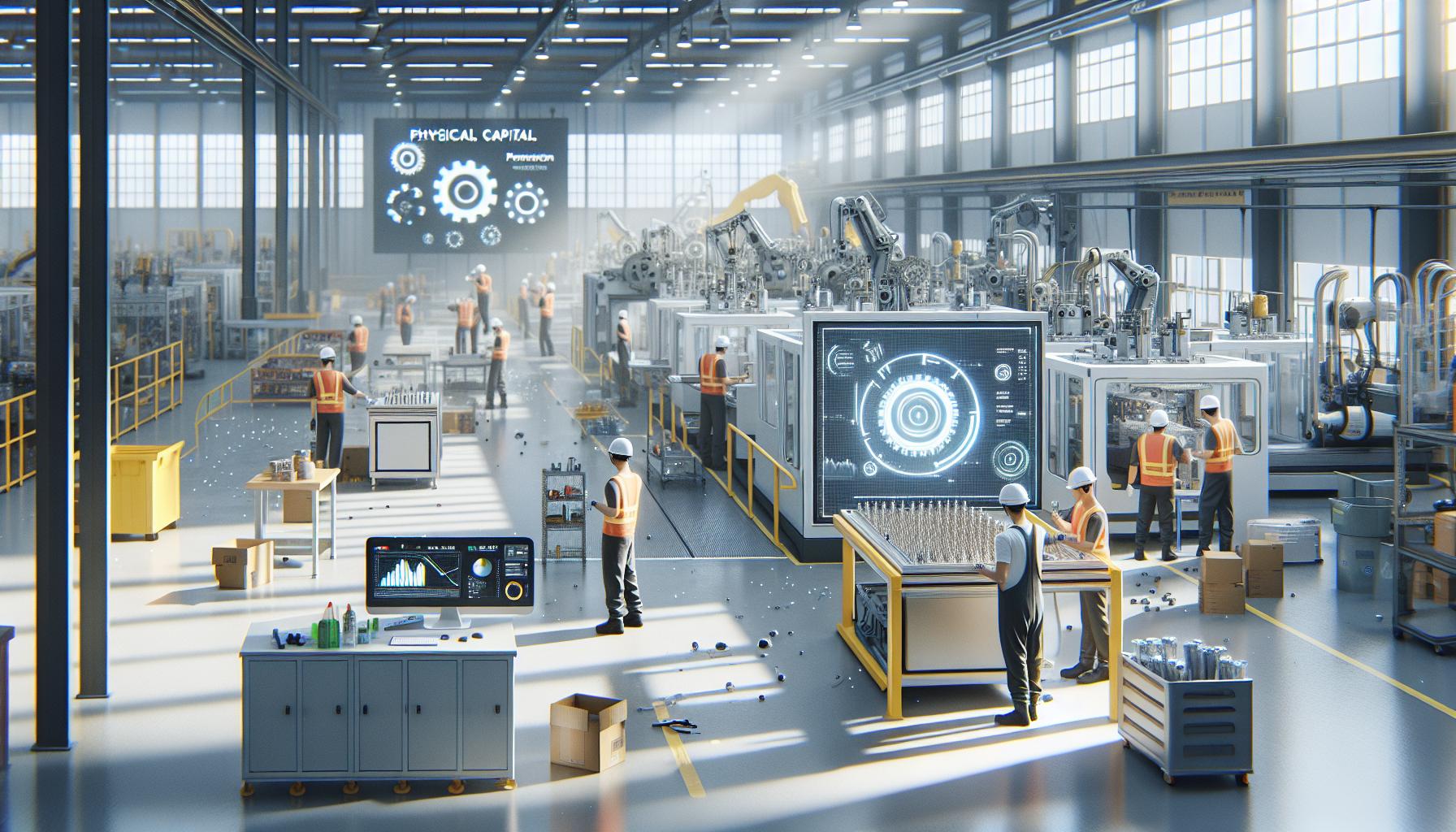
How Physical Capital Fuels Productivity
The connection between physical capital and productivity is deeply intertwined, acting as a powerful catalyst for business efficiency and economic growth. When organizations invest in tangible assets-such as state-of-the-art machinery or advanced technology-they equip themselves to operate more efficiently and effectively. This is not just a theoretical concept; the evidence shows that modernized tools and infrastructure drastically enhance operational capabilities.
Upgrading equipment, for instance, can significantly streamline production processes. Consider a manufacturing plant that replaces old, manual assembly lines with automated systems. The immediate benefits include reduced labor costs and faster production times, but the long-term impacts can be even more profound. With automation, companies can produce higher-quality goods with fewer defects, enabling them to compete more vigorously in global markets. Research indicates that businesses that prioritize the upgrading of physical capital enjoy productivity increases of up to 30% within just a few years after such investments [[2]].
Infrastructure plays an equally vital role in enhancing productivity. Investments in transportation networks-like roads, bridges, and ports-facilitate smoother and quicker logistics. This not only lowers shipping times but also cuts costs associated with delays and inefficiencies. For instance, when a country invests in expanding its road system, it directly improves the ability of businesses to distribute products to markets more quickly, thus encouraging consumer spending and fueling further economic growth. In many cases, nations with robust infrastructure systems report GDP growth rates that outperform their peers, illustrating the crucial link between physical assets and overall economic health.
Moreover, physical capital investments also have a broader impact on the workforce. Well-equipped workplaces can lead to improved employee morale and efficiency, as workers are less burdened by outdated and inefficient tools. For example, companies that invest in comfortable, modern workspaces often notice increased productivity and job satisfaction among employees, leading to lower turnover rates and attracting top talent. This cyclical advantage-where enhanced tools lead to a happier, more productive workforce-creates a thriving business environment that embodies the essence of profitable investment in physical capital.
As businesses and economies grapple with evolving challenges, prioritizing investments in physical capital remains a vital strategy not only for boosting productivity but also for securing long-term sustainable growth that meets the needs of both the market and the workforce.
Investment Strategies for Building Physical Capital
Investing in physical capital is not just about purchasing equipment or facilities; it’s about strategically enhancing a company’s capability to grow and compete. One compelling insight is that companies experience an average of 30% increase in productivity just a few years after upgrading their physical assets. This underscores the importance of thoughtful investment strategies. Here are practical methods to guide organizations in their pursuit of effective physical capital investments.
Focus on Modernization
To maximize returns, businesses should continuously assess and modernize their existing assets. This involves upgrading to newer technology that significantly improves efficiency. For example, a logistic company could implement automated inventory management systems, which not only reduce human errors but also speed up the processing of shipments. Regular audits of physical capital help identify underperforming assets and inform decisions on what to upgrade or replace.
Diversify Asset Types
A diversified portfolio of physical assets can safeguard against market fluctuations. Companies can benefit from balancing investments in machinery, technology, and infrastructure. For instance, while investing in advanced robotics might yield short-term returns in manufacturing, infrastructure improvements like better transportation links can enhance logistics and supply chain efficiency long-term. This approach minimizes risk, ensuring steady productivity growth even in volatile economic conditions.
Leverage Financing Options
Navigating the financial landscape to fund physical capital investments requires strategic approaches. Businesses should explore various financing options, including leases, loans, and government grants. Utilizing lease financing can reduce short-term capital expenditure while maintaining access to modern equipment. Additionally, many regions offer incentives for investing in green technologies, which can be both economically viable and beneficial for public image.
Implement a Sustainable Investment Framework
Investors now prioritize sustainability alongside profitability when making decisions. Organizations should incorporate environmental, social, and governance (ESG) criteria into their investment strategies. This not only attracts potential investors but also aligns with consumer preferences for sustainable practices. An example would be a manufacturing firm opting for renewable energy solutions in their facilities, leading to reduced operational costs and enhanced corporate reputation.
By adopting these strategies, organizations can effectively build and sustain their physical capital, driving productivity and ultimately propelling economic growth. Embracing modern technology while being mindful of financial and environmental impacts sets a solid foundation for long-term success in an increasingly competitive landscape.
Measuring the Impact of Physical Capital on GDP
The correlation between physical capital investment and GDP is pivotal, illustrating how enhancements in infrastructure, machinery, and technology directly impact economic performance. In fact, studies suggest that increases in physical capital can account for a significant portion of GDP growth. For instance, a report from the World Bank indicates that enhancing a country’s infrastructure can raise its GDP by as much as 1% to 2% per year, significantly influencing overall economic stability and growth.
To measure this impact effectively, economists often look at several key indicators. First, they assess investment ratios-the proportion of GDP that is invested in physical capital. A higher investment ratio typically correlates with stronger economic growth. Additionally, productivity metrics are essential; improvements in machinery or technology generally lead to increased output with the same input levels, thus boosting GDP. For example, when a manufacturing firm adopts advanced automated technology, its output can increase substantially without a linear increase in labor costs.
Furthermore, analyzing sectoral contributions can provide insights into which areas of physical capital have the most pronounced effects. Industries such as manufacturing, construction, and logistics often demonstrate a strong link between capital investment and GDP growth. Consider the example of renewable energy infrastructure: investments in this sector not only contribute to GDP growth through capital expenditure but also create jobs and stimulate auxiliary industries, thus generating a broader economic impact.
To quantify and contextualize these effects, economists also use multipliers-factors that estimate the broader economic impact of initial spending. For instance, every dollar invested in infrastructure can have a multiplicative effect on GDP due to increased efficiencies and the stimulation of related economic activities. This framework not only aids policymakers in understanding the importance of fostering physical capital investment but also provides businesses with a roadmap to appreciate how strategic investment can lead to significant economic returns.
In conclusion, requires a multifaceted approach, combining investment ratios, productivity metrics, sectoral contributions, and economic multipliers to paint a comprehensive picture. By focusing on these areas, both governments and businesses can better understand how to leverage physical capital investments to drive sustainable economic growth.
The Relationship Between Physical Capital and Innovation
Investing in physical capital does not merely upgrade machinery or facilities; it acts as a catalyst for innovation across various sectors. When companies invest in advanced technology, they foster an environment where creativity can thrive, leading to the development of new products and services. This synergy between physical capital and innovation can be illustrated through several pathways.
One significant way physical capital boosts innovation is through enhanced efficiency. Cutting-edge machinery and technologies streamline production processes, allowing businesses to increase output while reducing costs. For instance, the adoption of artificial intelligence in manufacturing can significantly speed up production cycles and improve product quality. This efficiency not only lowers operational costs but also frees up resources that can be redirected towards research and development (R&D). As businesses become more efficient, they tend to invest a higher proportion of their revenue into innovative projects, fueling a cycle of continuous improvement.
Additionally, real-world examples abound that illustrate the power of combining physical capital with innovative practices. Take the case of Tesla, which has made substantial investments in manufacturing infrastructure to support its electric vehicle production. Their Gigafactories are not only designed for efficiency but also incorporate state-of-the-art technologies that enable rapid prototyping and testing of new vehicle models. This strategic investment in physical capital allows Tesla to innovate more frequently and maintain a competitive edge in the fast-evolving automotive market.
Moreover, as companies increasingly recognize the value of sustainable practices, investments in green technologies exemplify how physical capital can drive innovation while also addressing environmental challenges. For example, companies in the renewable energy sector, such as wind and solar firms, are continuously innovating their approaches to harness energy more efficiently. The physical capital invested in improved solar panels and wind turbines leads to higher energy outputs, supporting the transition to a sustainable economy. This not only meets the growing demand for clean energy but also spurs innovation across adjacent industries, such as battery storage and smart grid technologies.
In summary, is dynamic and reciprocal. By strategically investing in advanced technologies and infrastructure, businesses can enhance efficiency, redirect resources towards creative endeavors, and ultimately foster a culture of innovation that propels economic growth. This interconnectedness highlights the importance of physical capital investment not just as a financial strategy but as a means to address broader societal challenges through innovative solutions.
Challenges in Investing in Physical Capital
Investing in physical capital can significantly augment a company’s productivity and facilitate innovation, yet it comes with a host of challenges that can deter businesses from making these crucial investments. One remarkable statistic highlights the gravity of this issue: as of 2022, over 30% of mid-sized firms reported that their inability to access affordable finance limited their capacity to invest in machinery and technology. Such constraints can stifle potential growth and make it difficult for countries to leverage physical capital for economic development.
Among the most immediate challenges are financial barriers. Many businesses, especially small and medium-sized enterprises (SMEs), struggle to secure financing for capital investments. Traditional lenders often view these investments as high-risk, leading to stringent lending criteria that can exclude many viable investment opportunities. To navigate this financial maze, companies should explore diverse funding options, including public grants, venture capital, and partnerships with universities or research institutions that can offer both financial and technical support.
Technology obsolescence presents another significant hurdle. In an era characterized by rapid technological change, businesses that invest heavily in physical capital may find their assets becoming outdated sooner than anticipated. This risk can be mitigated through a strategic approach to investment-focusing on modular and upgradeable systems that allow for incremental improvements over time. For instance, instead of investing heavily in a fully integrated production line, a company could choose to upgrade components individually, maintaining efficiency without locking itself into obsolete technology.
Regulatory challenges also impede investment in physical capital. Stringent environmental guidelines and compliance requirements can slow down the decision-making process and increase costs. However, embracing sustainability can also be an opportunity rather than just a challenge. Companies can channel investments into green technologies that not only comply with regulations but also attract a growing market of eco-conscious consumers. Real-world examples abound, such as companies in the manufacturing sector that adopt LEED-certified facilities, which not only enhance their brand image but can also yield long-term savings on energy costs.
In summary, while the potential for growth through physical capital investment is significant, navigating financial barriers, technology obsolescence, and regulatory frameworks can be challenging. Companies must adopt a multifaceted strategy that includes seeking innovative funding solutions, investing in adaptable technologies, and prioritizing sustainability within regulatory constraints. By doing so, they can turn potential pitfalls into pathways for growth, ensuring that their physical capital not only supports immediate operational needs but also positions them favorably for future advancements.
Case Studies of Successful Physical Capital Investments
Investing in physical capital has proven transformative for numerous businesses, often serving as a critical lever for economic expansion and enhanced productivity. One standout example is Tesla’s Gigafactory in Nevada, which has dramatically increased the company’s production capability while simultaneously driving down the costs of battery production. By investing over $5 billion in this state-of-the-art facility, Tesla aims to produce 500,000 electric vehicles annually, thus significantly scaling its operations and reinforcing its market position amidst rising competition. This case exemplifies how physical capital investments not only enable companies to meet consumer demand but also promote innovation in sustainable technologies.
Key Examples of Successful Investments
Another remarkable instance is Amazon’s investment in fulfillment centers, strategically located to optimize distribution networks and enhance delivery times. Since 2010, Amazon has invested approximately $80 billion in infrastructure, incorporating advanced robotics and automation technologies to streamline operations. As a result, Amazon has been able to offer same-day or next-day delivery for millions of products, redefining consumer expectations and solidifying its dominance in e-commerce. This investment illustrates the importance of aligning physical capital with strategic business goals, underlining how technology can elevate productivity and customer satisfaction.
For manufacturing companies, Bosch’s investment in the development of smart factories serves as a prominent case study. By integrating IoT (Internet of Things) technologies into their operations, Bosch has enhanced efficiency and reduced downtime through predictive maintenance. Their factories are now equipped with sensors and intelligent systems that provide real-time data on machinery performance. This strategic pivot has not only increased output but has also proven crucial in minimizing operational costs, allowing Bosch to maintain competitive pricing in a volatile market.
Lessons Learned
The successes of Tesla, Amazon, and Bosch highlight several important strategies for businesses considering significant physical capital investments:
- Align Investments with Business Objectives: Ensure that capital expenditures are closely tied to overarching company goals and market demands.
- Embrace Technology: Leverage emerging technologies to enhance the capabilities of physical assets and streamline operations.
- Consider Long-Term Sustainability: Factor in environmental impacts and regulatory compliance, as sustainable investments can lead to cost savings and improved public perception.
- Adapt and Scale: Invest in modular systems that can evolve with technology advancements, allowing for gradual enhancement without excessive upfront costs.
These real-world examples demonstrate that strategic investments in physical capital can yield substantial returns, not just for individual organizations but for the economy as a whole. Balancing innovation with sustainability, businesses can optimize their physical capital to drive growth while also contributing positively to social and environmental outcomes.
Global Trends in Physical Capital Investment
Amidst the shifting landscape of global economics, investments in physical capital are experiencing a transformative evolution. As businesses adapt to rapid technological advancements and changing consumer demands, there is a noticeable shift toward sustainability and efficiency in capital investment strategies. According to a recent report by the Global Infrastructure Hub, worldwide physical capital investment is projected to reach over $94 trillion by 2040, driven by the need for infrastructure modernization and sustainable development.
The rise of smart technologies plays a crucial role in this trend. Manufacturers and service providers are increasingly integrating Internet of Things (IoT) devices and automation within their operations. For instance, companies are leveraging AI to optimize supply chain logistics, resulting in lower operational costs and enhanced productivity. A prime example is Siemens, which has invested heavily in digital twin technology to create virtual models of their manufacturing processes. This allows for agile adjustments to production, minimizing waste and maximizing output.
Furthermore, there is a growing emphasis on green investments within the physical capital sector. Governments and private investors are prioritizing projects that not only offer economic returns but also adhere to environmental standards. The European Union has committed to substantial funding for environmentally friendly infrastructure, reflecting a broader global movement toward mitigating climate change impacts. For example, the construction of renewable energy plants, such as wind and solar farms, is not only creating jobs but also facilitating the transition to a low-carbon economy.
Shifts Toward Sustainable Practices
The transition to sustainable investment requires organizations to reevaluate their capital strategies. Here are some actionable insights for businesses looking to navigate these global trends:
- Invest in Energy Efficiency: Modernize operations by implementing energy-efficient technologies to lower costs and reduce carbon footprints.
- Prioritize Infrastructure Resilience: Ensure that investments consider the potential impacts of climate change, making infrastructural improvements resilient to extreme weather.
- Focus on Circular Economy Models: Adopt practices that minimize waste, such as reusing materials and designing for longevity.
- Embrace Collaborative Investments: Partner with local governments, NGOs, and other businesses to share risks and resources in sustainability-focused projects.
These trends indicate that investments in physical capital are not merely about expansion but are becoming pivotal to achieving long-term sustainability and resilience in an ever-evolving global market. As businesses embrace these shifts, they contribute not just to their bottom lines but also to the broader goal of a sustainable future.
The Future of Physical Capital in a Digital Economy
As technological advancements reshape industries, the future of physical capital investment is increasingly intertwined with digital innovation. The rapid integration of smart technologies, such as artificial intelligence (AI), automation, and the Internet of Things (IoT), presents a landscape ripe for transformation. For instance, businesses utilizing AI to enhance predictive maintenance can significantly reduce downtime in manufacturing processes, which not only accelerates production but also extends the life cycle of physical assets. This digital shift means that investments must now consider technological capabilities alongside traditional factors, leading to a more dynamic and resilient capital framework.
To capitalize on this evolution, companies are advised to adopt a multifaceted investment strategy in their physical capital spheres. This may include investing in smart infrastructure that adapts to real-time data, which can optimize resource allocation and improve operational efficiency. An example of this is Tesla’s gigafactories, which incorporate cutting-edge robotics for automation, driving down costs while increasing production capacity. Such strategic investments not only enhance productivity but also contribute to sustainable practices by reducing waste and energy consumption.
Moreover, the focus on sustainable and green technologies is set to redefine priorities in physical capital investment. With a growing emphasis on environmental responsibility, firms are encouraged to align their physical capital strategies with sustainability goals. For example, constructing eco-friendly facilities equipped with energy-efficient technologies can not only decrease operational costs but also attract eco-conscious consumers and investors. Companies must prioritize green innovations, such as renewable energy installations and sustainable materials, to meet regulatory requirements and corporate responsibility commitments.
In this digital economy, the ongoing challenge is to remain adaptable and foresighted. Businesses should regularly assess their investment portfolios to ensure that they are aligned with evolving technological trends and environmental standards. Embracing collaborative approaches-such as forming partnerships with technology providers and green organizations-can further enhance the efficacy of physical capital investments. By doing so, organizations can create a more robust capital framework that not only drives economic growth but also fosters a sustainable future. As we navigate this transformative era, responsible and strategic investments in physical capital will be critical to securing long-term success and resilience in an ever-changing market landscape.
Environmental Considerations in Physical Capital Investment
Investing in physical capital is no longer just about improving efficiency and increasing output; it has also become a vital part of addressing environmental challenges. Companies that prioritize sustainable practices in their physical capital investments can not only comply with regulatory requirements but also enhance their brand reputation and secure a competitive advantage. Around the globe, environmentally conscious consumers are increasingly favoring brands that commit to sustainability, making eco-friendly investments not just a moral imperative but a strategic business move.
One practical step companies can take is to incorporate energy-efficient technologies into their infrastructure. By upgrading machinery to more energy-efficient models, businesses can significantly reduce their carbon footprint. For instance, manufacturers that replace traditional assembly line equipment with advanced, energy-efficient machinery can lower energy costs by up to 30%. Additionally, investing in renewable energy sources like solar panels can power facilities sustainably while also providing long-term economic benefits, as the initial investment is often recouped through reduced energy bills over time.
Green Innovations and Their Impact on Physical Capital
Firms should also consider adopting sustainable materials in their physical capital strategies. Utilizing recycled or sustainably sourced materials not only lessens environmental impact but can also attract eco-conscious investors. For example, companies like IKEA have made significant strides in this area by committing to using only renewable or recycled materials in their products by 2030. This approach helps reduce waste and demonstrates a company’s commitment to sustainability, potentially increasing customer loyalty.
Creating a favorable environmental impact goes beyond mere compliance; it entails fostering a culture of sustainability within the organization. Businesses can achieve this by promoting practices such as zero-waste policies or engaging in local environmental initiatives. By integrating these practices into their physical capital investment strategies, organizations build stronger community relationships and promote a sense of responsibility among employees. This cultural shift can lead to innovative ideas for further reducing environmental impact, thereby enhancing overall productivity and worker satisfaction.
In conclusion, the intersection of environmental considerations and physical capital investment reveals a dynamic opportunity for businesses to drive economic growth while also adhering to sustainability goals. By making informed, responsible investments, organizations can not only improve their operational efficacy but also contribute to a healthier planet, demonstrating that profitability and sustainability can indeed go hand in hand.
FAQ
Q: What is the impact of physical capital investment on economic growth?
A: Physical capital investment is crucial for economic growth as it enhances productivity, creates jobs, and increases output efficiency. By investing in infrastructure, machinery, and equipment, businesses can produce more goods and services, driving economic development. For more details, check out the section on “The Role of Physical Capital in Economic Growth.”
Q: How does physical capital relate to technological innovation?
A: Physical capital fosters technological innovation by providing businesses with the tools and infrastructure needed to implement new technologies. This synergy accelerates productivity and promotes economic growth. Refer to “The Relationship Between Physical Capital and Innovation” for an in-depth analysis.
Q: What strategies can businesses use to invest in physical capital effectively?
A: Effective strategies include identifying key areas for investment, leveraging financing options, and prioritizing sustainability. Additionally, aligning investments with long-term business goals can maximize returns. Explore “Investment Strategies for Building Physical Capital” for actionable insights.
Q: What challenges do companies face when investing in physical capital?
A: Companies often encounter financial constraints, regulatory hurdles, and risk of technological obsolescence when investing in physical capital. Understanding these challenges is essential for informed decision-making. See “Challenges in Investing in Physical Capital” for more details.
Q: How can businesses measure the impact of physical capital on their growth?
A: Businesses can measure the impact by analyzing metrics like productivity levels, return on investment (ROI), and contributions to gross domestic product (GDP). Detailed guidance is available in the “Measuring the Impact of Physical Capital on GDP” section.
Q: Why is diversity in physical capital important for economic resilience?
A: Diversity in physical capital investments reduces dependency on a single sector and enhances economic resilience. It allows businesses to adapt to market changes and technological disruptions. For further information, refer to “Global Trends in Physical Capital Investment.”
Q: How do environmental considerations affect physical capital investment decisions?
A: Environmental considerations, such as sustainability and regulatory compliance, heavily influence investment decisions. Companies are increasingly focusing on green technologies to avoid potential liabilities and enhance brand reputation. Check out “Environmental Considerations in Physical Capital Investment” for comprehensive insights.
Q: When should businesses consider upgrading their physical capital investments?
A: Businesses should consider upgrading their physical capital when experiencing declining productivity, increased maintenance costs, or obsolescence of current assets. Proactive upgrades can lead to significant long-term benefits. For strategies on optimizing investments, see “Investment Strategies for Building Physical Capital.”
Concluding Remarks
Investing in physical capital is a fundamental driver of economic growth, enhancing efficiency, reducing costs, and boosting competitiveness. By understanding its importance, you can make informed decisions that not only benefit your business but also contribute positively to broader economic dynamics. Don’t miss the chance to leverage these insights-start exploring strategies for integrating physical capital into your operations today!
Interested in diving deeper? Check out our articles on the impact of labor investment and the role of technology in capital development to expand your knowledge. If you have questions or need personalized guidance, feel free to reach out or comment below. Join our newsletter for the latest updates and expert insights that empower your business decisions. Your journey toward growth starts now-explore and harness the potential of physical capital to elevate your success!