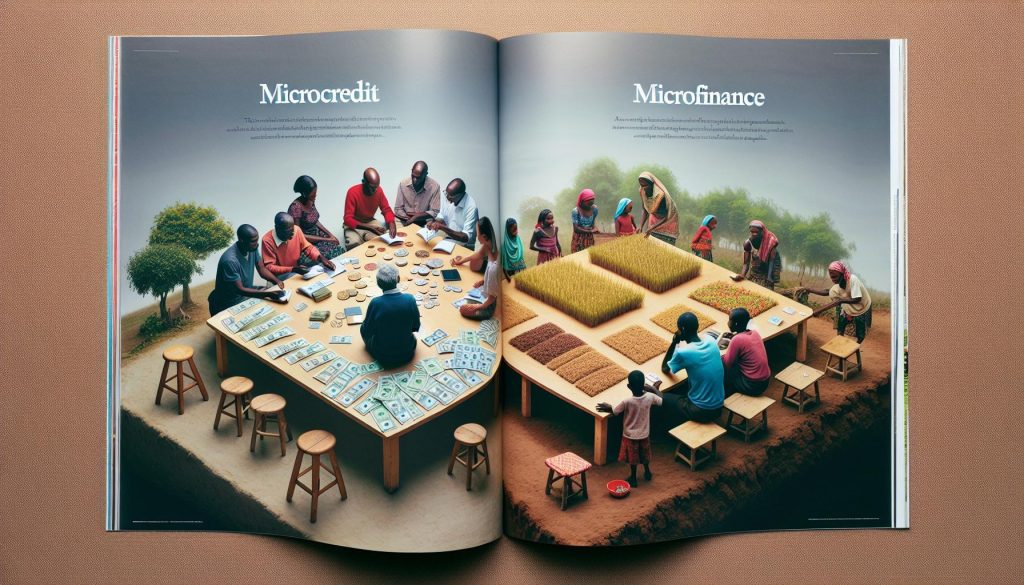
Did you know that over 1.7 billion individuals worldwide still lack access to traditional banking services? For many, microcredit offers a lifeline-small loans designed to empower low-income entrepreneurs without collateral or credit history. Understanding the key differences between microcredit and microfinance is essential for anyone looking to support sustainable development or start their own business. While both concepts aim to alleviate poverty and promote financial inclusion, they serve distinct roles in the broader landscape of economic support. By exploring these differences, you’ll gain valuable insights into how these financial tools can transform lives, providing the means for individuals to uplift themselves and their communities. Join us as we unravel the intricacies of microcredit and microfinance, and discover how they can work together to foster growth and empowerment.
What Is Microcredit? Understanding the Concept
Microcredit serves as a lifeline for many individuals in low-income communities around the globe. It is often defined as the provision of small loans to people who do not have access to traditional banking services, enabling them to invest in income-generating opportunities or improve their livelihoods. For example, a woman in rural India might use a microloan to purchase a sewing machine, thereby starting a small business that not only provides for her family but also contributes to the local economy. The essence of microcredit lies in its potential to empower individuals and foster economic upliftment.
Understanding microcredit involves recognizing its fundamental goal: financial inclusion. Unlike conventional loans that require collateral and a proven credit history, microcredit is designed to cater to those who typically do not qualify for such financing. Lenders often rely on social collateral, such as group accountability, where borrowers come together to support each other in repaying loans. This collaborative approach can lead to higher repayment rates and a sense of community among borrowers, fostering not just economic growth but social cohesion as well.
The impacts of microcredit extend beyond individual financial stability; they resonate throughout communities and economies. By providing access to credit, microcredit enables entrepreneurs to launch or expand their businesses, creating jobs and stimulating economic activity. Research shows that while the classic microcredit model does not always lead to significant increases in income or consumption for every borrower, there are notable successes where individuals have transformed their lives and those of their families through entrepreneurial ventures facilitated by microloans [[3]]. This potential impact highlights the importance of tailoring microcredit programs to address the specific needs and circumstances of borrowers, ensuring that they genuinely empower individuals rather than merely providing temporary financial relief.
Microfinance Explained: Beyond Just Loans
Microfinance offers a multifaceted approach that extends far beyond the traditional scope of loans. While microcredit is a critical component of microfinance, focusing on small loans for individuals without access to conventional banking, microfinance encompasses a broader range of financial services. These services include savings accounts, insurance products, and even financial literacy training aimed at empowering low-income individuals and communities. This holistic approach addresses various financial needs, allowing borrowers to manage their finances more effectively and work towards sustainable economic stability.
One of the remarkable aspects of microfinance is its emphasis on financial education. Many microfinance institutions recognize that providing loans alone is insufficient for fostering true economic empowerment. Thus, they often include training programs that equip borrowers with essential skills, such as budgeting and business management. For instance, a group of female entrepreneurs in Kenya may receive not only a microloan to start their businesses but also workshops on market strategies or customer relations. This dual approach not only improves the likelihood of business success but also enhances the borrowers’ confidence and decision-making capabilities.
Moreover, microfinance can create a ripple effect within communities. By encouraging local savings, facilitating group lending, and supporting the establishment of cooperatives, microfinance initiatives foster economic cooperation and community development. When individuals pool resources to support one another, they develop a strong support network, mitigating risks associated with entrepreneurship. In regions where financial resources are scarce, such cooperative initiatives can lead to significant communal advancements, including improved education and healthcare access.
In summary, microfinance serves as a vital instrument for broader economic growth by providing diverse financial services tailored to meet the unique challenges faced by low-income individuals. It not only empowers them through access to capital but also builds resilience and fosters community ties, thereby contributing to long-term economic sustainability and social cohesion.
Key Differences Between Microcredit and Microfinance
Microcredit and microfinance are often used interchangeably, but they represent distinct concepts within the realm of financial services, especially for underserved populations. Understanding these differences is crucial for grasping how they can effectively contribute to economic development and empower individuals.
Microcredit specifically refers to the provision of small loans, typically without the requirement for collateral, to individuals who lack access to traditional banking services. This model focuses primarily on lending and is aimed at enabling borrowers to invest in income-generating activities. For instance, a microloan might allow a woman in a rural community to purchase materials to start a weaving business, thereby improving her financial independence and contributing to her family’s welfare.
In contrast, microfinance encompasses a broader range of financial services beyond just lending. It includes savings accounts, insurance products, and financial education that collectively foster financial inclusion. Microfinance institutions (MFIs) often provide training sessions on budgeting and business management alongside their loan offerings. For example, an MFI might not only provide capital to a small-scale farmer but also teach him about sustainable farming practices and financial literacy, equipping him with the necessary skills to manage his resources effectively.
Moreover, while microcredit can be viewed as a component of microfinance, the latter’s holistic approach addresses the various financial needs and challenges faced by low-income individuals. By combining savings, credit, and education, microfinance not only promotes entrepreneurship but also enhances financial resilience and community development.
Understanding these distinctions can empower stakeholders, including policymakers, investors, and community leaders, to design more effective programs that cater to the unique needs of their target populations. Emphasizing the broader impact of microfinance can also inspire confidence in supporting initiatives that contribute to sustainable economic growth and social change in underserved communities.
The Importance of Microcredit in Economic Development
Microcredit plays a crucial role in economic development, acting as a lifeline for countless individuals and communities striving for financial independence. By offering small loans without collateral, microcredit enables those typically marginalized by traditional banking systems to engage in income-generating activities. This financial inclusion not only empowers borrowers but also stimulates local economies by encouraging entrepreneurship and job creation. For instance, a small loan can help a local farmer purchase seeds and equipment, ultimately leading to increased agricultural productivity and enhanced food security within the community.
Enhancing Financial Stability
The impact of microcredit extends beyond individual success stories; it contributes to broader economic stability. Microcredit allows borrowers to improve their income levels, which leads to enhanced living standards and greater economic resilience. As individuals invest in their businesses, they create jobs not only for themselves but also for others in their communities. This ripple effect can significantly reduce poverty levels and foster sustainable economic growth. According to research, households that participate in microcredit programs often experience better financial health, characterized by increased savings and reduced vulnerability to economic shocks.
Empowering Women and Marginalized Groups
One of the most compelling aspects of microcredit is its transformative effect on women and marginalized communities. Studies have shown that women are often primary recipients of microloans, and when empowered financially, they reinvest in their families and communities. For example, a woman who borrows money to start a small business is likely to use her profits to support her children’s education and healthcare, thereby breaking cycles of poverty. By addressing gender disparities and providing essential resources, microcredit helps level the playing field, offering women entrepreneurs a platform to thrive.
Challenges and the Path Forward
Despite the numerous benefits, microcredit is not without its challenges. Borrowers may face issues such as high-interest rates, over-indebtedness, and limited access to other financial services. To maximize the positive impacts of microcredit, it is crucial for microfinance institutions (MFIs) to implement responsible lending practices, provide financial education, and develop tailored products that address the specific needs of borrowers.
To ensure the sustainability of microcredit initiatives and their contributions to economic development, stakeholders must recognize these challenges and invest in continuous training and support for borrowers. By doing so, they can create an ecosystem where microcredit not only serves as a financial tool but also fosters empowerment, resilience, and opportunity in underserved communities.
How Microcredit Programs Empower Entrepreneurs
Microcredit is a powerful tool for fostering entrepreneurship, particularly among individuals who lack access to conventional financial services. Small loans-often a few hundred dollars-can ignite the entrepreneurial spirit in those otherwise marginalized by economic systems. This financial lifeline enables aspiring business owners to take the leap into self-employment, fueling small enterprises that not only uplift individuals but also invigorate entire communities.
By providing access to capital, microcredit programs empower entrepreneurs to start or expand their businesses. For instance, a small-scale seamstress can purchase a sewing machine, enabling her to increase production and, eventually, hire local workers. This creates jobs and promotes economic stability within the community. Additionally, these loans often come with essential business training and financial education, which equip entrepreneurs with the skills needed to manage their finances prudently and sustain their businesses over the long term. Through such programs, beneficiaries learn to create effective business models, understand market dynamics, and enhance their negotiation and marketing skills, laying a strong foundation for success.
One of the profound impacts of microcredit is the empowerment of women, who frequently represent a significant portion of microloan recipients. Studies reveal that when women gain financial independence, they invest heavily in their families, often prioritizing their children’s education and health. For example, a woman who secures a microloan to start a small grocery store can contribute more significantly to her household’s income, leading to improved conditions for her children and community. As women gain confidence and ability through their enterprises, they challenge traditional gender roles and inspire others, creating a ripple effect of empowerment.
However, the benefits of microcredit extend beyond mere financial transactions; they are essential tools for social change. Entrepreneurs who succeed often become role models, demonstrating the potential of self-help and resilience in the face of adversity. The stories of these individuals underscore the transformative power of microcredit, showcasing how small investments can lead to monumental changes in lives, communities, and economies. Thus, microcredit programs are not just about providing loans; they are about creating pathways to opportunity, fostering innovation, and lifting entire communities out of poverty.
Microfinance Institutions: Roles and Impact
Microfinance institutions (MFIs) play a pivotal role in transforming the economic landscape for underserved populations by providing access to financial services that were previously out of reach. These entities are not merely lenders; they are catalysts for change, actively fostering entrepreneurship and empowering communities. By focusing on individuals who lack access to conventional banking-such as the rural poor, marginalized groups, and women-MFIs help bridge the gap between aspiration and opportunity.
The impact of MFIs extends beyond the provision of microloans. They often offer a suite of services that includes business training, savings accounts, and insurance, creating a comprehensive support system for borrowers. This holistic approach is essential because it equips individuals with the necessary skills and knowledge to manage their finances effectively. For instance, many MFIs conduct workshops that teach financial literacy, enabling borrowers to understand budgeting, saving, and investing. When borrowers are well-informed, they are more likely to succeed in their ventures, which, in turn, enhances their financial stability and contributes to the economic vitality of their communities.
Social and Economic Impacts
MFIs also serve as local agents of social change, addressing broader issues like gender equality and poverty alleviation. Research indicates that women constitute a significant portion of microcredit clients. When women gain access to financial resources, they frequently invest in their families’ health and education, generating a ripple effect that fosters community development. For example, a woman who starts a small bakery not only increases her household income but may also support the education of her children, contribute to local economies, and inspire other women to pursue similar paths.
Moreover, MFIs often leverage group lending models, where small groups of borrowers come together to secure loans. This strategy not only reduces the risk for lenders but also instills a sense of accountability among borrowers. Each member of the group supports the others, creating a micro-community focused on shared success. Such frameworks not only mitigate risk but also empower participants to learn from one another and build networks that can lead to further economic opportunities.
MFIs face challenges, including sustainability and the need for ongoing funding. However, the positive impact they can have on individuals and communities underscores their importance in the financial ecosystem. By fostering entrepreneurship and helping individuals climb out of poverty, microfinance institutions are not just making loans; they are nurturing the seeds of economic resilience and social empowerment across the globe.
Challenges Faced by Microcredit Borrowers
Accessing microcredit can be a double-edged sword for borrowers. While it opens doors to potential financial independence and entrepreneurship, it also presents significant challenges that can hinder success. One of the most pressing issues is the burden of high interest rates that some microcredit institutions impose. Despite being marketed as affordable loans for low-income entrepreneurs, these rates can sometimes exceed those of traditional financial institutions, leading to a cycle of debt that is difficult for borrowers to escape. Borrowers may find themselves trapped in a situation where they must take out additional loans to repay existing debts, undermining their efforts to improve their financial situations.
Another major challenge is the lack of financial literacy and support among borrowers. Many individuals who seek microcredit lack a basic understanding of financial management, which can lead to poor spending choices and failed business ventures. Without proper education and resources, borrowers may struggle to utilize their loans effectively, making it critical for microfinance institutions (MFIs) to provide ongoing financial literacy training. By equipping borrowers with the knowledge to budget, save, and invest wisely, MFIs can significantly increase the chances of their clients’ success.
Additionally, social and cultural barriers can pose significant obstacles. For many borrowers, especially women in rural areas, prevailing societal norms may discourage them from pursuing business ventures. Gender biases can limit access to resources and decision-making power, further complicating the landscape for female entrepreneurs. Support networks, mentorship programs, and community-oriented lending models can help alleviate some of these challenges by fostering collaboration and shared success among borrowers.
While these challenges can be daunting, there are viable strategies to navigate them. Borrowers are encouraged to seek out microfinance programs that offer comprehensive support services, including business training and mentorship. Moreover, fostering peer accountability through group loans can provide emotional and practical support, creating a sense of community among borrowers. With the right resources and support, microcredit can indeed fulfill its promise of empowering individuals and transforming communities.
Success Stories: Transformative Power of Microfinance
Many inspiring stories illustrate the transformative potential of microfinance, highlighting how small loans can lead to significant changes in individuals’ lives and their communities. One notable example comes from Bangladesh, where Grameen Bank, founded by Muhammad Yunus, revolutionized lending practices by providing microloans to the impoverished, especially women. These loans, often as small as $50, have empowered countless women to start businesses, repay loans, and establish financial independence. For instance, a woman named Ayesha Johnson turned a small sewing operation into a thriving garment business, enabling her to support her family and contribute to her community’s economy.
Microfinance not only offers financial resources but also creates a supportive ecosystem for borrowers. Many microfinance institutions (MFIs) incorporate training programs that teach business skills and financial literacy, which are crucial for long-term success. By equipping borrowers with knowledge and tools, MFIs increase the likelihood of business sustainability. For example, an MFI in Kenya provided training alongside loans, allowing borrowers like Peter Wanjala, who began as a small-scale farmer, to adopt better agricultural practices. Over time, he expanded his farm, increased his yields, and even hired local workers, thereby boosting the local economy.
As these success stories unfold, it becomes evident that microfinance can catalyze more than just economic improvement; it can foster social change. Community-oriented lending models and group loans create a sense of accountability among borrowers, encouraging collaboration and peer support. This collective approach not only reinforces community bonds but also helps mitigate the risks associated with individual businesses. For example, women in a village in India formed a support group to manage their microloans collectively, sharing insights and encouraging one another to succeed. This resulted in increased business resilience and generated a network of mutual support that extended beyond financial transactions.
The impact of microfinance is indeed profound, illustrating how access to small amounts of capital, coupled with education and community support, can empower individuals and transform entire communities. By bridging the gap between traditional financial systems and underserved populations, microfinance initiatives exemplify how innovative funding solutions can address poverty while promoting social equity and sustainable development. Through these narratives of resilience, entrepreneurship, and community spirit, the transformative power of microfinance becomes not just a theoretical idea but a tangible reality for many around the globe.
Comparing Traditional Financing and Microfinance Solutions
In the realm of finance, understanding the differences between traditional financing and microfinance solutions is crucial for those exploring options to access capital. Traditional financial institutions often cater to individuals with established credit histories and substantial collateral, leading to a funding model that can exclude populations with limited resources or business experience. In contrast, microfinance solutions aim to break down these barriers by providing small, manageable loans to entrepreneurs who may lack access to conventional banking services.
Accessibility and Eligibility
One of the most significant distinctions lies in accessibility and eligibility criteria. Traditional lenders typically require borrowers to provide extensive documentation, including proof of income, collateral, and a robust credit score. This process can disenfranchise low-income individuals and startups without a proven track record. Microfinance institutions (MFIs), however, focus on the borrower’s determination and potential rather than their financial background. They often assess the viability of a business idea and the individual’s commitment, ensuring that even those without formal employment can obtain funding.
Loan Sizes and Repayment Terms
The size and terms of loans further illustrate how microfinance differs from traditional financing. Traditional banks tend to provide larger loans, which can be beneficial for established businesses looking to expand but often overwhelming for fledgling entrepreneurs. Microloans, on the other hand, are typically much smaller-often ranging from $50 to $500-allowing borrowers to start small and grow sustainably. Repayment terms in microfinance are usually more flexible, accommodating the borrower’s cash flow situation and promoting financial resilience instead of burdening them with immediate repayment demands.
Support and Education
Another crucial difference is the support and educational resources that accompany microfinance. Many MFIs provide not only capital but also training in financial literacy and business management. This holistic approach equips borrowers with essential skills, enhancing their likelihood of success and fostering a culture of entrepreneurship. In contrast, traditional lending often lacks these supportive measures, leaving borrowers to navigate their financial paths independently, which can be challenging without prior experience.
By bridging gaps in equality and providing tailored financial solutions, microfinance not only empowers individuals but also contributes to broader economic development. These differences highlight how microfinance can serve as a vital tool for poverty alleviation and community improvement, making it an invaluable component of today’s economic landscape.
The Future of Microcredit and Microfinance Globally
As the landscape of global finance evolves, the future of microcredit and microfinance carries significant promise for addressing economic disparities and fostering entrepreneurial spirit. A striking statistic underscores this potential: the World Bank estimates that over 1.7 billion adults worldwide remain unbanked, lacking access to the financial services essential for economic participation. This gap presents a unique opportunity for microfinance institutions (MFIs) to not only provide small loans but also deliver holistic support, creating a more inclusive financial ecosystem for underserved populations.
Innovative Approaches and Technologies
The integration of technology in microfinance is transforming how financial services can be delivered, promoting efficiency and accessibility. Mobile banking apps are leading the charge, allowing individuals in remote areas to access loans and manage their finances through smartphones. For instance, M-Pesa in Kenya has demonstrated how digital platforms can empower users by enabling them to save, transfer money, and secure loans without needing a traditional bank account. As more MFIs adopt similar technological solutions, the operational costs can decrease, translating to lower interest rates for borrowers and enhancing the reach of microfinance globally.
Focus on Sustainability and Impact
Future microcredit and microfinance initiatives are increasingly recognizing the importance of sustainability-not just imbuing financial viability but also social and environmental considerations into their models. Many MFIs are now committed to driving not only economic empowerment but also environmental stewardship. For example, green microfinance programs are emerging, providing loans specifically for eco-friendly projects, such as renewable energy installations or sustainable agriculture practices. This dual focus not only supports entrepreneurial growth but also contributes to combating climate change, showcasing how microfinance can play a pivotal role in creating a sustainable future.
Shifts in Policy and Support Systems
As microcredit gains international recognition, there is a growing push for supportive policies from governments and international organizations. Enhanced regulatory frameworks can facilitate the growth of MFIs, ensuring consumer protection while fostering innovation. Collaborative efforts between stakeholders-governments, non-profits, and the private sector-can lead to the development of comprehensive support systems that address not only financing but also education and mentorship for borrowers. Such initiatives can significantly boost the success rates of micro enterprises, making it more likely for them to thrive and contribute to local economies.
The evolution of microcredit and microfinance holds transformative potential for millions; by embracing technology, sustainability, and supportive policies, the sector can foster economic development that is inclusive and resilient. This proactive approach not only empowers individuals but also weaves microfinance into the fabric of global economic progress, proving that small loans can lead to significant change.
How to Access Microfinance Services: A Step-by-Step Guide
Accessing microfinance services can open doors to opportunity for those who may not have access to traditional banking systems. If you’re considering utilizing these services, here’s a step-by-step guide to navigate the process effectively.
Begin your journey by identifying the right microfinance institution (MFI) that suits your needs. Research various MFIs in your area, looking for reviews and testimonials from past clients. It’s vital to evaluate their reputation and the types of loans they provide. Pay attention to interest rates, repayment terms, and any additional services they might offer, such as financial education or business training. Online platforms and local community centers can assist in providing this information, enabling you to make an informed choice.
Once you’ve chosen an MFI, prepare the necessary documentation to support your loan application. Commonly required documents include a form of identification, proof of income (even if informal), details of your business idea, and sometimes a business plan. Crafting a clear, concise business plan can significantly bolster your application by outlining your goals, budget, and how you intend to repay the loan. Remember, MFIs often look for commitment and a sound understanding of your business needs, so demonstrating this can enhance your chances of success.
After gathering your materials, approach the MFI to submit your application. Many institutions are now leveraging technology, facilitating online applications through their websites or mobile apps. This method can save time and increase access, especially for those in remote areas. When submitting your application, be transparent and honest about your financial situation and the purpose of the loan; this builds trust and lays a solid foundation for your relationship with the lender.
If approved, you’ll need to review your loan agreement carefully. Pay close attention to the repayment schedule, interest rates, and any associated fees. Understanding all aspects of the agreement is crucial to avoid any miscommunications in the future. Once you accept the terms, strategize a repayment plan that aligns with your income and business cash flow to ensure timely repayments while avoiding financial strain.
In conclusion, accessing microfinance services can empower you to take the next step in your entrepreneurial journey. By selecting the right institution, preparing thoroughly, and understanding your loan agreement, you can leverage microcredit effectively to foster economic growth and ensure sustainability. Additionally, always remain aware of the support networks available in your community, as they can provide valuable resources and guidance throughout your microfinance journey.
Global Trends in Microfinance: What You Need to Know
As the landscape of microfinance continues to evolve, numerous trends are shaping how microcredit services are delivered and who they reach. One remarkable trend is the integration of technology into microfinance. Many microfinance institutions (MFIs) are leveraging mobile banking and digital platforms to provide services to underserved populations, particularly in developing regions. For instance, the use of mobile money has drastically improved the accessibility of financial services for remote communities, allowing individuals to manage their loans and repayments from their smartphones. This digitization not only enhances convenience but also lowers operational costs for MFIs, enabling them to serve more clients effectively.
Another key trend is the rising focus on sustainability and social impact. Many MFIs are now measuring their success not just by financial metrics but also by the social and environmental benefits they create. This shift is leading to innovative microfinance products aimed at promoting green businesses and eco-friendly practices. For example, green microcredit initiatives provide funding for solar energy projects or sustainable agriculture, thus aligning financial goals with environmental stewardship. These efforts are essential as they resonate with a growing global consciousness about climate change and sustainable development.
Additionally, the conversation around gender equality in microfinance is gaining momentum. Reports suggest that women entrepreneurs, who often struggle to access conventional financing, are increasingly benefiting from targeted microcredit programs. Many organizations are focusing on empowering female business owners through specialized training, female-only lending groups, and loans tailored to their specific needs. This gender lens not only helps close the financial gap but also fosters greater economic stability in communities by elevating women’s roles in the economy.
Finally, data analytics is transforming how MFIs assess credit risk and tailor their services. Institutions are increasingly turning to alternative data sources, such as mobile usage patterns and transaction histories, to gauge creditworthiness, thereby enabling them to reach potential borrowers excluded from traditional banking systems. This trend is essential for expanding the microfinance sector and ensuring that it addresses the diverse needs of borrowers effectively.
In summary, the microfinance landscape is becoming more inclusive and efficient through the integration of technology, a focus on sustainability, a commitment to gender equality, and the use of innovative data analytics. These trends not only enhance the reach of microcredit but also facilitate responsible lending practices that contribute to long-term economic development.
Faq
Q: What is the primary purpose of microcredit?
A: The primary purpose of microcredit is to provide small loans to individuals who lack access to traditional banking services. This financial support enables borrowers to start or grow small businesses, leading to increased income and improved living standards, particularly in developing countries.
Q: How does microfinance differ from traditional banking?
A: Microfinance differs from traditional banking primarily in its target demographic. While traditional banks focus on customers with established credit histories and collateral, microfinance institutions serve individuals with low income, no collateral, and limited credit history, offering tailored financial products and support.
Q: Who are the typical borrowers of microcredit?
A: Typical borrowers of microcredit are low-income individuals, often in developing countries, such as women entrepreneurs, small farmers, and informal sector workers. They usually lack access to conventional financing due to insufficient credit history or collateral.
Q: Can microcredit lead to significant economic growth?
A: While microcredit can empower individuals and promote entrepreneurship, studies indicate that its broader impact on economic growth may be limited. Many borrowers see modest improvements in income and consumption, suggesting that while beneficial, microcredit alone may not drive transformative economic change.
Q: What types of services are included in microfinance?
A: Microfinance includes various services such as microcredit (small loans), savings accounts, insurance products, and financial literacy training. This holistic approach aims to improve economic stability and responsibility among its users.
Q: What are some challenges faced by microcredit borrowers?
A: Microcredit borrowers often face challenges such as high interest rates, lack of financial education, and pressure to repay loans quickly. These factors can lead to cycles of debt or financial stress if not managed properly.
Q: How do microfinance institutions support their borrowers?
A: Microfinance institutions support borrowers through tailored financial products, financial education, and mentorship programs. This comprehensive assistance helps improve borrowers’ financial management, ensuring better outcomes and increased chances of business success.
Q: Why is understanding microcredit important for social development?
A: Understanding microcredit is crucial for social development because it highlights the potential of financial inclusion in reducing poverty. By empowering individuals through accessible capital, microcredit can play a significant role in fostering economic independence and promoting community growth.
Concluding Remarks
Understanding the nuances between microcredit and microfinance is essential for anyone interested in the impact of these financial tools on entrepreneurship and poverty alleviation. Microcredit serves as a lifeline for those without access to traditional bank loans, helping to ignite small businesses and empower individuals facing financial barriers. If you’re inspired to delve deeper into how these concepts can transform lives, consider exploring our related articles on the impact of microfinance in developing economies or the success stories of businesses launched through microcredit.
Don’t hesitate to take the next step-sign up for our newsletter to stay informed about the latest trends and best practices in microfinance. Your journey towards understanding and utilizing these financial services could start today. Share your thoughts or experiences in the comments below, and connect with others who are also passionate about making a difference. Together, we can foster a community focused on financial empowerment and innovation.
Get our latest guides, news, and insights highlighted in your Google Search & AI Overviews.